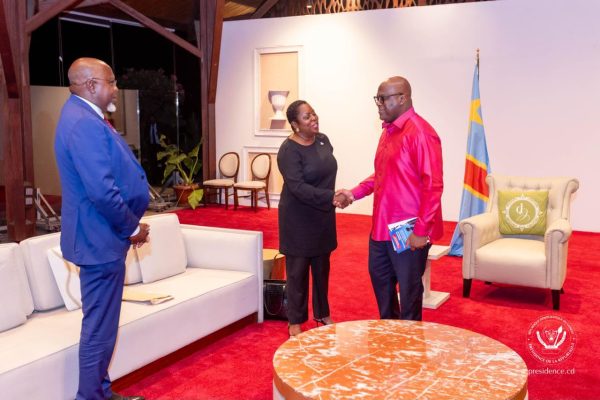
An ambitious diplomatic offensive is set to unfold in France as early as the next parliamentary session, with the aim of securing official recognition of the GENOCOST—the genocide linked to resource exploitation in the Democratic Republic of Congo (DRC). This initiative, spearheaded by the Collective of French Elected Officials of Congolese Origin (CEFOCK), follows a high-level meeting with President Félix Tshisekedi at the Cité de l’Union Africaine in Kinshasa.
The campaign will prioritize raising public awareness through memorial events, targeted advocacy sessions, and strategic engagement with French local governments, national institutions, and the Congolese diaspora. The goal is clear: to elevate the GENOCOST from a humanitarian concern to a cornerstone of international policy discussions.
CONTINUED AFTER AD
Beyond media silence, the elected officials—acting as vital bridges between the DRC and France—seek to dismantle the barriers preventing political and public acknowledgment of the atrocities committed in the Congo. By leveraging their influence in French institutions, they aim to embed the GENOCOST into France’s policy agenda, ensuring it receives the attention it deserves.
Strengthening the fight with institutional backing
A pivotal partnership has been forged with the Inter-Institutional Commission for Victim Support and Reform Assistance (CIA-VAR), a key governmental body tasked with documenting atrocities, facilitating reparations, and preserving the memory of victims. This collaboration will focus on two critical fronts: reinforcing the duty of remembrance to prevent historical erasure and pushing for the formal recognition of victims of the Congolese genocide.
President Tshisekedi has publicly endorsed this initiative, emphasizing its role in bolstering the DRC’s international memory diplomacy. His support underscores the urgency of addressing these crimes on the global stage.
The diaspora’s pivotal role in shaping policy
The timing of this campaign is no coincidence. The DRC is ramping up its efforts to persuade the international community to classify the atrocities committed since 1996 as a genocide. The Congolese diaspora, now represented in French municipal, departmental, and regional councils, holds unprecedented institutional leverage. With the CEFOCK at the helm, this community is transitioning from passive testimony to active political advocacy.
By targeting French lawmakers, the campaign aims to replicate the momentum seen in other international genocide recognition movements. This strategy could exert tangible pressure on France to acknowledge the GENOCOST in its parliamentary chambers.
Domestically, the push for recognition is gaining ground. On August 2, the National Day dedicated to the GENOCOST, President Tshisekedi led a solemn ceremony honoring the victims. During the event, he unveiled plans for the construction of the National GENOCOST Museum and a dedicated memorial—a bold statement to institutionalize remembrance within the DRC.
Together, these domestic and diplomatic efforts signal a coordinated push by Kinshasa to secure global acknowledgment of the genocide tied to resource exploitation in the DRC. The stage is set for a historic reckoning.