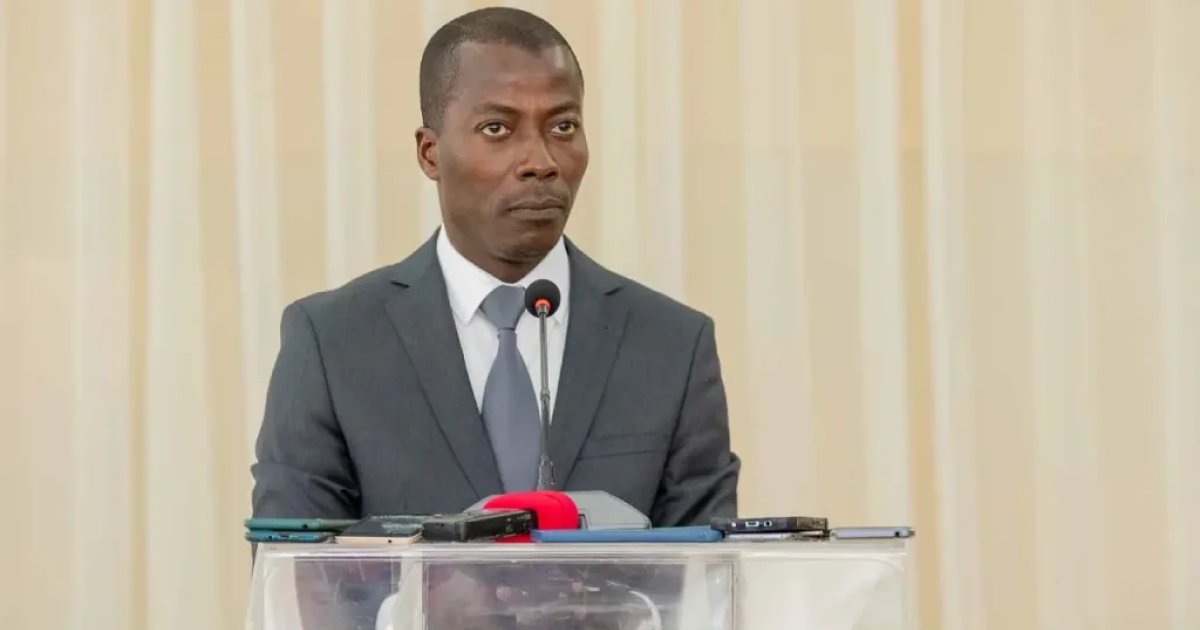
Eighteen months following the political upheaval of July 26, 2023, in Niamey, the grand promises of national “Refoundation” and a clean break from the past are crumbling under the weight of oil sector mismanagement. At the center of the storm is the newly appointed Minister of Oil, Hamadou Tini, who stands accused of violating basic ethical standards by occupying multiple roles that conflict with his public duties. A former executive at the Mazars consulting firm, Hamadou Tini is now allegedly using his ministerial authority to revive contracts for his private entity, demanding unrestricted access to the sensitive trade secrets of SORAZ (Société de raffinage de Zinder).
From sovereignty rhetoric to the return of private interests
In the wake of their takeover, the military leaders of the Conseil national pour la sauvegarde de la patrie (CNSP) positioned economic sovereignty as their primary objective. Their main target was clear: the management of petroleum resources, specifically the SORAZ refinery. Official state communication channels were used to denounce the previous democratic administration and its international associates.
Among those targeted was the international consulting firm Mazars, which had partnered with the state of Niger for a decade. The new administration, supported by Chinese partners from the China National Petroleum Corporation (CNPC), initially dismissed the firm, claiming its audits were biased. The official stance was firm: Niamey would seek a neutral, independent international firm to scrutinize SORAZ. However, behind the scenes, lobbying efforts quickly shifted the landscape. By January 2026, under the direct patronage of General Mody, Hamadou Tini—a chartered accountant—was appointed to lead the Ministry of Oil, signaling a comeback for the firm he had recently served.
The Minister as client, provider, and paymaster
Upon taking office, Hamadou Tini moved quickly to prioritize his own interests. Leveraging his ministerial power, he immediately reinstated the financial and management audit of SORAZ. Crucially, he mandated that this strategic mission be handled exclusively by his former firm, Mazars, ostensibly to allow the firm to complete its previous work and receive payment.
This contractual maneuver represents an unprecedented conflict of interest. The Minister of Oil now occupies several contradictory positions: he is the client ordering the audit for Niger, the service provider performing the work through Mazars, the final recipient of the audit findings, and the sole authority signing the public checks for the service.
This consolidation of roles eliminates any hope of independent oversight. It is impossible for an audit firm to remain objective when its former leader and mentor is the very minister overseeing the entire process.
A race for confidential data
The strategy extends beyond mere contract signatures. With the future of the transition period remaining uncertain, the Tini faction appears to be in a rush. The minister recently issued a directive to the management of SORAZ that leaves no room for negotiation.
Through this ministerial order, Hamadou Tini has demanded that Mazars be given full access to all financial, accounting, technical, and operational records within eight days, without any restrictions. These are the exact strategic and confidential datasets that refinery management and CNPC partners had previously protected to maintain business secrecy. In Niamey, observers note that the minister’s previous intimate knowledge of SORAZ‘s accounting vulnerabilities allows him to pinpoint exactly where to exert pressure.
The mystery of the ousted ministers
The aggressive takeover of SORAZ provides a potential explanation for the chronic instability at the Ministry of Oil since the coup. Three different ministers have held the position in just three years, a turnover rate that seems tied to the secrets held within the Zinder refinery.
Before Hamadou Tini took the helm, Minister Mahaman Moustapha Barké had announced a major financial audit of SORAZ in June 2024. Shortly after, on January 13, 2025, he was detained by the Direction générale de la documentation et de la sécurité extérieure (DGDSE). He was held in isolation for nearly a year without legal proceedings until his release in early 2026. His successor, Dr. Sahabi Oumarou, also attempted to launch an audit in February 2025 before being abruptly removed from his post.
Industry insiders now suggest that Hamadou Tini played a role in the downfall of his predecessors. While still working for Mazars, he reportedly authored targeted memos and reports designed to undermine the credibility of Barké and Oumarou in the eyes of the military leadership. This appears to have been a calculated move to clear the path for Mazars‘ return and secure the ministerial seat for himself.
A “Refoundation” in name only
The SORAZ situation highlights the internal contradictions of the Niamey administration. While the citizens of Niger face the economic hardships of diplomatic isolation and wait for the promised benefits of oil wealth, the country’s “black gold” appears to be serving narrow corporate interests. The SORAZ audit, once demanded by civil society as a tool for transparency, has been transformed into a weapon for internal power struggles. Under the control of a minister who is also the auditor, the process serves as both a shield for conflicts of interest and a source of revenue for his former firm. For the CNSP‘s promised “Refoundation,” the reality is stark: the methods of managing Niger‘s oil have not evolved; only the names of the beneficiaries have changed.