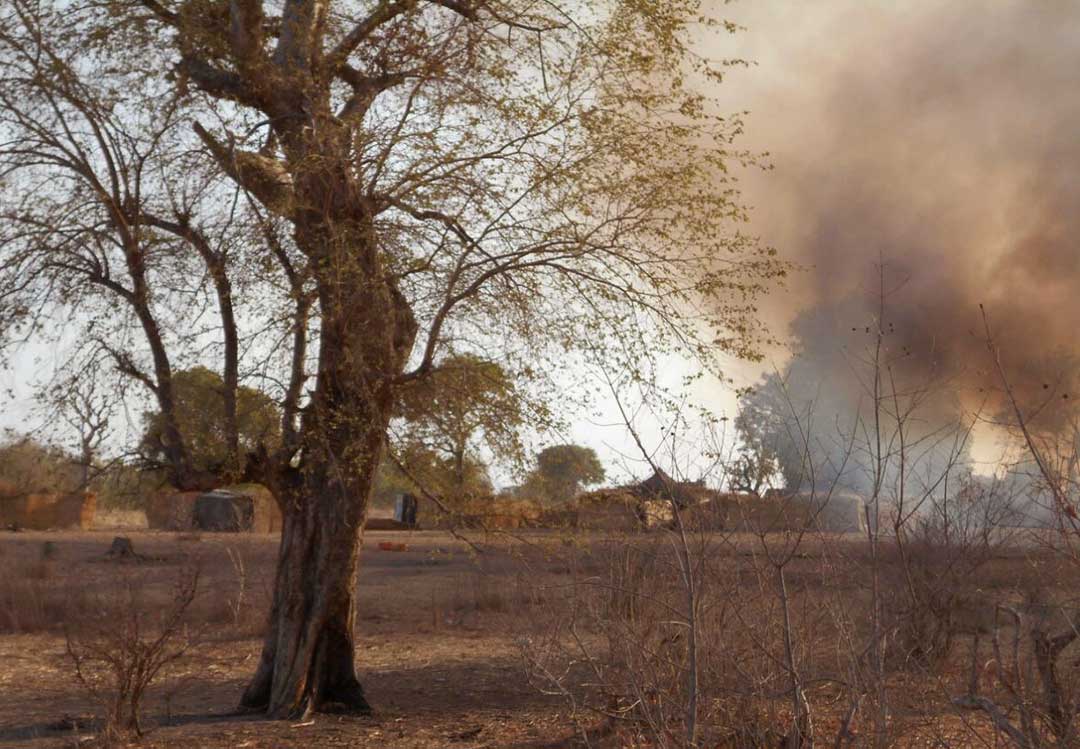
Once a thriving natural haven covering 60,000 square kilometers in Nigeria’s Northeast, the Sambisa Forest has transformed into a battleground. Tourist attractions and wildlife have vanished, replaced by two rival militant factions locked in a deadly struggle for dominance.
The Sunni Group for Preaching and Jihad (JAS) and the Islamic State’s West Africa Province (ISWAP) have been fighting for control since 2016, when Boko Haram split into these two adversaries. Recent intelligence suggests the clashes are escalating, with both sides inflicting heavy casualties.
With its dense vegetation and expansive terrain, Sambisa offers the perfect hideout for insurgents to launch attacks and control smuggling routes. The forest’s strategic value makes it a prized territory for both groups, each vying to expand their influence across the region.
Two factions, one deadly rivalry
The JAS, historically focused on kidnappings, looting, and deadly ambushes, now faces a more organized opponent in ISWAP. While the latter prioritizes territorial control, tax collection, and establishing local governance structures, it has shown little regard for human life. Sambisa and the Lake Chad islands have long served as their strongholds.
Shifting dynamics and security challenges
Security analyst Zagazola Makama, based in Borno State, reports intensified skirmishes in and around Sambisa. Both factions claim significant losses, though exact figures remain unverified. Makama notes that these clashes mirror their broader insurgency against state forces, including the Nigerian military and the Multinational Joint Task Force.
‘The rivalry between JAS and ISWAP has evolved into a parallel conflict, complicating efforts to dismantle their networks,’ Makama stated in a recent assessment. While counter-terrorism operations have weakened both groups, they continue to maintain communication networks and operational capabilities within their enclaves.’
A growing regional threat
Since Boko Haram’s insurgency began in 2009, the conflict has spilled into neighboring Cameroon, Niger, and Chad, resulting in over 40,000 civilian deaths and displacing more than two million people, according to UN estimates.
Taiwo Adebayo, a Boko Haram specialist at South Africa’s Institute for Security Studies, warns that security strategies must adapt. ‘JAS should be treated as an independent and adaptive threat rather than a weakened rival of ISWAP,’ he argues in a 2025 analysis. The Nigerian military’s focus on ISWAP’s attacks on military installations has inadvertently allowed JAS to regroup.’
An impasse with no clear end
Malik Samuel, a senior researcher at Good Governance Africa, predicts a prolonged stalemate. ‘ISWAP struggles to penetrate JAS’s stronghold in Barwa, where its leader is based, making a Sambisa-style offensive nearly impossible,’ he explains. However, their proximity in the Lake Chad islands ensures inevitable confrontations as they compete for territory and resources.’
Samuel adds, ‘Outside these islands, JAS cannot match ISWAP’s manpower, territorial reach, global connections, or experience—especially with foreign fighters bolstering ISWAP’s ranks.’