Catholic bishops in the DRC voice strong opposition to Tshisekedi’s constitutional reform
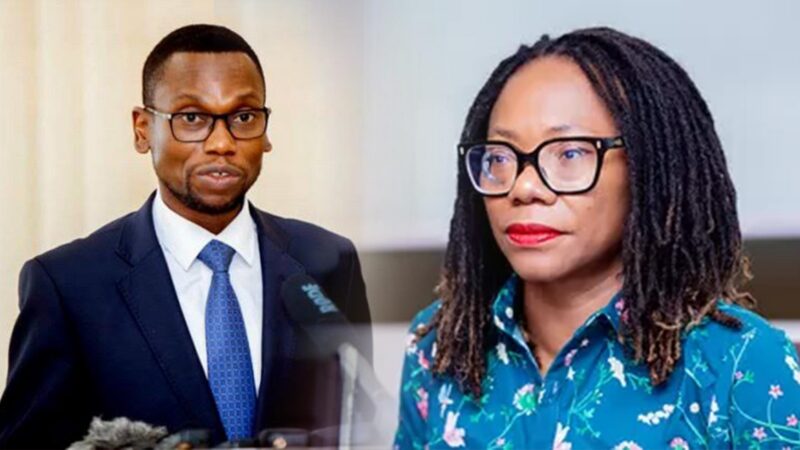
The National Episcopal Conference of Congo (CENCO) has expressed a firm and unequivocal opposition to the constitutional revision project championed by President Félix Tshisekedi. The Catholic prelates in the Democratic Republic of Congo warn that such a move could trigger severe institutional instability and undermine the democratic progress achieved by the nation. This intervention adds significant weight to a political debate that has been intensifying in Kinshasa for several months.
The Catholic Church stands against constitutional changes
In a notably stern declaration, the Congolese clergy argued that any modification to the Basic Law is inappropriate under the current circumstances. CENCO, an institution with significant historical influence in the public sphere of the DRC, maintains that the 2006 Constitution remains a vital and legitimate framework. They view it as the result of a hard-won national consensus following years of political transition. The bishops express concern that altering the text could eventually be used to manipulate electoral rules to favor those currently in power.
President Félix Tshisekedi first suggested the need for a new Constitution in October 2024, arguing that the country required a document better suited to Congolese realities. The Head of State claimed the current text was drafted under foreign pressure and serves as an obstacle to national growth. While a commission was expected to begin deliberations in 2025, this prospect has sparked deep anxiety within the Church, as well as among opposition parties and civil society groups.
A history of resisting term limit extensions
The current stance of the bishops follows a long-standing tradition of political engagement. Back in 2015, during the presidency of Joseph Kabila, CENCO actively campaigned against efforts to modify presidential term limits. The Church also played a pivotal role in brokering the Saint Sylvester Agreement in December 2016, a deal that was crucial in preventing a major national crisis. This history gives the current warnings from the episcopate a substantial political impact.
The bishops emphasize that the Congolese Constitution contains “locked” or intangible provisions, specifically regarding the number and length of presidential terms. In their view, tampering with these safeguards would be akin to opening an institutional Pandora’s box. While the presidential camp maintains that the goal is to modernize the state’s architecture rather than extend a mandate, this distinction has failed to reassure the Catholic leadership, which advocates for a strict adherence to existing laws.
This debate extends beyond legal technicalities into the realm of powerful symbolism. In a nation where over 40% of the population identifies as Catholic, the bishops’ words carry immense weight. Their message has already begun to spread through Sunday sermons in various parishes, indicating a grassroots mobilization that reaches far beyond the Church’s administrative offices.
A defining moment for Félix Tshisekedi’s administration
Following his reelection in December 2023, Félix Tshisekedi holds a solid majority in the National Assembly, making the initiation of a revision process technically feasible. However, the resistance from CENCO complicates the political landscape. The President must navigate the opposition of an entity with enduring moral authority, whose views are closely monitored by international partners in Brussels, Paris, and Washington.
Observers point out that this constitutional debate is unfolding during a period of high tension in the eastern part of the country. The Congolese military is currently engaged in conflict with the M23 in the provinces of Nord-Kivu and Sud-Kivu. Some analysts suggest that launching a constitutional battle could distract from urgent military and humanitarian crises. Conversely, others interpret the move as a strategy to strengthen the executive branch amidst regional instability and external pressures.
The coming months will determine whether the government proceeds with its planned timeline or opts for a more cautious approach. The Parliament, the members of the Union Sacrée coalition, and civil society organizations will all be forced to take a side. For its part, the episcopate has made it clear that it will not remain a passive observer. This burgeoning conflict between Kinshasa and the Catholic Church could fundamentally alter the political balance in the DRC for years to come.