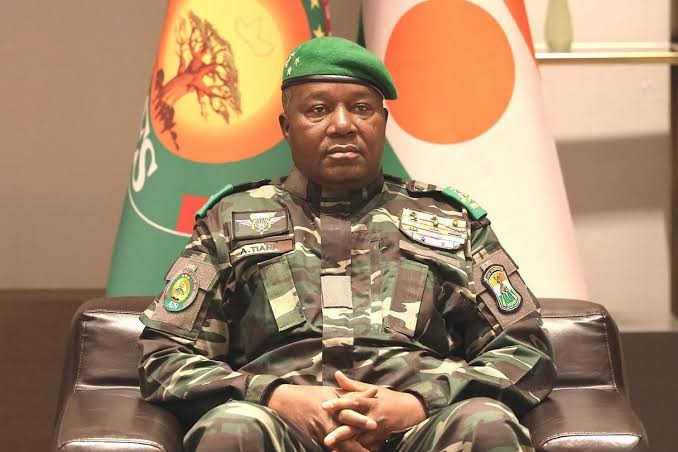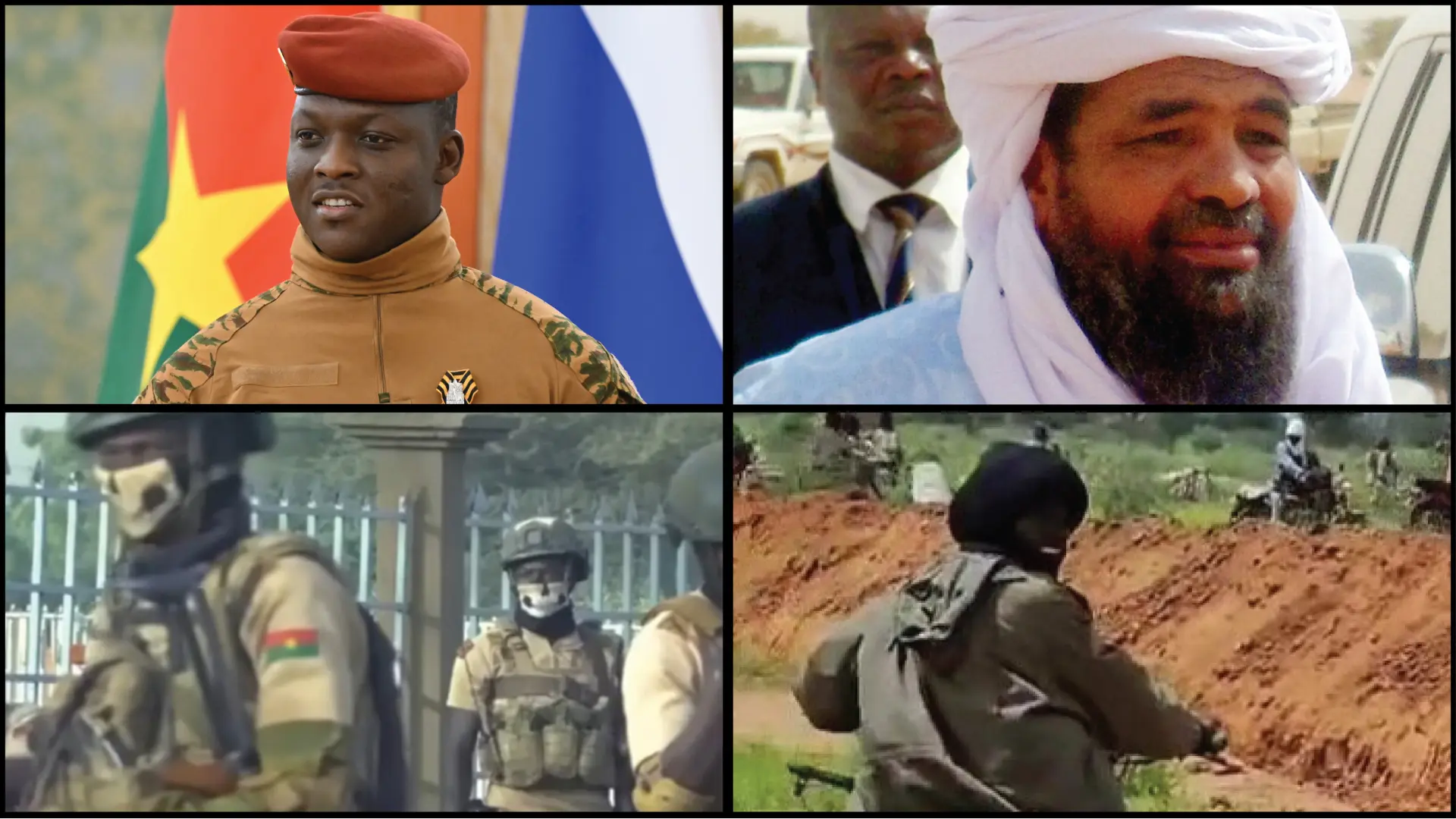
At 36, Captain Ibrahim Traoré, sporting newly acquired captain’s insignia, presides over a presidential palace he secured not through democratic elections—a system he conveniently dismantled. This shift from electoral politics allows for direct communication, or rather, direct pronouncements, to the media rather than the electorate. From the opulent Koulouba palace, Traoré recently addressed a select group of six journalists for two hours, presenting a glowing, almost utopian, vision of Burkina Faso. His discourse painted a picture of military triumphs, with the army reclaiming vast territories, a burgeoning industrial sector, burgeoning gold reserves, expanding infrastructure, and an unprecedented level of freedom for Burkinabè citizens. The scene, ripe for a state-sponsored documentary, seemed only to lack a stirring soundtrack and a national flag unfurling majestically.
However, this carefully curated narrative sharply collides with a starkly different reality unveiled by Human Rights Watch (HRW). Coinciding with Traoré’s optimistic address, HRW released a comprehensive 351-page report titled “No One Will Escape.” This damning document compiles extensive testimonies, irrefutable satellite imagery, and grim lists of fatalities, exposing the brutal truth of 1,837 civilian deaths over a mere two and a half years. The report implicates various actors in these atrocities, including the Burkinabè army, local VDP militias, and JNIM jihadist groups. While violence is widespread, HRW’s findings underscore a particularly disturbing pattern: state-affiliated forces are systematically executing civilians, often with the clear backing of aerial surveillance and direct orders from higher command, suggesting a deliberate strategy rather than isolated incidents.
The HRW report meticulously details acts that constitute grave violations of international law, including war crimes and crimes against humanity. A particularly alarming aspect is the systematic ethnic targeting of the Fulani community. The document cites specific, horrifying incidents: the summary execution of 223 civilians, including 56 children, in Nondin in February 2024; hundreds of fatalities in Baraboulé in December 2023; and the massacre of 130 Fulani near Solenzo in March 2025. These atrocities are corroborated by the discovery of mass graves, compelling survivor testimonies, and undeniable satellite evidence. Despite such overwhelming proof, the regime frequently dismisses these findings, often implying they are merely part of a “Western conspiracy.”
Adding a layer of disturbing irony, Captain Traoré proudly cited the “recapture” of towns like Baraboulé and Pétégoli as evidence of military success. Yet, HRW’s investigation directly contradicts this narrative, revealing these locations as sites of unspeakable brutality. The report documented “Operation Tchéfari 2”—meaning “The Warriors’ Honey” in Fulfulde, a chillingly poetic name for a massacre—where the army was responsible for killing hundreds of civilians across 16 villages. While state television hailed these operations as “successes,” survivors recount them as nothing short of a “slaughterhouse,” highlighting the profound disconnect between official propaganda and the lived experiences of the population.
In a bizarre attempt to deflect responsibility, Traoré suggested that the killings were perpetrated by terrorists disguised in military uniforms, who then filmed their own atrocities. This explanation strains credulity, implying that these “terrorists” possess the capacity to don Burkinabè army uniforms, deploy military drones, coordinate sophisticated operations involving multiple battalions, and then vanish without a trace. Such a level of operational sophistication seems highly improbable for groups Traoré himself describes as merely “reading the Quran in the bush,” further exposing the flimsiness of his defense.
During his extensive two-hour interview, a critical word conspicuously absent was “Fulani.” This deliberate omission is profoundly disturbing, akin to discussing World War II without acknowledging the Jewish Holocaust—an act technically feasible but morally reprehensible. HRW’s report meticulously documents the systematic targeting of the Fulani community, who constitute 8% of Burkina Faso’s population. This group has been collectively accused of terrorism, leading to village-by-village massacres and the displacement of hundreds of thousands. The report even cites Traoré’s own chilling words to Fulani leaders in February 2023: “There will be many dead. And it will be more complicated for your community.” His presidential guard chief reportedly made an even more explicit threat: “We will kill them all.” Yet, the official stance maintains there is no “Fulani problem” in Burkina Faso, only a “problem of Fulani.”
Traoré provocatively asserted that Burkinabè citizens enjoy “much greater freedom” than their European counterparts. This statement, however, is a cruel distortion of reality, as freedom in Burkina Faso often translates to the freedom to disappear. Journalists have been abducted and coercively enlisted into militias; independent media outlets have been forcibly closed; human rights websites are routinely blocked; the electoral commission has been dismantled; and the death penalty has been reinstated. Further exacerbating this climate of repression, sophisticated networks of pro-junta online trolls, known as the “BIR-C” (Rapid Communication Intervention Battalions), relentlessly inundate social media platforms with propaganda and deepfakes designed to glorify Captain Traoré. The scale and audacity of this digital manipulation make even the propaganda efforts of regimes like Kim Jong-un’s appear comparatively rudimentary.
In light of the extensive evidence, Human Rights Watch has unequivocally called for Captain Traoré to be investigated for command responsibility. Despite six generals being explicitly named in connection with these atrocities, not a single individual has faced trial. The junta’s decision to withdraw from the International Criminal Court (ICC) further underscores a blatant disregard for international justice, a move often interpreted as an attempt to evade accountability when one has “nothing to hide.” Simultaneously, the regime publicly shames and films corrupt traffic officers for pocketing a mere 500 CFA francs, elevating such minor infractions to national scandals. In stark contrast, the massacre of hundreds of civilians by the army is conveniently dismissed as “terrorist perfidy.” The regime’s distorted priorities could not be more apparent.
Predictably, the regime consistently attributes all criticism to Western interference. A European Parliament resolution is labeled “interference”; the French army chief is told to “mind his own business”; NGOs are dismissed as “manipulators”; the media as “liars”; the internet as “fake”; territorial maps as “fake”; and even the meticulously compiled 351-page HRW report, based on 450 interviews, is declared “fake.” In this narrative, everything is fabricated except the junta’s own pronouncements. While acknowledging the genuine historical grievances rooted in postcolonial exploitation—the fact that France indeed plundered Africa is undeniable—the regime’s strategy of weaponizing this history to construct an impenetrable shield against criticism, all while perpetrating massacres against its own populace, mirrors the tactics of figures like Mugabe, but at an accelerated pace. Anti-imperialism, it must be stated unequivocally, does not grant a license to kill innocent civilians.
In a final, chilling statement, Traoré encouraged Burkinabè citizens to “have children” because “the land is rich.” Tragically, this assertion rings with a macabre irony, as the very land he speaks of is increasingly becoming a repository for the countless victims of the ongoing violence.