Bénin’s growing footprint in West African markets
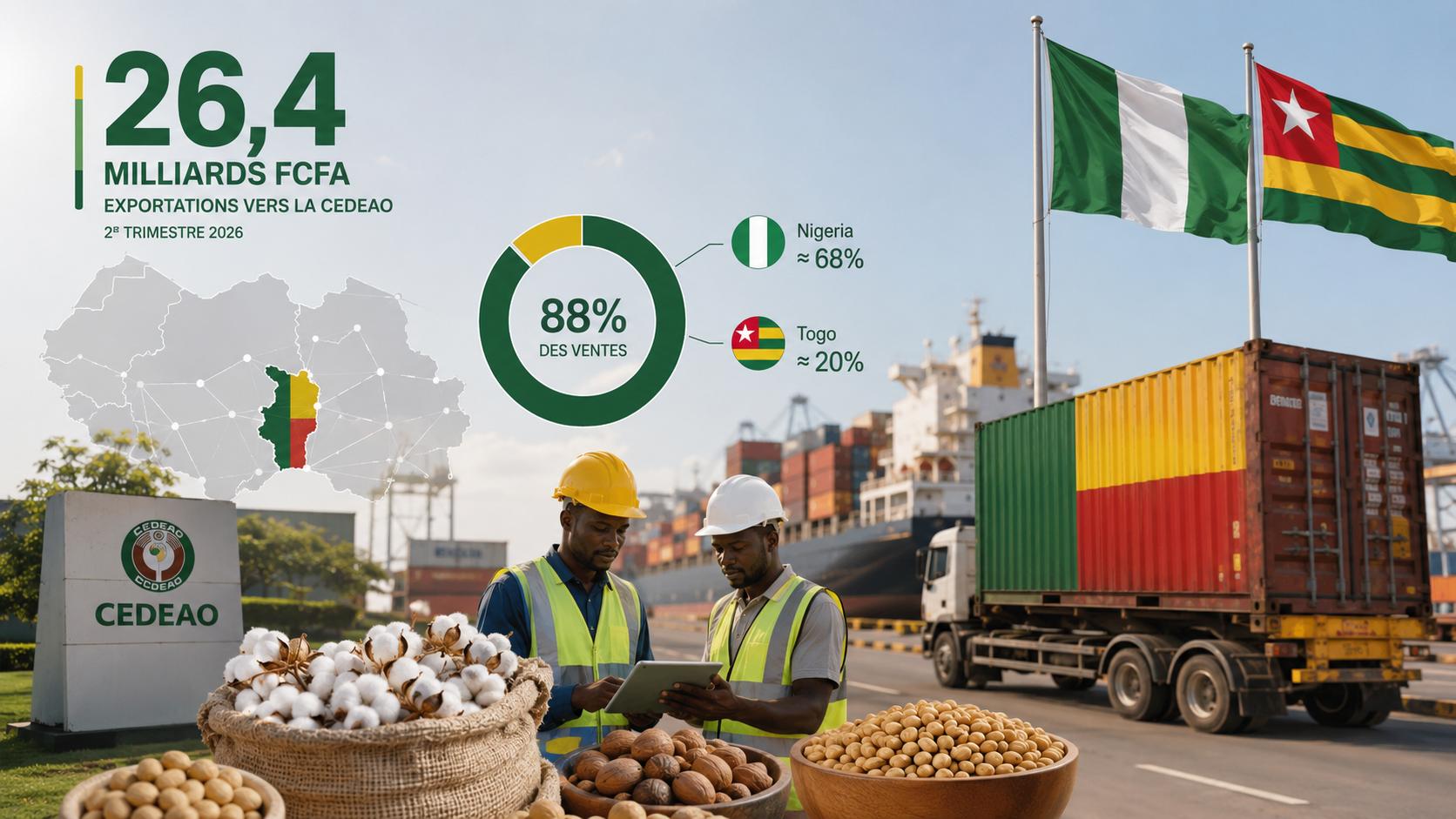
In the second quarter of 2026, Bénin’s exports to ECOWAS member states reached 26.4 billion FCFA, reinforcing the country’s economic momentum since the launch of its transformation-driven policies in 2016. Nearly 88% of these exports were absorbed by two key partners: Nigeria and Togo, highlighting both the potential of regional integration and the success of Bénin’s strategy to boost competitiveness and trade.
This surge in trade activity is not merely a statistical milestone but a reflection of deliberate economic reforms. The 26.4 billion FCFA figure represents 14% of Bénin’s total export volume, signaling a shift toward deeper regional engagement.
Nigeria leads the way in Bénin’s trade expansion
The sheer scale of Bénin’s commercial ties with Nigeria underscores the strategic importance of this neighbor. As the region’s largest economy, Nigeria alone accounted for 56.1% of Bénin’s ECOWAS-bound exports in the second quarter of 2026. Togo followed with 31.7%, while Côte d’Ivoire contributed 5.1%. Together, these three countries represent nearly 94% of Bénin’s regional trade, illustrating both the opportunities and challenges of market concentration.
The composition of exports to Nigeria reveals a diversified basket of goods. Petroleum and bituminous mineral oils led the way with 7.6 billion FCFA in sales, totaling over 8,500 metric tons. Ferrous and steel bars, primarily destined for re-export, contributed 3.3 billion FCFA, while soy oil and its fractions generated 2.3 billion FCFA.
Togo and Côte d’Ivoire: emerging trade partners with untapped potential
While Nigeria remains the dominant destination, trade with Togo and Côte d’Ivoire is gaining traction. Togo received 2.2 billion FCFA worth of cottonseed cake and solid residues, along with 1.5 billion FCFA in raw cotton seeds and 700 million FCFA in unbleached cotton fabrics.
In Côte d’Ivoire, Bénin’s exports included 1 billion FCFA in unbleached cotton fabrics, complemented by printed textiles, water-based paints and varnishes, and certain plastic materials. These exchanges demonstrate the broadening scope of Bénin’s trade relations across the region.
The transformative power of regional trade
Beyond the numbers, the rise in regional commerce is driving structural economic changes. Increased exports require greater production, processing, packaging, and logistics capabilities. This, in turn, stimulates demand for raw materials, labor, and services, benefiting farmers, industrial workers, transporters, and logistics providers alike.
For households, the ripple effects are tangible. A stronger export sector can create jobs, particularly for young people, while improved infrastructure reduces transport costs and enhances mobility. Industrial zones and logistics hubs are emerging as catalysts for economic diversification, offering alternatives to traditional sectors.
Since 2016, Bénin has prioritized economic modernization, infrastructure development, and agricultural transformation. The goal? To move beyond raw material exports and build a value-added economy that retains more wealth within the country.
From raw materials to value-added products
The agricultural sector, particularly cotton, is a prime example of this shift. Once limited to raw production, the cotton value chain is now evolving into a more structured textile industry. This transition promises to generate employment and increase incomes for those involved in the sector.
The government’s focus on industrialization is equally evident. New industrial zones and enhanced logistics networks are being developed to attract investors and accelerate local processing. The message is clear: more of the wealth generated from Bénin’s resources should remain within its borders.
Diversification: the next frontier
While the concentration of exports in Nigeria and Togo is a testament to their importance, it also highlights the need for diversification. Expanding into Côte d’Ivoire and other ECOWAS markets, while introducing higher-value processed goods, could reduce vulnerability to fluctuations in a single market.
Sectors such as agro-processing, textiles, and manufacturing offer promising avenues for increasing export value. The challenge for Bénin is not just to sell more, but to produce more, process more, and command higher prices through local value addition.
A sustainable trajectory for inclusive growth
The 26.4 billion FCFA in second-quarter exports is more than a trade milestone—it’s a sign of Bénin’s deepening economic integration with West Africa. With a population of hundreds of millions and a strategic location, the region offers immense opportunities.
Since 2016, Bénin has leveraged its geographical advantages by investing in infrastructure, industrialization, and agricultural modernization. While trade figures are a strong indicator of progress, the ultimate goal is to translate this momentum into sustainable job creation, higher incomes, and improved living standards for all citizens.
The path forward is clear: regional trade must evolve from a mere export engine into a sustainable driver of economic transformation. By capitalizing on its strengths and diversifying its partnerships, Bénin is well-positioned to turn proximity into prosperity.