Benin’s new president Romuald Wadagni faces significant challenges
The new president’s mandate will be defined by his ability to balance inclusive growth, political openness, and the restoration of regional relationships.
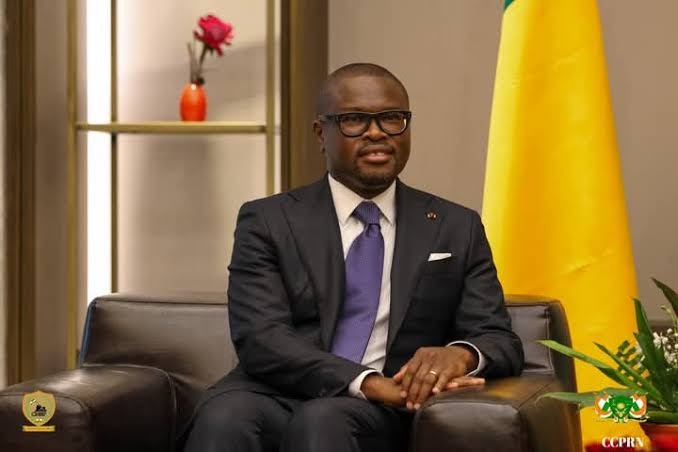
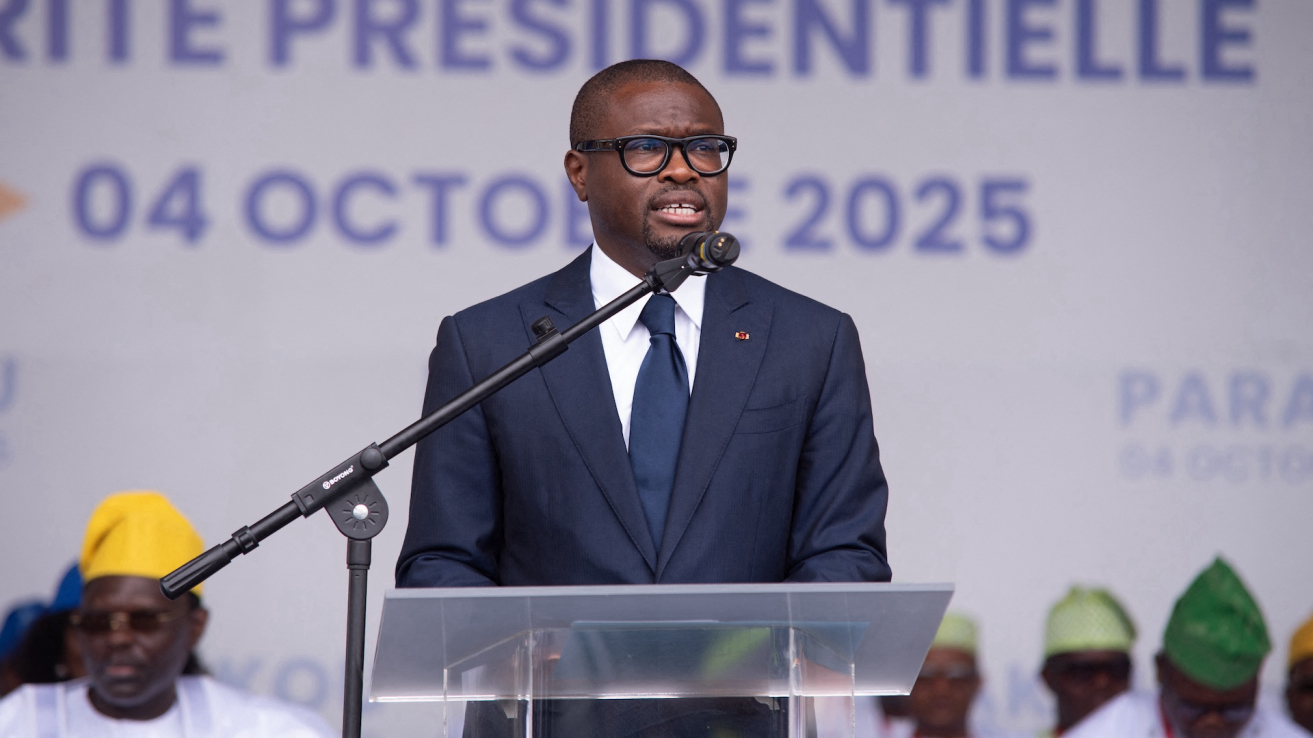
Romuald Wadagni secured a decisive victory in Benin’s presidential election on April 12, garnering 94.27% of the votes. His opponent, Paul Hounkpè, promptly conceded defeat, urging for national unity and a steadfast commitment to republican values. The Constitutional Court officially validated the election results, noting a voter turnout of 63.57%, a significant increase from the 50.17% recorded in the 2021 polls.
This electoral outcome signifies Benin’s fifth democratic transition since the pivotal National Conference of 1990. At a time when many regional nations grapple with instability stemming from presidential term limit extensions, the outgoing President Patrice Talon’s adherence to the constitutional two-mandate restriction notably strengthens the nation’s institutional stability.
While the election generally proceeded peacefully, isolated and localized incidents, including allegations of ballot stuffing, were reported. Thorough investigations are essential to ascertain accountability for these occurrences. Nevertheless, the Electoral Commission, the Constitutional Court, and various observation missions collectively concluded that these isolated events did not undermine the overall credibility of the election. In fact, the Constitutional Court proactively invalidated 34,596 votes nationwide due to verified irregularities.
Paul Hounkpè did not pose a significant threat to the candidate representing the presidential majority. His political party, the Forces Cauris pour un Bénin émergent, had previously demonstrated modest electoral showings in the January 2026 legislative and local elections, as well as the 2021 presidential race, securing 4.78%, 6.65%, and 11.37% of the votes, respectively.
Having served as Minister of Finance for a decade, Wadagni is widely recognized as a pivotal architect behind the substantial economic achievements witnessed during President Talon’s two terms. Under Wadagni’s stewardship, Benin’s annual Gross Domestic Product (GDP) growth rate surged from a mere 1.8% in 2015 to approximately 8% by 2025.
Despite eight years of consistent growth, approximately 40% of Benin’s population still lives below the poverty line.
A primary challenge for the incoming administration will be translating this robust economic expansion into a tangible reduction in poverty. Even with sustained growth, an estimated 40.1% of Beninese citizens continue to live beneath the poverty threshold. Acknowledging this critical issue, Wadagni has positioned inclusive growth at the core of his 2026-2033 agenda, structured around three fundamental priorities: universal social well-being, a diversified and competitive economy, and fostering national cohesion alongside robust security.
The ultimate success of Wadagni’s presidency will also hinge on his ability to safeguard political pluralism, ensure a balanced distribution of powers, fortify the rule of law, and normalize diplomatic relations with neighboring states.
This presidential election unfolded within an extraordinary backdrop, occurring just four months after a coup attempt on December 7 that threatened to derail the electoral process and destabilize the nation. Furthermore, the polls followed a series of significant constitutional and institutional reforms initiated back in 2016.
These reforms have profoundly reshaped the landscape for political participation and competition, concurrently narrowing the civic and political spheres. Specifically, the introduction of a 15% sponsorship quota from members of parliament and/or mayors, mandated by the March 2024 revision of the electoral code, partly accounts for the absence of the primary opposition party, Les Démocrates, in the recent presidential contest.
Wadagni now presides over a political and institutional environment heavily influenced by members of parliament and local officials aligned with the presidential movement, who are now exclusively empowered to endorse candidacies for the 2033 presidential election.
The opposition potentially faces exclusion from the electoral process until 2040 unless the current sponsorship regulations undergo revision.
Meanwhile, the opposition appears weakened and fractured by internal strife. The departure of former President Boni Yayi from the leadership of Les Démocrates in March 2026 plunged the party into an unprecedented leadership crisis, leading to numerous defections. Under these circumstances, the opposition risks remaining sidelined from the electoral arena until the 2040 presidential election if the existing sponsorship rules are not revisited.
The November 2025 Constitution outlines that a “republican responsibility pact” may be forged between the government and political parties, overseen by the Senate, to establish a framework for collaboration with the opposition, particularly given the prohibition of permanent electoral campaigns outside designated election periods.
This constitutional provision, alongside the contentious political truce introduced by the 2025 constitutional revision—whose precise parameters still require clarification—must not be leveraged as mechanisms to neutralize opposition voices or stifle critical debate. Instead, this pact should ideally function as a platform for constructive dialogue and consensus-building.
As articulated in his agenda, Wadagni is also tasked with ensuring the effective implementation of institutionalized mechanisms for citizen participation and the establishment of itinerant public accountability dialogues, both crucial tools for strengthening national cohesion.
The government would benefit immensely from promptly initiating a national dialogue with the nation’s vital forces. This would facilitate an evaluation of the contested reforms, allow for the correction of any shortcomings, and foster compromises designed to secure popular support while steadfastly upholding democracy and the rule of law.
The security vacuum resulting from fractured regional partnerships primarily benefits terrorist groups.
The new administration must also thoroughly absorb the lessons learned from the recent coup attempt, which starkly highlighted the fragility of Benin’s democratic achievements. Concurrently, the opposition faces the imperative to reinvent itself, striving to present a credible alternative and effectively fulfill its vital role as a counterweight to power.
The dynamic between Wadagni and Talon will undeniably be a critical determinant of Benin’s stability over the next seven years. The potential for institutional friction is considerable, particularly with the establishment of a Senate in November 2025, endowed with significant prerogatives such as reviewing laws passed by the National Assembly and requesting second readings of legislative texts. A potential appointment of Talon to lead the Senate could effectively institutionalize a form of dual executive power.
Finally, Wadagni is tasked with revitalizing regional cooperation amidst a troubling security landscape. Terrorist attacks continue in the northern regions of the country, and diplomatic relations with certain neighbors remain strained. While ties with Nigeria have seen improvement following its support during the coup attempt, relationships with Burkina Faso and Niger continue to be precarious.
Throughout his campaign, Wadagni adopted a conciliatory stance towards neighboring nations, framing his election as a fresh opportunity for diplomatic resurgence. He acknowledges that Benin cannot unilaterally confront multidimensional security threats. However, the resumption of robust regional cooperation will also depend on the political will demonstrated by the authorities in Niamey and Ouagadougou.
The security vacuum created by the disruption of regional collaboration disproportionately benefits terrorist organizations. Without renewed cooperation, cross-border areas and the W-Arly-Pendjari complex will likely persist as rear bases, further undermining the stability of all three nations involved.