From local harvests to global shelves: Benin’s agri-food revolution
The sweet taste of Benin’s golden pineapples, the richness of Ouémé Valley soybeans, and the pure essence of hillside honey are no longer confined to domestic or regional markets. These agricultural treasures now grace international tables, thanks to a deliberate government strategy that prioritizes quality, safety, and global compliance. This green revolution is not only boosting farmers’ incomes but also reshaping the nation’s economic landscape.
The uphill battle for global recognition
For years, Benin’s agricultural brilliance struggled to cross borders due to strict international standards, particularly those imposed by the European Union and China. The case of pineapples perfectly illustrates this challenge: after a 2017 export suspension to Europe over compliance issues, Benin had to rebuild its entire system from scratch. Exporting isn’t just about supply—it’s about meeting rigorous health and safety benchmarks.
The government, under President Patrice Talon’s leadership, took decisive action. Massive investments were poured into upgrading national laboratories, including the Beninese Agency for Food Safety (ABSSA). These structural reforms paid off, securing long-term access to Western and Asian markets. Benin’s produce is now celebrated not only for its flavor but also for its impeccable traceability and safety standards.
Honey: Benin’s golden treasure wins over Europe
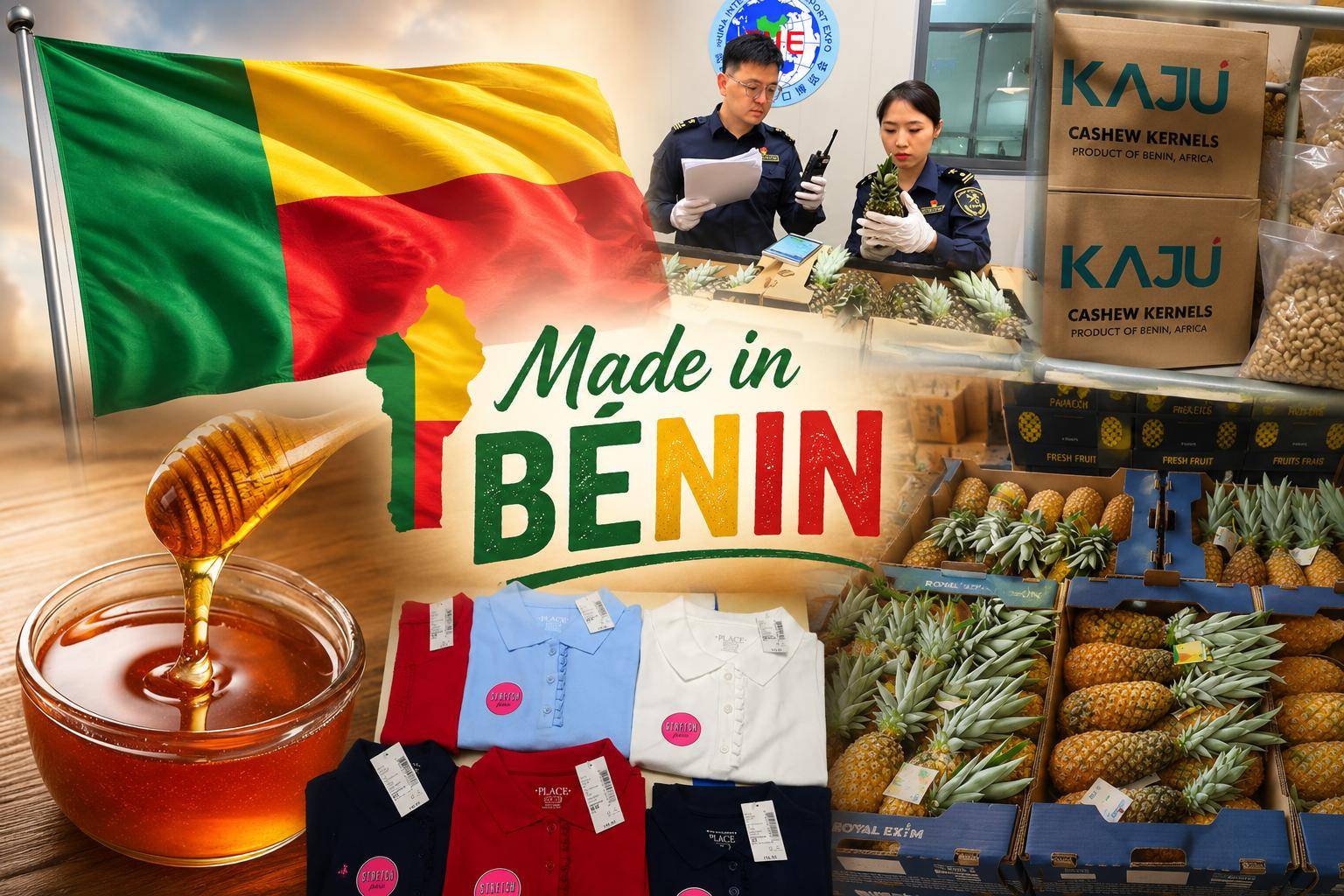
The turning point came in February 2018, when the European Commission officially approved Benin’s honey for export. This milestone validated the product’s natural purity and biodiversity-friendly production methods, often sourced from traditional beekeeping practices in northern and central Benin.
For local beekeepers, this was a game-changer. What was once a humble subsistence product is now a sought-after luxury in global markets, prized for its therapeutic benefits and unique flavors. The shift guarantees stable, remunerative prices, making beekeeping an attractive career for rural youth.
Diverse champions on the world stage
Benin’s agricultural success isn’t limited to honey. In October 2021, the Pineapple Pain de Sucre from the Allada Plateau earned the country’s first Protected Geographical Indication (IGP) from the African Intellectual Property Organization (OAPI). Celebrated for its exceptional sweetness, this pineapple is now exported fresh or as 100% pure juice, showcasing Benin’s freshness credentials.
Meanwhile, organic soybeans have gained traction in Europe and Asia, thanks to the industrial dynamism of the Glo-Djigbé Special Economic Zone (GDIZ). Benin no longer ships raw beans but adds high-value processed products. The cashew sector is following suit: the gradual ban on exporting raw nuts is pushing local processing, creating thousands of jobs before global distribution.
Real-world impact: prosperity returns to Benin’s farms
The benefits extend far beyond macroeconomic gains. Farmers are seeing tangible improvements in their livelihoods. “Today, we sell our soybeans with the confidence of fair pricing,” says a producer from Savalou.
Stable access to global markets has stabilized rural incomes, strengthened cooperatives, and reduced precarity. The drive for international compliance has also professionalized farming. Producers receive training, adopt modern harvesting techniques, and reduce chemical inputs, safeguarding soil for future generations.
For Benin, this agricultural boom is a major foreign exchange earner and a powerful tool for trade balance recovery. With over 60% of the active population relying on agriculture, it’s clear that farming is the backbone of national development.
The “Made in Benin” seal: a mark of excellence
Benin’s agriculture has undergone a transformation. From the 2018 honey certification to the 2021 pineapple milestone, the country has carved out a reputation for quality and institutional reform. Whether it’s golden forest honey or the sweet pineapples of the plateaus, Benin’s expertise is now exported with pride. This success story proves that with clear policy vision and farmer commitment, Africa can feed the world with distinction. The “Made in Benin” label is no longer just a tag—it’s a promise of prestige and trust.