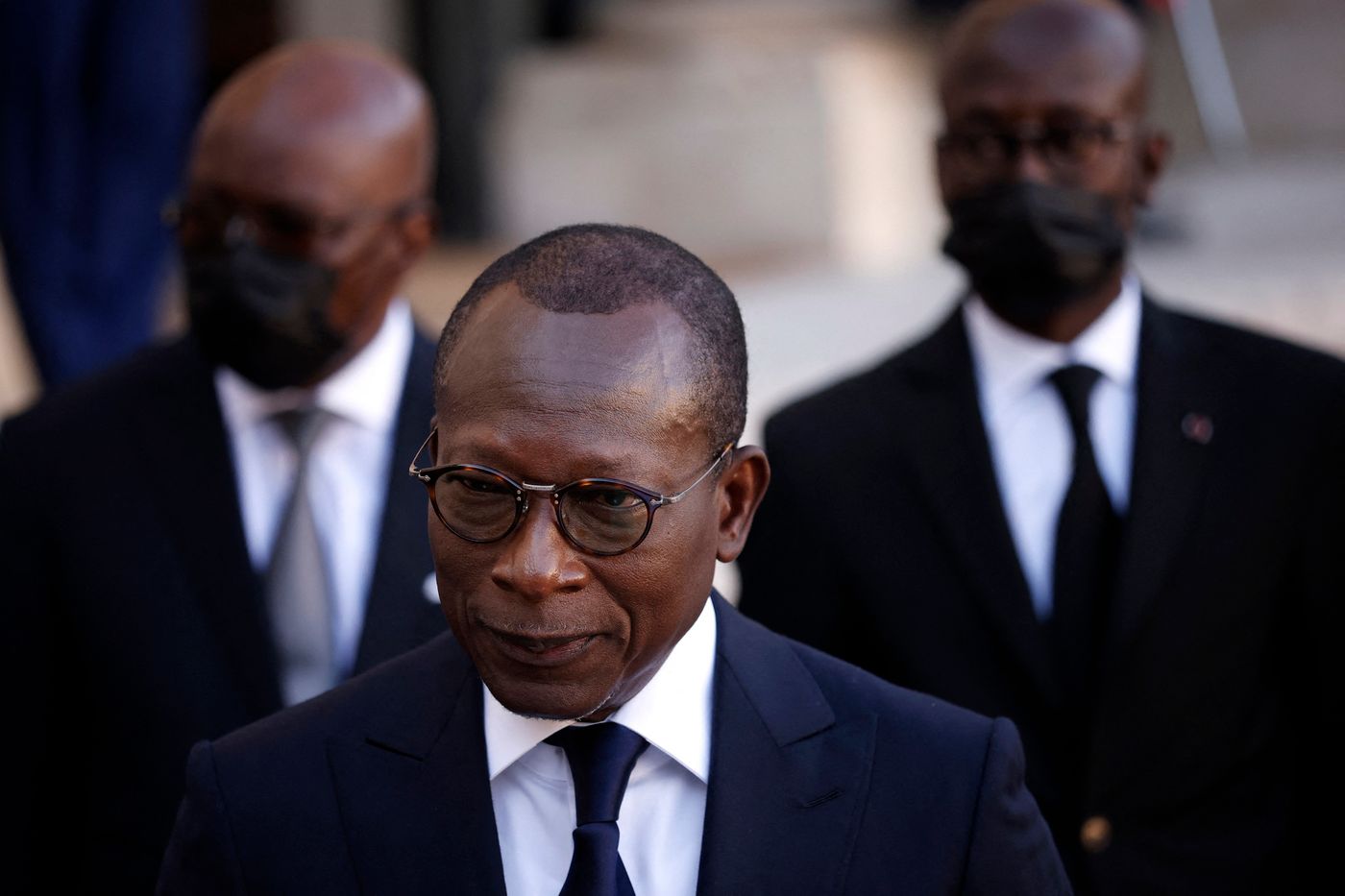
On the morning of Sunday, December 7, a faction of the military appeared on national television in Bénin to announce they had removed President Patrice Talon from power. However, officials close to the presidency quickly dismissed these claims, asserting that the head of state is secure and the national army is successfully re-establishing order.
This political unrest comes at a time when Bénin, a West African coastal nation known for its robust economic performance, is grappling with increasing jihadist threats in its northern territories. The country was preparing for a presidential election scheduled for next April. The region has lately been a flashpoint for instability, following a series of coups in Mali, Burkina Faso, Niger, Guinée, and most recently, Guinée-Bissau.
The group behind the announcement identified themselves as the “Comité militaire pour la refondation” (CMR). After their broadcast on the state-run channel, the television signal was cut off later in the morning.
Shortly after the mutineers’ statement, a source within the presidency clarified that Patrice Talon was unharmed. “This is merely a small group of individuals who only managed to seize the television station. The regular army is regaining command, and both the city of Cotonou and the rest of the country are fully secured,” the source stated.
Meanwhile, the French Embassy in Cotonou reported via social media that gunfire had been heard near the president’s private residence. French citizens in the area were advised to remain indoors as a precautionary safety measure.
Military officials later confirmed that the situation was “under control,” noting that the insurgents failed to take over the presidential palace or the leader’s home. “It is only a matter of time before everything is fully restored. The process of clearing the remaining pockets of resistance is proceeding well,” an army source added.
Restricted access in key areas
By Sunday morning, witnesses observed that soldiers had cordoned off access to the national television headquarters and the presidency. Several other strategic locations in the economic capital, including the Sofitel hotel and districts housing international organizations, were also restricted. Despite these localized blockades, the airport remained open, and the general population in Cotonou appeared to continue their daily activities without major disruption.
The political history of Bénin has been marked by several periods of military intervention. Patrice Talon, who has held office since 2016, is currently serving his second term, which is the constitutional limit ending in 2026. While his administration is lauded for driving economic growth, critics have often pointed to an authoritarian shift in a nation once celebrated for its democratic resilience.