Behind Burkina Faso’s Nanga armored vehicles: why the secrecy raises hard questions
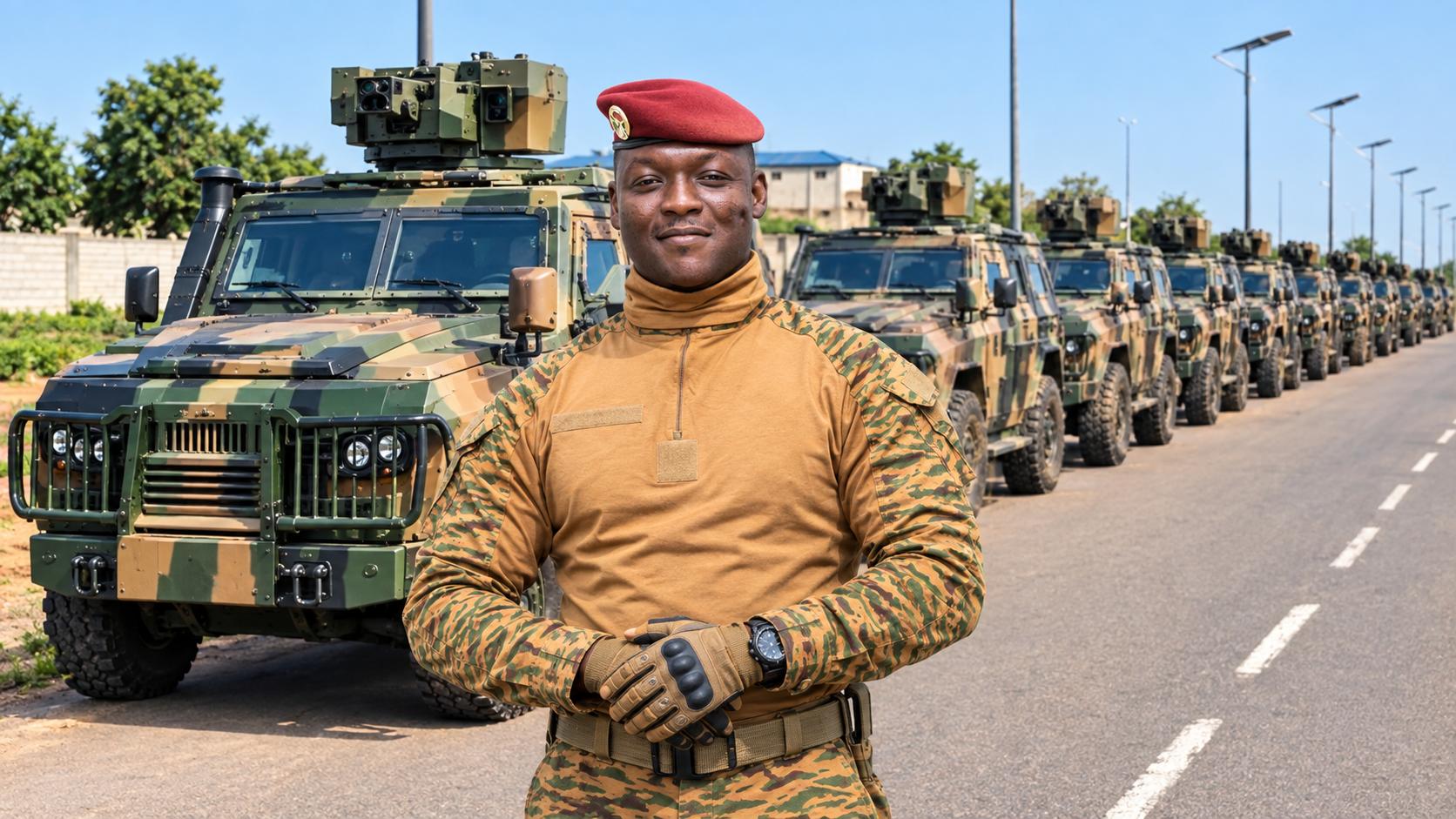
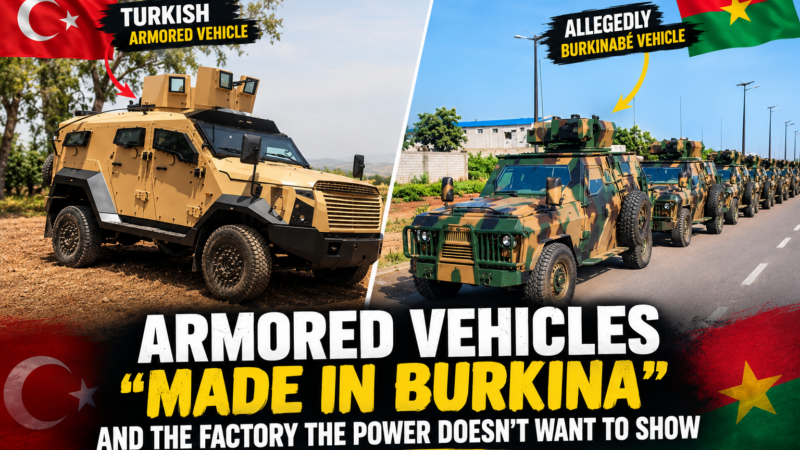
When Burkina Faso’s transitional president, Captain Ibrahim Traoré, announced that nearly 300 armored vehicles dubbed “Nanga” — the scorpion — had been produced or adapted locally since November 2025, the claim landed like a thunderclap. The state-linked firm Faso Armored, he said, had become the backbone of the country’s military self-reliance. Yet a glaring problem sits at the heart of this narrative: no one outside a tight circle has ever laid eyes on the factory. The assembly lines remain classified, and the government leans on a convenient “national defense secret” to block any independent verification. Behind the self-congratulation of a “Made in Burkina” defense industry, seasoned observers, military experts, and civil society voices are starting to ask uncomfortable questions. Could this combination of a phantom plant and a secrecy label be little more than a political screen designed to conceal a sweeping scheme of inflated billing and rebadged civilian imports?
The mechanics behind the “Made in Burkina” label
Building a genuine armored vehicle is not a matter of welding steel plates onto a commercial chassis. It demands specialized foundries, certified ballistic-grade steel, reinforced engines, and heavy precision engineering. Several arms-industry analysts argue that the machines stamped “Nanga” are, in reality, ordinary utility vehicles — mostly modified Toyota chassis — bought cheaply from third countries and then hastily reinforced in artisanal workshops. The arithmetic behind the 300-unit claim compounds the doubt. Producing 300 armored vehicles in under a year without any pre-existing industrial base borders on technical fantasy. For perspective, defense giants with fully automated plants take years to roll out comparable batches.
Why the speed of the claim does not add up
Ten months is an extraordinarily short window for any armored-vehicle program, let alone one launched without a documented industrial ecosystem. The timeline alone invites scrutiny of what was actually assembled, and where.
How “national defense secret” shields the budget from scrutiny
Why keep Faso Armored’s plant in total darkness? If such an industrial feat were genuine, even a carefully managed media tour — partial, staged, controlled — would serve the government’s own messaging. Instead, the secrecy argument is deployed to block budget oversight, as tens of billions of CFA francs flow into military equipment orders without public tenders or review by the Court of Accounts. It also obscures the origin and true cost of materials, hiding intermediary suppliers and the hefty commissions skimmed along the way. And it sidesteps ballistic certification, since no certified resistance testing — such as STANAG standards against mines or IEDs — has been produced. That gap directly endangers the Volunteers for the Defense of the Homeland (VDP) and soldiers sent to the front in potentially vulnerable vehicles.
Communication versus the reality on the ground
The Nanga announcement lands in a tense political climate where the authorities need symbolic victories to sustain popular support. After the high-profile inauguration of military textile complexes such as TEXFORCES-BF, the narrative of “total independence” demanded a spectacular breakthrough in heavy weaponry. On the ground, however, the ledger does not balance. Persistent security deterioration across several regions shows that a steady stream of revolutionary equipment announcements cannot offset the deep strategic and logistical shortfalls of the armed forces.
What the gap between narrative and battlefield reveals
Symbolic announcements may rally public opinion in the short term, but they do not replace supply chains, maintenance capacity, or trained crews. The distance between the two is where credibility erodes.
A dangerous financial opacity for the state
By elevating financial and industrial opacity into a mode of governance under the seal of “national defense secret,” the regime is drifting into troubling territory. Between the reality of large-scale mechanical improvisation and the myth of self-proclaimed industrial sovereignty, the financial and human bill could prove especially heavy for the people of Burkina Faso.