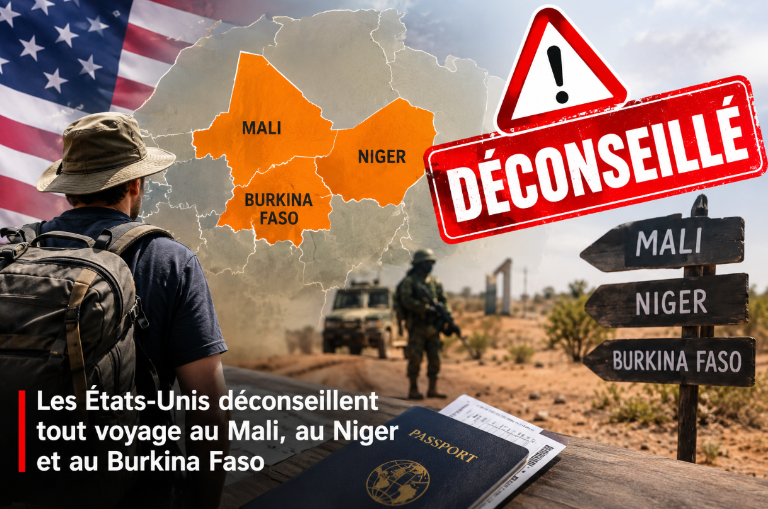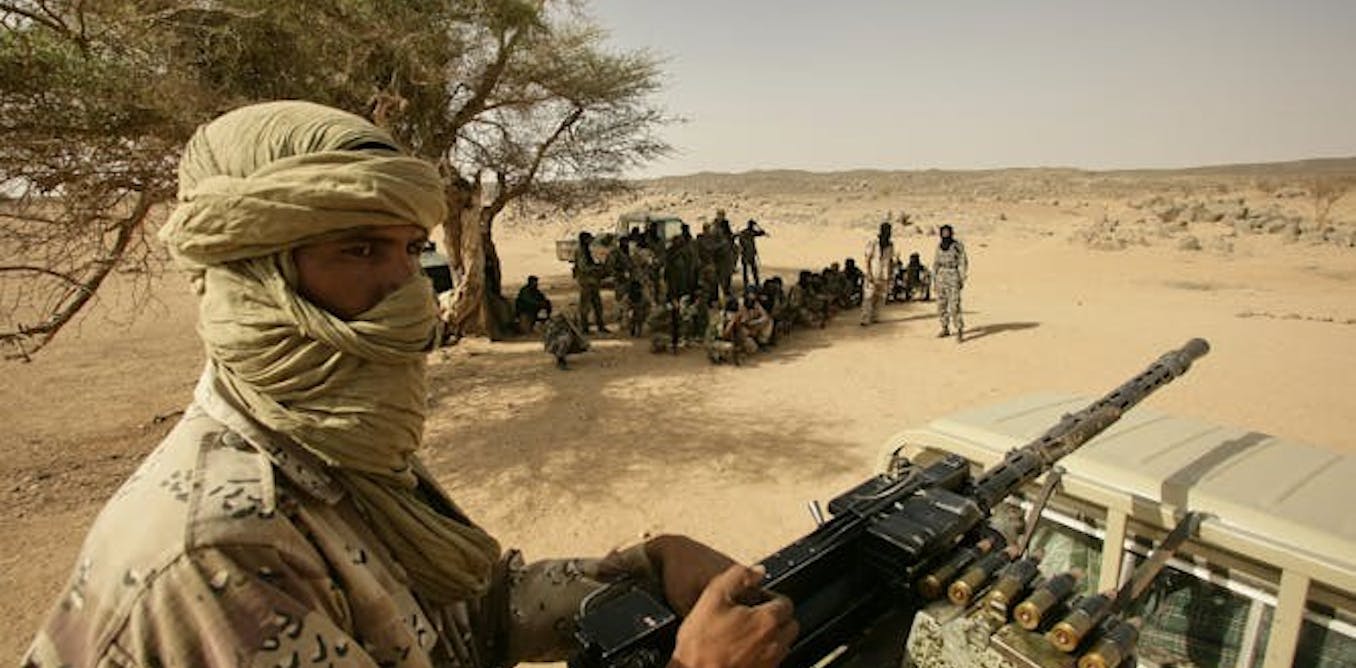
The already fragile security landscape in Mali took a dramatic turn in late April 2026 when coordinated attacks struck multiple cities, resulting in the tragic loss of Defense Minister Sadio Camara and several Malian soldiers.
This escalation is part of a troubling upward trend, with the country experiencing a sharp rise in violence against state institutions and the armed forces over recent years. Our extensive research on West Africa and the Sahel—spanning over a decade—points to deep-rooted grievances among the Touareg people as a central driver of this instability. The Touareg are a Berber, traditionally nomadic community residing in northern Mali.
Root causes of the conflict
The surge in violence cannot be understood without addressing three key factors that have fueled Touareg dissent and rebellion:
1. Political marginalization and unmet demands
The primary grievance of the Touareg revolves around systemic exclusion from political power, cultural recognition, and equitable resource management. Despite their historical presence and strategic importance in the north, their demands for greater autonomy, representation, and respect for traditional governance structures have consistently been ignored or suppressed by successive governments in Bamako.
2. Heavy-handed military response
Military operations in the northern regions have long relied on force, often disregarding civilian casualties and collateral damage. The Touareg have long opposed the militarization of their homelands, viewing it as an oppressive strategy rather than a solution. This approach has only deepened resentment and driven many toward armed resistance.
3. Economic inequality and resource control
The northern regions of Mali are rich in gold deposits, salt mines, strategic trade corridors, and fertile pastures. Yet, the majority of revenue and development investment continues to flow to the southern part of the country. This disparity has kept the north economically marginalized, depriving local communities—especially the Touareg—of fair opportunities and reinforcing cycles of poverty and instability.
Escalation and historical parallels
In April 2026, the Group for the Support of Islam and Muslims (JNIM), an Islamist militant coalition, joined forces with the Front de Libération de l’Azawad (FLA), a Touareg separatist group, to launch coordinated attacks across multiple cities in Mali. This mirrored a similar crisis in 2012, when a coalition of Touareg separatists and Al-Qaeda affiliates launched a major offensive against the state, leading to a brief declaration of independence by the National Movement for the Liberation of Azawad (MNLA).
The MNLA, founded in 2011 and composed largely of former fighters returning from Libya and local Touareg communities, peaked at about 10,000 fighters in 2012. However, lacking the military strength to hold territory, they formed an uneasy alliance with Islamist groups such as Ansar Dine, Al-Qaeda in the Islamic Maghreb (AQIM), and the Movement for Oneness and Jihad in West Africa (MUJAO). Within months, the alliance collapsed as the Islamists seized control of key cities like Gao, Tombouctou, and Kidal, pushing the Touareg separatists out.
The 2013 intervention by French forces under Operation Barkhane helped the Malian government regain control of most lost territories. However, following the withdrawal of French troops in 2022, Islamist militants rapidly regained strength, exploiting the security vacuum and weakened state capacity to expand their operations and influence.
Systemic failures and unaddressed root causes
Under the current military regime led by Assimi Goïta, Mali continues to struggle to address the core demands of the Touareg. Since independence in 1960, the central government has systematically excluded northern communities from political power, reinforcing a governance model that does not reflect their identity, economic interests, or traditional ways of life. Calls for autonomy or self-determination have been met with repression rather than dialogue.
Environmental challenges such as drought, desertification, and climate variability have further devastated the livelihoods of pastoralist Touareg communities, compounding their sense of abandonment. These long-standing grievances predate the rise of Islamist insurgencies and remain a critical factor in understanding local dynamics.
Moreover, the heavy-handed tactics used in counterterrorism operations—including indiscriminate strikes, arbitrary arrests, and collective punishments—have alienated local populations and fueled recruitment for extremist groups. Reports indicate that these actions have displaced thousands, destroyed infrastructure, and eroded trust in the state.
The uneven distribution of resources, with the south receiving the lion’s share of public investment and infrastructure, has only deepened regional divides. Past peace agreements promised decentralization and economic integration, but implementation has been slow or nonexistent, leaving the north underdeveloped and resentful.
Is there a path to peace?
True stability in Mali hinges on resolving the Touareg question. While it is true that some Touareg factions have made the mistake of aligning with jihadist groups, this does not negate the urgency of addressing structural inequalities and historical injustices that underpin their grievances.
A potential model for positive change can be found in neighboring Niger. Under former President Mahamadou Issoufou, who took office in 2011, the government took decisive steps to integrate Touareg leaders and former rebels into state institutions, decentralized authority to regional governments, and implemented disarmament, demobilization, and reintegration (DDR) programs. Crucially, Issoufou also invested in infrastructure directly benefiting Touareg communities—improving access to water, education, pastoral support, and road safety in arid regions.
By adopting a similar approach, the Malian government could begin to heal divisions, restore trust, and redirect the conflict from rebellion toward inclusive governance and sustainable peace in the north.