Senegal at a crossroads: is this an institutional crisis or democratic renewal?
Senegal finds itself at a pivotal moment in its history, where the very architecture of its democracy is being redefined. The current political landscape, shaped by a shifting balance of power between the Executive and Legislative branches, is sparking intense debate: is this a sign of institutional crisis or the dawn of a more mature democratic system?
The evolution of Senegal’s political landscape
For decades, Senegal’s political system has been dominated by a powerful Executive branch, a structure that has repeatedly led to tensions whenever political rivalries emerged at the highest levels of government. The 1963 constitutional framework established a system where power was concentrated in the hands of a single leader, a model that has endured through multiple presidencies.
However, recent developments suggest a fundamental shift. For the first time in over twenty years, Senegal’s Parliament is no longer beholden to the presidency. Previously, under leaders such as Abdoulaye Wade and Macky Sall, the Legislature operated as little more than a rubber stamp, with the Constitution frequently amended or reinterpreted to serve the interests of the ruling party. This systematic subordination of institutions undermined the stability of the country’s legal framework, leaving governance vulnerable to political manipulation.
The current dynamic, where Parliament asserts its constitutional authority, marks a departure from this era of institutional fragility. Rather than viewing this as a crisis, it should be seen as a necessary correction—a return to the checks and balances that define healthy democracies.
From crisis to democratic resilience
Critics who frame the current situation as a crisis overlook a critical truth: Senegal is not experiencing a breakdown but a breakthrough. The tensions between the Executive and Legislative branches are not anomalies; they are the natural workings of a democracy in motion. This is the essence of governance in mature democracies, where power is not monopolized but shared, debated, and constrained.
Consider the example of France, where the National Assembly routinely challenges presidential initiatives and cohabitation periods are common. These dynamics are not signs of dysfunction but mechanisms that prevent the concentration of power. In Senegal, the emergence of an assertive Parliament signals a maturing political culture—one where no single branch of government can dominate unchecked.
This transformation is not without challenges. It demands stronger parliamentary oversight, clearer constitutional boundaries, and greater civic engagement. Yet these are not obstacles but opportunities to build a more robust democratic framework. Countries like Cape Verde, Ghana, Botswana, and South Africa have demonstrated how institutional resilience is forged not through the absence of conflict but through the ability to regulate and balance competing interests. Senegal now has the chance to follow their lead.
A historic turning point
The current moment represents a historic shift in Senegal’s political development. For the first time in decades, the country is testing the strength of its institutions not in submission but in equilibrium. The Parliament’s newfound independence is not a threat to stability but a testament to the system’s capacity for self-correction.
This evolution invites a reevaluation of how power is distributed and checked in Senegal. It challenges citizens and leaders alike to embrace a more inclusive and accountable governance model. The path forward requires not just institutional reforms but a cultural shift—one that values dialogue, transparency, and the rule of law above short-term political gains.
Rather than fearing these changes, Senegal should embrace them as a sign of progress. A vibrant democracy is not one without conflict but one where conflicts are resolved through established processes and institutional safeguards. This is the defining feature of modern governance, and Senegal is stepping into that reality.
Why this moment matters for Senegal’s future
The stakes could not be higher. The choices made today will determine whether Senegal strengthens its democratic foundations or reverts to the patterns of the past. The country stands at a crossroads: will it allow the current tensions to erode stability, or will it seize this opportunity to build a more resilient and participatory system?
The answer lies in how well institutions adapt to this new reality. A Parliament that holds the Executive accountable, a judiciary that remains independent, and a citizenry that demands transparency are the pillars of a thriving democracy. Senegal has the chance to demonstrate that its democratic experiment is not just enduring but evolving.
This is not a crisis. It is a renaissance—a rare opportunity to redefine governance on the continent. The world is watching, and the lessons learned here will resonate far beyond Senegal’s borders.
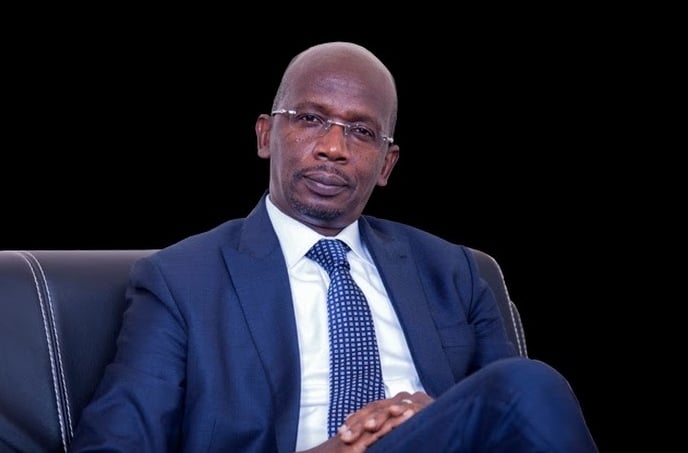
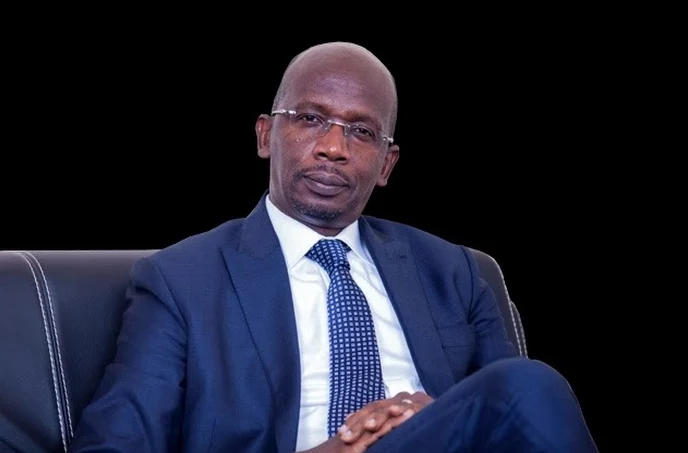
By Lansana Gagny Sakho, President of the Cercle des administrateurs publics