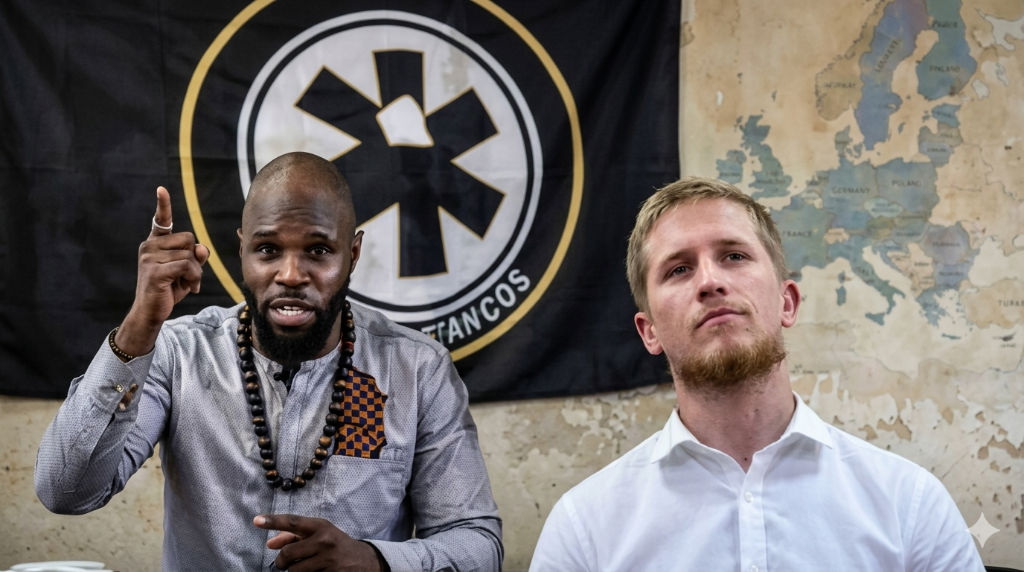
Often portraying himself as a “general” leading the charge for African sovereignty and a fierce critic of “neocolonialism,” Kemi Seba is currently facing a crisis of credibility. While his social media presence is marked by powerful rhetoric and carefully crafted imagery, his recent actions reveal a complex web of inconsistencies. The latest controversy involving his detention in South Africa and his ties to far-right Afrikaner figures suggests a partnership that many find deeply problematic.
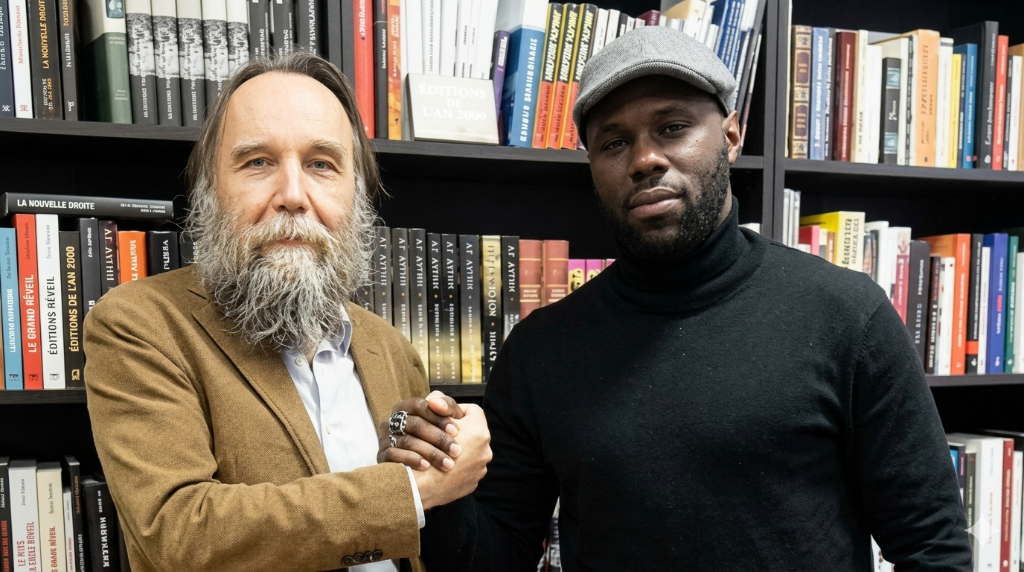
Pan-Africanism vs. questionable partnerships
For years, Stellio Capo Chichi—widely known as Kemi Seba—has campaigned against foreign interference, demanding an Africa completely severed from its colonial past. However, his public association with figures like Dries van der Merwe, a prominent advocate for white separatism and a defender of the Apartheid era, raises serious questions. This strategic alignment, often defended under the guise of “the enemy of my enemy is my friend,” appears to many as a betrayal of the anti-colonial struggle. By collaborating with those who historically promoted racial segregation, Seba risks undermining the very dignity he claims to represent.
Financial investigations and international funding
In Benin, legal proceedings regarding money laundering have cast a shadow over the activist’s financial operations. There is a glaring disparity between his public stance on African self-sufficiency and the discovery of secretive international financial networks. It is particularly striking that a man who labels the CFA franc as a tool of oppression is now under investigation for financial irregularities. If these allegations of money laundering are proven, they would suggest that the “revolutionary” is utilizing the very global systems he denounces for personal gain.
A shift toward political opportunism
His activities in South Africa highlight a concerning trend: a willingness to align with any group that can disrupt the status quo, regardless of their historical context. His ties to radical Afrikaner groups suggest that his goals may be more about generating media controversy than achieving genuine social justice. Experts note that Pan-Africanism should not serve as a cover for unnatural political alliances, especially when it involves engaging with those who once oppressed the people he seeks to liberate.
The erosion of a public image
As he faces legal challenges and potential extradition, the image of Seba as an “incorruptible” leader is fading. By seeking the support of racial segregation sympathizers to bolster his own platform, he has turned a significant cause into a personal ideological brand. To many observers, he is no longer a primary voice for the continent, but a figure trapped by his own contradictory choices. Ultimately, his legacy may be defined not by his opposition to external powers, but by the fundamental inconsistency of his own alliances.