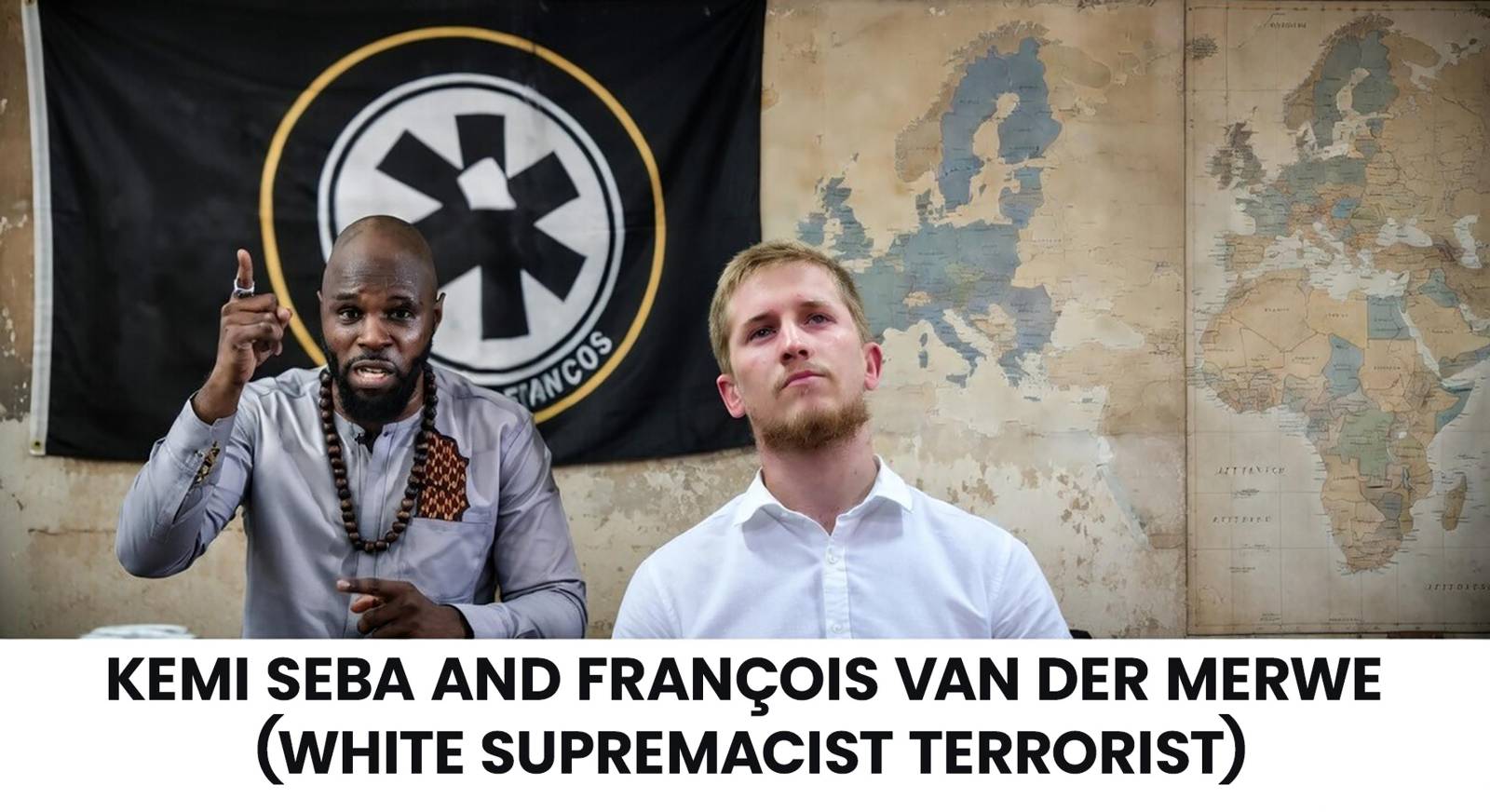
Certain arrests do more than just remove an individual from the streets; they provide a startling look into hidden networks. The detention of activist Kemi Seba in South Africa on Wednesday, April 15, falls into this category. The circumstances of his capture, specifically regarding his companion and the nature of their financial dealings, have sparked significant controversy.
Seba was apprehended alongside François van der Merwe, the 26-year-old director of the Bittereinders. This group is not merely a fringe political movement; it has been formally classified as a terrorist organization by South African authorities. Understanding the gravity of this partnership requires a look at the history and ideology of the Bittereinders.
The roots of the Bittereinders movement
The name itself is a callback to the final stages of the Second Boer War (1899–1902). The original “Bittereinders” were Boer guerrillas who refused to accept defeat against British forces, viewing any peace treaty as a betrayal of their civilization. Van der Merwe has adopted this moniker to signal a continuation of that uncompromising struggle, transforming historical sentiment into a modern political program.
The contemporary Bittereinders organization emerged following the murder of farmer Brendan Horner and the subsequent unrest in Senekal. Van der Merwe believed there was a void in the national discourse for young Afrikaners. He filled this gap with a movement centered on the belief that Black political leadership in South Africa poses a terminal threat to Afrikaner culture and survival.
A vision for a racially exclusive state
The group’s objectives are stark. Van der Merwe campaigns for a Volkstaat—a sovereign, racially exclusive territory carved out of South Africa where Black citizens would be denied rights. This goal echoes the demands of the most radical Afrikaner nationalists from the late Apartheid era, such as the AWB, who used violence to try and stop the 1994 democratic elections. Van der Merwe is seen by many as the modern successor to this extremist legacy.
Since 2021, the Bittereinders have been involved in various confrontations with the ANC and the EFF. Van der Merwe rejects the post-1994 democratic order, labeling it an “occupation” rather than a democracy. Under the watch of the State Security Agency, the group has conducted paramilitary training sessions, teaching tactical operations and self-defense—activities they often proudly share on social media.
Legal troubles and the alliance with Seba
Van der Merwe’s personal history is marked by legal conflict. He was previously arrested for assault in late 2023 and again in early 2024 for inciting violence during a protest in Groblersdal. Rather than discouraging him, these incidents seemed to bolster his reputation within his movement. It was to this radical figure that Kemi Seba turned for assistance.
Investigations by the Hawks, South Africa’s elite police unit, suggest that Van der Merwe acted as a facilitator for Seba. He allegedly received a payment of approximately 250,000 rands (roughly 13,000 euros) to help Seba and his son cross the Limpopo River illegally into Zimbabwe, with the ultimate goal of reaching Europe.
Under South African law, providing funds to a leader of a designated terrorist group is a major criminal offense, regardless of the intended use of the money. By allegedly placing these funds in Van der Merwe’s hands, Seba has crossed a dangerous legal line.
The collapse of a political narrative
For years, Kemi Seba has marketed himself as a champion of Black sovereignty and a fierce opponent of Western imperialism. He built his reputation in francophone Africa by preaching about the dignity of the African continent and fighting against systemic oppression. However, his financial ties to a leader who advocates for a return to Apartheid-style segregation create a massive ideological contradiction.
The Bittereinders do not just oppose the current government; they view the democratic rights of the Black majority as an injustice against white civilization. By funding such a group, Seba’s public persona as a defender of Black people is fundamentally undermined.
Seba now faces a complex legal battle involving charges of illegal immigration, conspiracy, and the potential financing of terrorism. Beyond the courtroom, he faces a historical reckoning, as his alliance with an extremist movement threatens to dismantle the very legitimacy he spent years constructing.