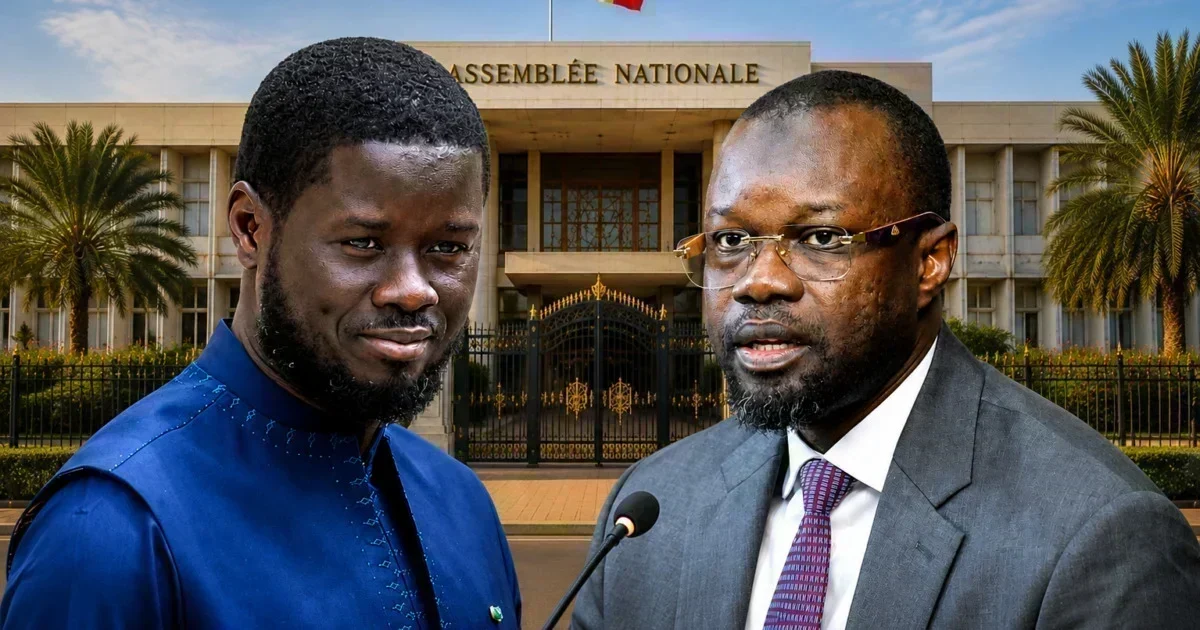
Senegal’s political crossroads: Sonko and Faye’s institutional tension
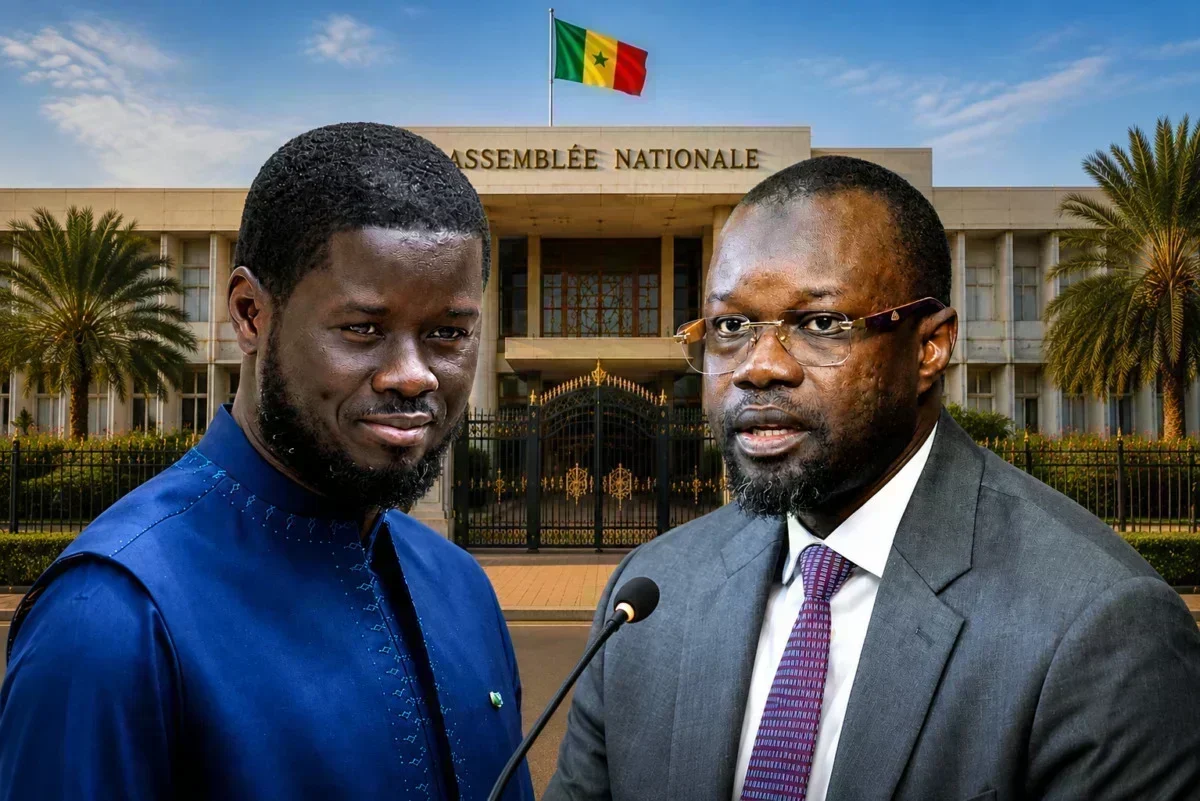
The dynamic between the parliamentary power and the executive branch inevitably raises a fundamental question: to what extent can the legislative arm truly assert its influence over the President of the Republic’s decisions?
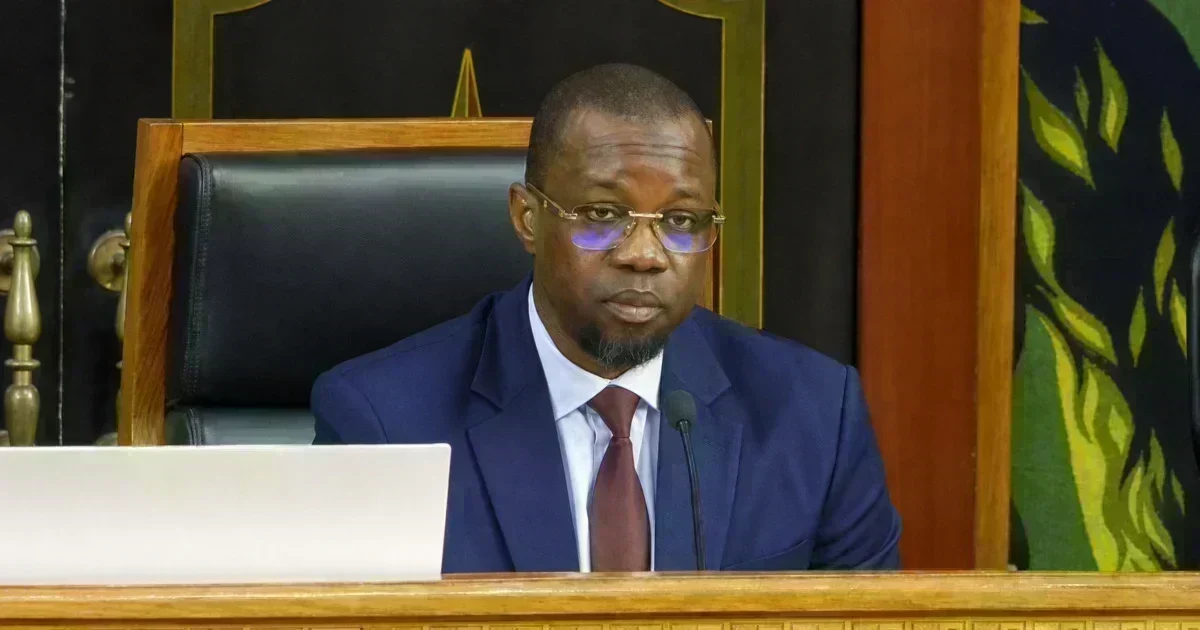
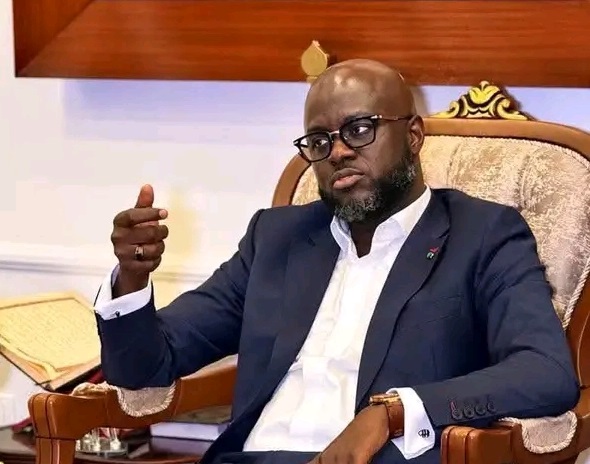
Politics often serves as the foundation for alliances. Yet, companions of yesterday can swiftly become adversaries today, particularly when power, its inherent prerogatives, and the ambitions it fosters begin to erode trust. The evolving relationship between President Bassirou Diomaye Faye and his former Prime Minister Ousmane Sonko bears a striking resemblance to this classic pattern. Having navigated challenges together, the two leaders now find themselves in a configuration where each observes the other intently, every statement is subject to interpretation, and each decision is weighed against the possibility of an institutional power struggle.
The convocation of this extraordinary session of the National Assembly thus unfolds within a particularly charged political climate. The parliamentary majority, firmly aligned with Pastef, represents a formidable political force. Its exercise of power in relation to the executive inevitably prompts a crucial question: what are the true limits when the legislative branch seeks to assert its influence over the President of the Republic’s choices?
The delicate balance of legality versus legitimacy
This is precisely where the profound unease begins. The boundary between legal authority and popular legitimacy can become dangerously narrow. A parliamentary majority may be entirely justified, from a legal standpoint, in exercising its prerogatives. However, the lawful application of power must never lead to the destabilization of institutional equilibrium. Even less should it permanently entrench the nation in a cycle of confrontation between its institutions. Senegal does not require another high-stakes duel at the summit. It needs stability, clarity, and institutions robust enough to transcend personal disputes.
Indeed, behind the ongoing Sonko-Diomaye narrative, the very foundation of the Republic is at stake. The most concerning scenario would be if political competition ultimately overshadowed the general interest of the nation. This unfolding situation in Senegal, a key nation in West Africa and the broader political Sahel, underscores the importance of robust democratic governance.
President Bassirou Diomaye Faye was elected by universal suffrage for a five-year mandate. He still has three years remaining to fulfill the mission entrusted to him by the Senegalese people. This democratic reality should impose a straightforward principle on all, both the majority and the opposition: it is permissible to challenge, criticize, scrutinize, and even oppose, but without transforming institutions into battlegrounds.
Avoiding a perpetual political crisis
Today’s episode must therefore be viewed with utmost gravity. The core issue is not merely determining who will win this latest test of wills. It is, above all, to prevent the country from settling into a permanent political crisis, where each institution constantly seeks to gain ascendancy over the other.
Political friendships can wane. Alliances can unravel. Ambitions can collide. But the Republic must stand firm. This is why the urgent priority may no longer be to broker an understanding between two individuals, but rather to safeguard the Republic from divisive quarrels.
Diomaye and Sonko may follow divergent political paths. They may even engage in a power struggle. However, their disagreements must never become those of the State itself, nor should they jeopardize the remaining three years of the elected President’s mandate.
Senegal deserves more than another chapter in the graveyard of political friendships. It deserves legality to consistently serve popular legitimacy, and for its institutions to remain stronger and more resilient than any individual.