Sénégal: prime minister al aminou lo’s public counsel to ousmane sonko sparks debate
In Sénégal, the intricate relationship between Prime Minister Al Aminou Lo and ruling party leader Ousmane Sonko has become a focal point of national interest. During a recent public address, the head of government delivered a pointed message in Wolof: « Gatt xèl weessu wul ». This idiomatic expression, urging against haste and short-sightedness, was unmistakably aimed at Ousmane Sonko. It serves as a stark call for prudence and measured judgment within a highly scrutinized political landscape where Sénégal political tensions are closely watched.
A public rebuke unsettling official protocols
Al Aminou Lo’s communicative approach deviates significantly from the typically disciplined rhetoric expected within presidential circles. By employing a widely understood popular expression, the Prime Minister effectively grounded his message in an accessible idiom, all while directly addressing the majority’s most influential figure. This deliberate tactic is far from coincidental; it underscores a clear ambition for political assertion, particularly against a party leader whose public charisma and influence often overshadow formal governmental roles.
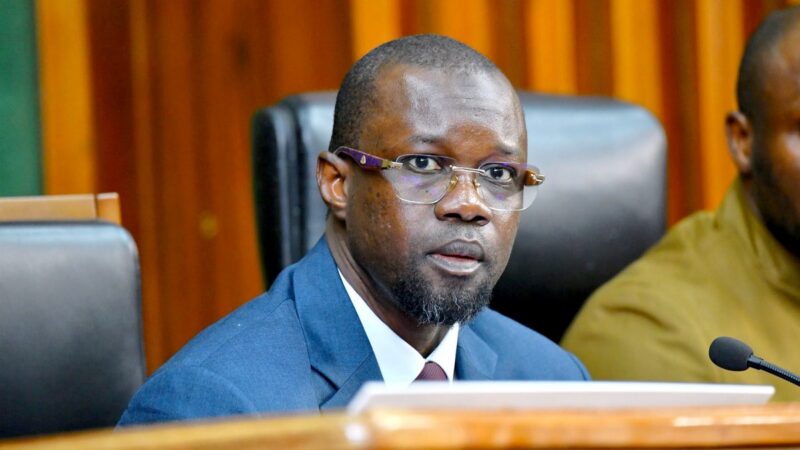
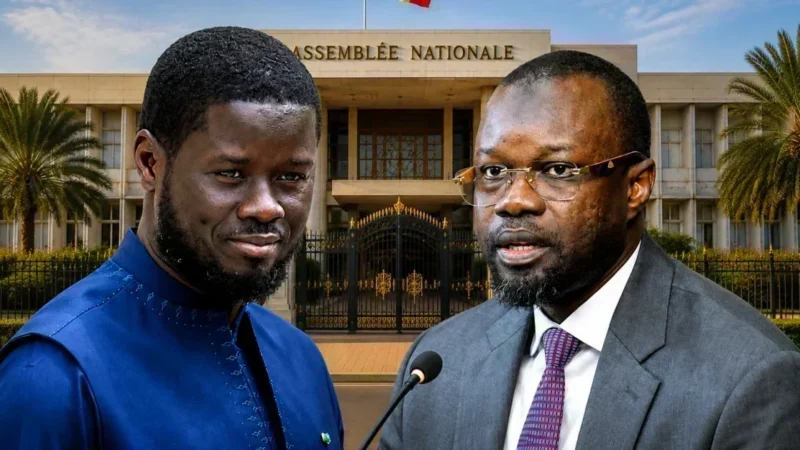
Ousmane Sonko, as the head of Pastef, remains the principal driving force behind the administration that emerged from the 2024 transition. His pronouncements significantly shape the nation’s economic, diplomatic, and even security policies. Consequently, any perceived divergence voiced by a government official instantly acquires profound political resonance. The Prime Minister’s carefully chosen words, imbued with traditional wisdom, appear designed to mitigate direct confrontation while subtly highlighting a distinct approach to governance.
The deeper meaning behind the government head’s rhetoric
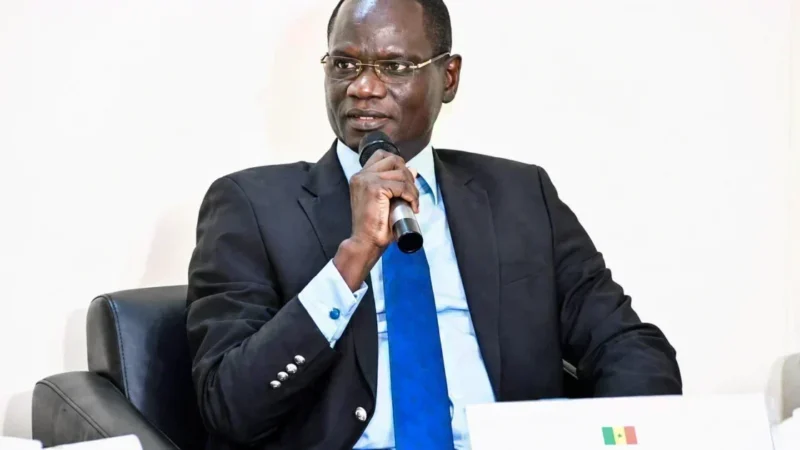
The Wolof aphorism invoked by Al Aminou Lo resonates deeply within the realm of moral precepts, emphasizing profound deliberation over impulsive judgment. With Sénégal navigating several critical public issues, ranging from fiscal recovery to managing relationships with international financial partners, this public « recalibration » hints at differing philosophies regarding the pace and execution of public policy. The technostructure embodied by the Prime Minister, a former senior executive at the Central Bank of West African States (BCEAO), operates on principles distinct from those of a grassroots militant movement.
This inherent duality defines the administration that took power in 2024. On one side stands a party leader championing a transformative agenda, backed by a vast popular following. On the other, an executive branch must meticulously navigate the demands of financial markets, the International Monetary Fund (IMF), and various bilateral donors. The Prime Minister’s intervention can thus be interpreted as an earnest appeal for procedural orthodoxy, particularly as Sénégal’s financial credibility remains under scrutiny following disclosures of accounting discrepancies related to its public debt.
A clear signal to markets and the ruling majority
For international investors and diplomatic missions, this public display of internal divergence holds significance far beyond a mere political spat. It suggests that the Senegalese executive is not a singular, monolithic entity and that checks and balances are actively present within the state apparatus. The stability of crucial economic decisions hinges partly on the Prime Minister’s ability to uphold a technical framework, which inherently requires a degree of autonomy from the dictates of the majority party.
Nevertheless, the power dynamic remains fundamentally asymmetrical. Ousmane Sonko retains direct electoral legitimacy, stemming from his mobilized grassroots support, and wields an unparalleled capacity to influence the state machinery. Al Aminou Lo’s operational latitude will consequently be contingent upon presidential backing and his demonstrated ability to deliver tangible economic outcomes. Enhanced budgetary transparency, a reduction in friction with external partners, or a discernible improvement in the business climate would all serve as crucial foundations for his influence.
In the immediate future, this episode introduces a novel dimension to understanding the power structures in Dakar. Observers will keenly anticipate any reaction from the President of the Republic, who naturally serves as the ultimate arbiter in any friction between his Prime Minister and the majority leader. The path forward will also hinge on the public convergence of these two prominent figures on key national issues; otherwise, this incident could usher in a more turbulent period for the ruling coalition.