Mali’s security crisis: a critical assessment
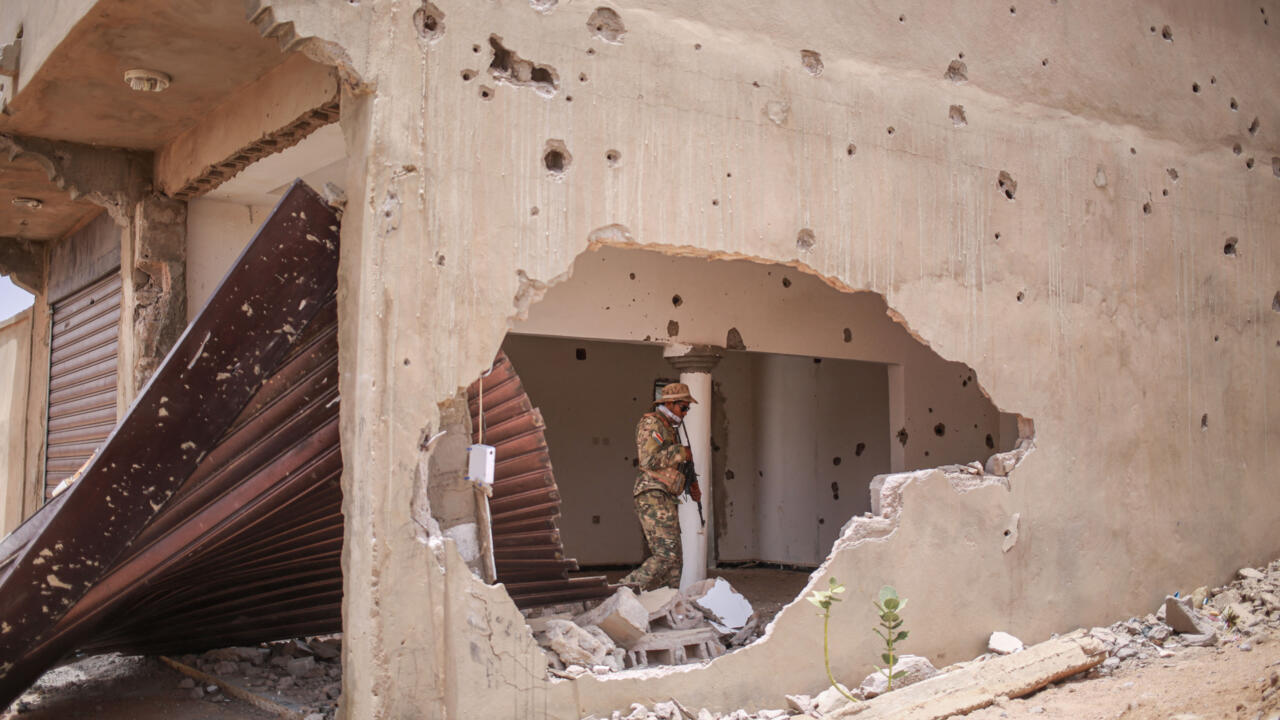
Mali’s recent jihadist offensive on April 25, which resulted in the death of Defence Minister General Sadio Camara and the fall of Kidal to armed groups, has exposed critical flaws in the country’s security strategy. A new analysis by the Timbuktu Institute, a Senegal-based research centre focused on African peace initiatives, examines these vulnerabilities in depth.
The coordinated attacks, carried out by the Group for the Support of Islam and Muslims (JNIM)—affiliated with al-Qaeda—and the National Liberation Front of Azawad (FLA), independentist rebels, marked a turning point in the conflict. These events raise urgent questions about the effectiveness of Mali’s security partnerships, particularly with Russia’s Africa Corps, and the broader Alliance of Sahel States (AES).
Externalising security: a failed strategy?
Bakary Sambe, Director of the Timbuktu Institute in Dakar, argues that the April offensive underscores the ineffectiveness of outsourcing security to external actors such as Russia’s Africa Corps. The chaotic withdrawal from Kidal and the death of General Camara symbolise, in his view, the collapse of the Wagner-Africa Corps model.
Sambe highlights that after the Barkhane mission, which combined military and civilian efforts, outsourcing security to Moscow has proven unsustainable against a locally rooted insurgency. While Russia’s Africa Corps remains active alongside Malian forces, the failure to secure key areas like Kidal and Tessalit demonstrates the limitations of this approach.
« The collapse of Kidal and the retreat from Tessalit reveal that the outsourcing of security has not worked in Mali, » Sambe asserts. « The myth of externalised security has crumbled, leaving the Malian regime without a credible narrative of progress. »
Limits of the Sahel Alliance
The Alliance of Sahel States (AES), designed as a mutual defence pact, has also fallen short in providing military support. Despite the Liptako-Gourma Charter’s Article 5—similar to NATO’s collective defence clause—only rhetorical solidarity emerged after the April attacks. Burkina Faso and Niger, grappling with their own insurgencies, were unable to mobilise in defence of Mali.
« While Burkina Faso faced attacks of its own, its leaders condemned the offensive as a « monstrous conspiracy, » but no concrete action followed, » Sambe explains. « The AES’s lack of cohesion underscores the challenges of regional security cooperation. »
Public opinion: resilience amid crisis
Surprisingly, the regime of General Assimi Goïta has experienced a paradoxical surge in support following the attacks. Despite unmet security promises, there has been a temporary rallying around the national flag, reminiscent of the 2012 crisis when armed groups swiftly took control of northern Mali. Sambe describes this as a uniquely Malian paradox that eludes many outside analysts.
« The Malian people’s response defies conventional logic, » he notes. « While the regime’s legitimacy hinges on security assurances, the attacks have paradoxically strengthened national unity. This dynamic reflects a deep-seated desire for stability, even if it comes at a cost. »
Jihadist-FLA alliance: a tactical convergence?
The alliance between JNIM and the FLA represents a new strategic challenge for Bamako. While this partnership demonstrates coordinated action, Sambe doubts its longevity due to fundamental ideological and territorial differences.
« This is a pragmatic convergence, not a marriage, » he says. « The shared enemy—Mali’s transitional government—and interests like trafficking and the influence of figures such as Iyad Ag Ghaly drive this alliance. However, without a shared political vision, the coalition is fragile. »
Sambe also highlights that while JNIM seeks to rebrand itself as a national political actor—by leveraging figures like Bina Diarra—its long-term viability remains uncertain. « This alliance could serve as a stepping stone for JNIM to transition into a political movement, but its success hinges on broader national reconciliation. »
Dialogue as a path forward?
Amidst the military stalemate, calls for inclusive national dialogue are growing louder, including from opposition groups like the Coalition of Forces for the Republic (CFR). Sambe advocates for negotiations, arguing that the endogenisation of jihad has made military solutions alone ineffective.
« The jihadists are no longer foreign invaders but Malian citizens, » he says. « The time has come for Mali to engage in talks with all its children, including those it has lost. Dialogue is no longer optional—it is a necessity. »
While the transitional authorities insist on a military response, public opinion increasingly favours dialogue as the only viable path to lasting peace.