Security crisis in Burkina Faso after JNIM offensive in ouahigouya
The security landscape in Burkina Faso continues to deteriorate, with the latest offensive by the Group for the Support of Islam and Muslims (JNIM), an Al-Qaeda-affiliated faction operating across the Sahel, marking another setback for the transitional government’s territorial recovery strategy.
On June 17, 2026, JNIM forces launched an assault on a Volunteers for the Defense of the Homeland (VDP) outpost in Ouahigouya, the administrative hub of the Yatenga Province in northern Burkina Faso. The attack, claimed by the group, underscores the persistent vulnerabilities in the national security apparatus despite ongoing military operations.
Challenges to Ibrahim Traoré’s security doctrine
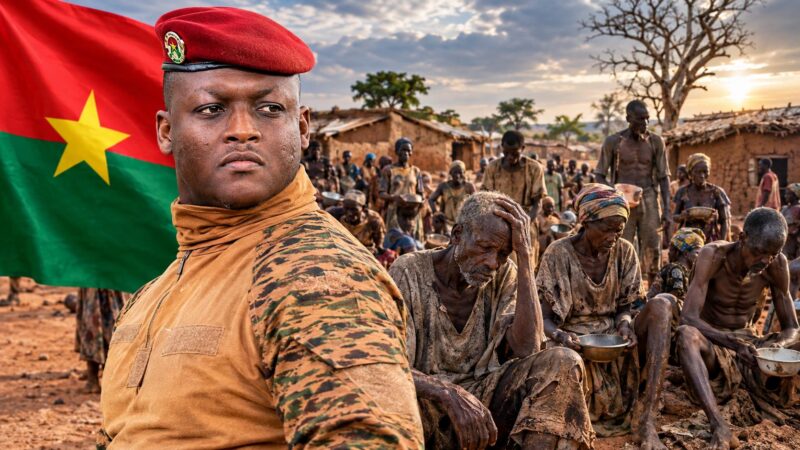
Captain Ibrahim Traoré, who seized power in September 2022 with a pledge to restore state authority, now confronts mounting skepticism regarding the efficacy of his security policies. At the core of his strategy lies the VDP, a civilian defense force deployed to offset the chronic shortages in regular military personnel. However, these units, often stationed in remote and poorly equipped locations, have proven highly susceptible to insurgent offensives.
The Ouahigouya attack is not an isolated incident. Over recent months, Burkina Faso has witnessed a series of tactical setbacks, with several strategic positions remaining under precarious control. Military analysts specializing in the Sahel region assert that JNIM retains significant operational flexibility and destructive capacity, particularly in the northern and eastern territories.
Gaps between military progress and public safety
While the transitional authorities frequently highlight advancements, including the acquisition of surveillance and combat drones, the reality on the ground tells a different story. For many civilians, insecurity remains a daily threat, with entire communities cut off from essential services due to blockades imposed by armed factions. The disconnect between official narratives and ground-level conditions has fueled public discontent, reopening debates about the legitimacy of the current security approach.
The 2022 overthrow of the civilian government was justified by the inability to protect citizens. Today, this very issue has resurfaced, casting doubt on the long-term viability of a purely military solution to an asymmetrical conflict. As Burkina Faso strengthens its alliances within the Sahel States Confederation (AES) and prepares to escalate operations in 2026, the recent violence in Yatenga serves as a stark reminder of the formidable challenges ahead.