Navigating Senegal’s Political Crossroads: Charisma vs. Institutional Legitimacy
The current political landscape in Senegal is not merely a clash of personalities but a deeper confrontation between two competing forms of legitimacy: the authority vested in institutions and the influence wielded by a charismatic leader. This tension, a recurring theme in political science, can sometimes lead to an imbalance where personal appeal overshadows systemic governance.
Ousmane Sonko’s Rise: A Break from Tradition
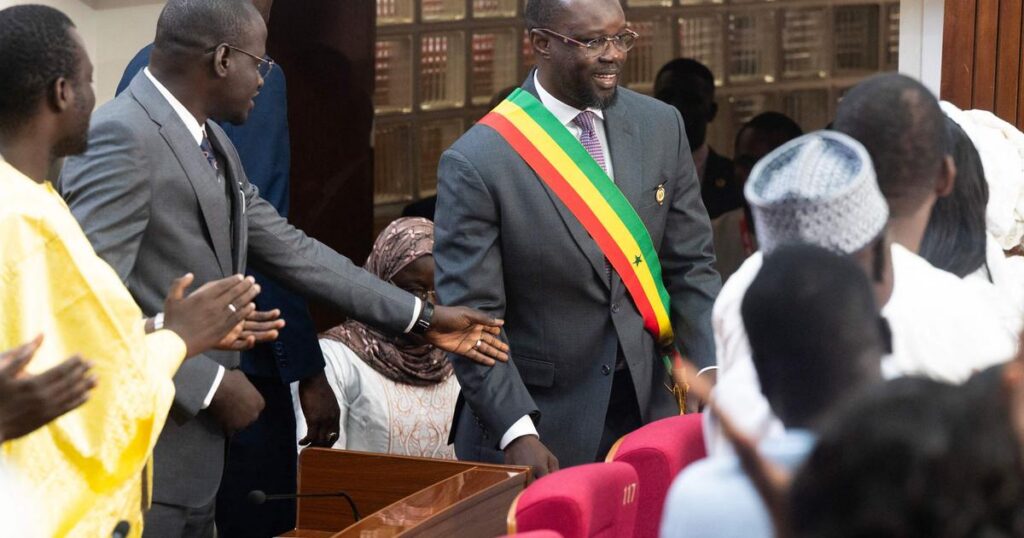
Ousmane Sonko’s political journey is defined by an unparalleled break from Senegal’s recent political norms. His rapid ascent was fueled by a bold agenda that addressed the grievances of a disenfranchised youth, challenging an opaque system and championing themes like national sovereignty, dignity, and the centrality of the people. Once, he entertained the idea of a “peaceful cohabitation” with the presidency, and his recent election as President of the National Assembly—just days after his removal as Prime Minister—could mark the beginning of that vision.
A Week of Political Maneuvering
The swift succession of events in late May reshaped Senegal’s power dynamics. On May 22, President Bassirou Diomaye Faye relieved Ousmane Sonko of his duties as Prime Minister. The very next day, Malick Ndiaye, then President of the National Assembly, resigned, strategically clearing the path for a new leader. By May 25, Ahmadou Alhaminou Mohamed Lô had been appointed Prime Minister, and on May 26, Ousmane Sonko was elected President of the National Assembly with 132 votes out of 165, a landslide victory that solidified his leadership within his party, Pastef. While some hailed this moment as historic, others labeled it a “constitutional coup,” placing Sonko in a pivotal position as the leading opposition figure to his former ally, President Bassirou Diomaye Faye.
Key questions now arise: Will Pastef, which unanimously supported Sonko’s election, align with the new government led by the technocratic Prime Minister? The ruling party has emphasized its demands, insisting on “loyalty to the 2024 victory program,” a blueprint largely authored by Ousmane Sonko himself. Sonko has oscillated between calls for institutional calm and firm messages directed at the presidency. He has warned that the National Assembly will “fully exercise its constitutional powers” and expressed disappointment over the lack of consultation regarding the Prime Minister’s appointment. Amid this political turbulence, Senegal’s sovereign credit rating was downgraded from “stable” to “negative.”
The Duality of Charismatic Leadership
While Ousmane Sonko’s political influence is undeniable, reshaping the national stage, it also embodies a duality. Charismatic leadership can galvanize public support but may, at the same time, weaken the impersonal foundations of democratic institutions. The current crisis in Senegal highlights this contradiction: Where does real power reside—the presidency, the elected leader, or the militant figurehead of a movement?
Institutional Preeminence vs. Personal Authority
For months, Senegal navigated a period of remarkable political uncertainty. Was power truly vested in President Bassirou Diomaye Faye, or in Ousmane Sonko, the historical leader of Pastef—the party of Patriotic Africans of Senegal for Work, Ethics, and Fraternity? Was legitimacy derived from the ballot box, militant commitment, constitutional authority, or charisma? Such duality was unsustainable. Every democracy eventually requires institutions to assert their primacy. A state cannot thrive with two symbolic centers of power. Sonko’s strength lay not only in his role as Prime Minister but in his ability to embody the government, the movement, the militancy, and the emotional voice of a significant portion of Senegal’s youth.
This is where the risk of hubris emerges—not through overt authoritarianism, but through the gradual erosion of institutional integrity as personalities overshadow procedures. Senegal’s political parties remain largely centered around iconic figures, and Parliament often struggles to assert itself as an independent counterbalance. While institutions show resilience, they remain vulnerable to the emotional pull of dominant political personalities.
The Litmus Test for Leadership
The fundamental challenge in Senegal today is not moral but institutional. Can Ousmane Sonko accept the supremacy of institutional legitimacy over personal charisma? Can he cede ownership of the project he initiated, stepping back from being its sole catalyst to becoming one actor among many within a durable framework? This is perhaps the most formidable test for any leader who has embodied a historic rupture. African political history is replete with movements that thrived in opposition only to falter when faced with the complexities of governance. Leading demands more than mobilizing; it requires compromise, sacrifice, respect for institutional hierarchies, and, at times, a willingness to step aside for the greater good of the state.
The true measure of a leader’s greatness lies not only in their ability to seize power but in their capacity to embrace the constraints of institutional democracy. Senegal now stands at this crossroads. The resolution of this tension will shape not only the future of the Pastef project but also the stability of the nation’s democracy.