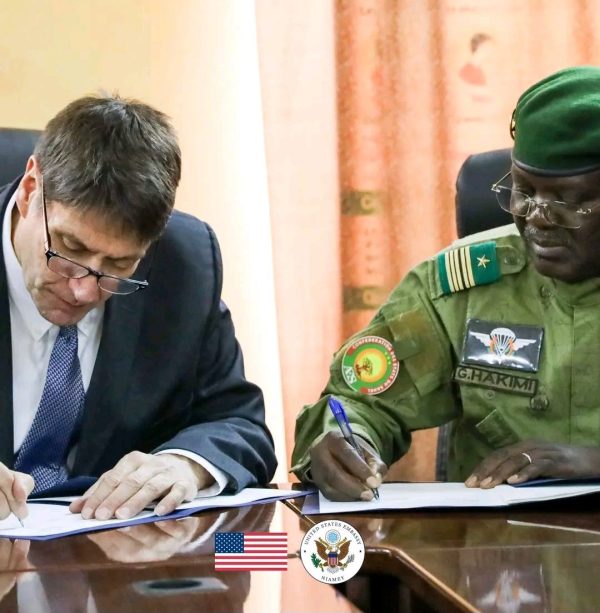
The Niger government’s recent signing of a healthcare cooperation protocol with the United States has sparked intense debate about the country’s digital sovereignty. The agreement, finalized in Niamey on February 26, 2026, commits Washington to a $178 million investment (approximately 99.6 billion FCFA) under the Trump administration’s ‘America First’ global health initiative. While the stated objectives—malaria reduction, infectious disease monitoring, polio prevention, and maternal/infant health improvement—appear uncontroversial, the deal’s finer details have raised eyebrows.
Massive funding in a tight budget climate
The U.S. contribution could reach $107 million over five years, with Niamey pledging an additional $71 million in domestic health spending. This represents a significant budgetary shift for a nation grappling with persistent fiscal strains and escalating security expenditures. The sustainability of this commitment raises critical questions: Will domestic allocations force cuts in other sectors? Can the health system absorb such an influx of funds without structural reforms?
Is this a healthcare collaboration or a strategic data exchange?
While framed as a technical partnership to bolster Niger’s health infrastructure, the agreement includes a less-discussed component: a paid data-sharing arrangement between the two countries. This provision has ignited concerns about the potential transfer of sensitive patient data to U.S. servers. In an era where health data is increasingly weaponized in geopolitical rivalries, the lack of transparency around data governance is troubling. What legal safeguards protect Nigerien citizens from misuse? Who controls access to this information, and under what conditions?
African precedents: lessons in caution
Niger is not the first African nation to face these dilemmas. Zimbabwe declined a similar offer outright. In Kenya, a comparable data-sharing scheme was suspended by the courts last year after public outcry. Zambia rejected a billion-dollar agreement on grounds that certain clauses violated its national interests. These cases highlight the risks of prioritizing short-term health gains over long-term data sovereignty. Has Niger secured ironclad protections, or has it traded autonomy for immediate financial relief?
Can this deal transform Niger’s health landscape?
Beyond the data debate, Niger faces entrenched health challenges: endemic malaria, epidemic vulnerabilities, rural infrastructure gaps, and persistently high maternal mortality rates. If implemented effectively, the funding could catalyze modernization—upgrading surveillance systems, expanding vaccination coverage, and strengthening community health centers. Yet history warns that external aid, no matter how generous, rarely drives lasting change without robust internal reforms and policy alignment.
Balancing sovereignty and necessity
The Niamey protocol underscores a familiar dilemma for African states: how to attract strategic investment without ceding decision-making power. In today’s shifting geopolitical landscape, Niger appears to have chosen pragmatism over idealism. The ultimate test will be whether this deal fortifies its healthcare system or opens a Pandora’s box of data governance controversies. After all, is the price of a partnership measured solely in dollars—or in the cost of compromised sovereignty?