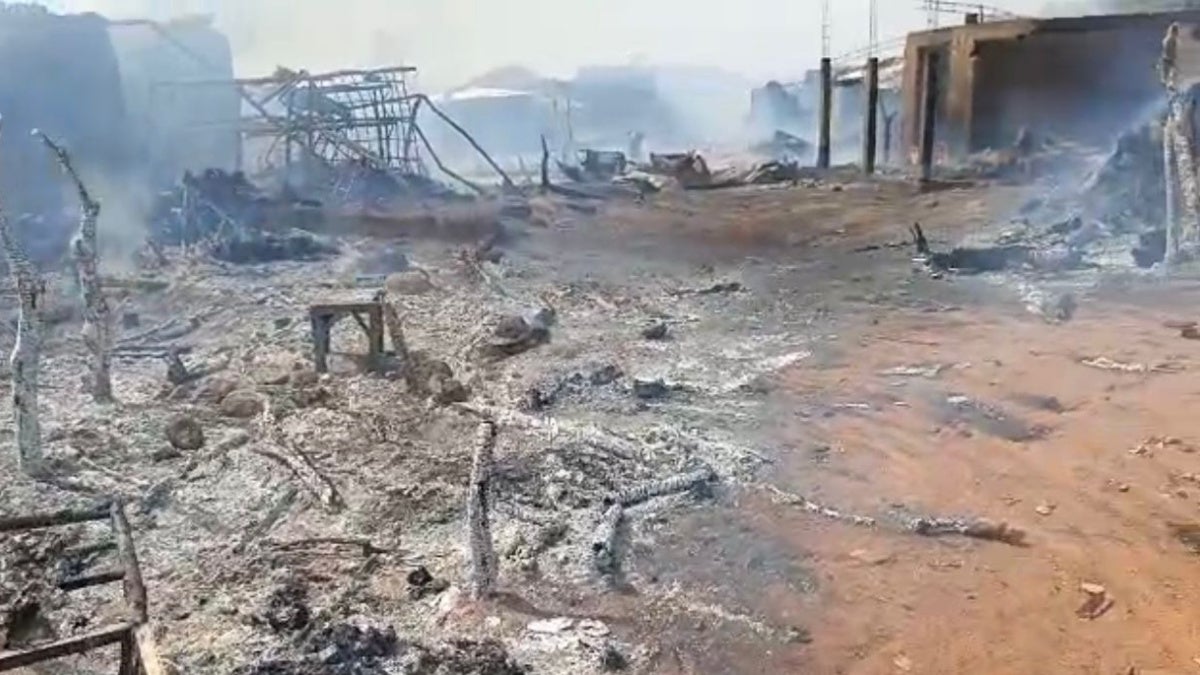
A military drone strike in Niger‘s western region has resulted in the tragic loss of at least 17 civilian lives, including four children, with 13 others sustaining injuries, according to reports. The attack, which also claimed the lives of three Islamist militants, occurred on January 6, 2026, at a bustling market in the village of Kokoloko, located in the Tillabéri region—approximately 120 kilometers west of the capital, Niamey, and less than three kilometers from the border with Burkina Faso.
Violation of international humanitarian law
Human rights organizations have raised serious concerns about the strike, emphasizing that it violated international humanitarian law, which prohibits indiscriminate attacks. The incident may constitute a war crime, as the use of explosive weapons in populated areas disproportionately affects civilians. “The drone strike in Niger not only failed to distinguish between combatants and civilians but also resulted in widespread civilian casualties, which is a clear violation of the laws of war,” stated a senior researcher from a leading rights group.
Local accounts paint a grim picture
Witnesses described the harrowing moments before and after the attack. Between 10:00 and 13:00 local time, a drone was observed flying over Kokoloko twice before releasing a munition at approximately 13:30. The market was teeming with hundreds of people, including women selling food and children playing nearby. “I saw a white drone hovering overhead, followed by a loud whistle before a massive explosion tore through the market,” recounted a 36-year-old merchant who narrowly escaped injury. “The scene was chaotic—women and children were scattered everywhere, their bodies charred beyond recognition.”
Residents reported that six Islamist State in the Sahel (ISIS) militants, three of whom were unarmed and dressed in civilian clothing, were present in the area at the time of the strike. While three militants were at the market, the others were in the village. “The militants often visit markets in the region to purchase supplies before leaving,” explained a local elder. The bodies of the three militants were later recovered by villagers and buried separately from the civilian victims.
Devastating impact on Kokoloko’s community
The aftermath of the strike was catastrophic. A total of 17 civilians—11 women aged 29 to 50, two men aged 32 and 55, and four children aged 5 to 10—were killed. Among the 13 injured were four women, seven men, and two children aged 14 and 15. Many bodies were so severely burned that identification became nearly impossible. Survivors recounted the gruesome task of collecting and burying the victims in a mass grave. “We buried the women and children together in one grave and the men in another,” shared a local man. Satellite imagery and video evidence confirmed the extent of the destruction, with charred remains of market stalls and signs of intense fires.
In the wake of the attack, nearly all of Kokoloko’s 1,200 residents fled to neighboring villages or crossed into Mali. A grieving woman, who lost her 50-year-old cousin and five-year-old nephew, described her desperate escape: “We spent the first night in a nearby village before crossing into Mali with almost nothing.”
Unanswered questions and calls for accountability
The Nigerien military junta, which seized power in a 2023 coup, has remained silent on the incident. Human rights organizations have urged an independent and transparent investigation, emphasizing the need for accountability. “The authorities must conduct a thorough probe, hold those responsible to account, and provide adequate compensation to the victims and their families,” demanded a researcher. Despite requests for comments, the junta has not responded.
The attack raises critical questions about the use of drones in conflict zones. Since 2022, Niger’s military has reportedly acquired Turkish-made drones, including the Bayraktar TB-2, Karayel-SU, and Aksungur UCAV, which can be equipped with guided munitions. While the type of drone and munition used in the Kokoloko strike remains unidentified, experts warn that such weapons, when deployed in populated areas, pose a severe risk to civilian lives.
Broader context of instability in the Sahel
The Tillabéri region has been a hotspot for violence, with Islamist groups, including ISIS in the Sahel and the Group for the Support of Islam and Muslims (GSIM), frequently targeting civilians. According to the Armed Conflict Location and Event Data Project (ACLED), Tillabéri recorded the highest number of civilian casualties in the central Sahel in 2025. This incident is not isolated; in September 2025, airstrikes in the nearby village of Injar killed over 30 civilians, while a 2024 drone strike in Tiawa also resulted in civilian fatalities.
International observers have called on foreign governments supporting Niger’s military to pressure authorities into adopting measures that minimize harm to civilians. “Support must come with the responsibility to protect local populations from further harm,” emphasized a rights advocate. “The government should ensure medical and psychological support for survivors and provide fair compensation to victims and their families.”