The Morocco of the 21st century presents a striking paradox: while the Kingdom boasts world-class infrastructure—high-capacity ports, high-speed rail networks, and cutting-edge industrial zones—its economic vibrancy masks deep social fissures. Behind the gleaming façade of automotive and aerospace industries lies a stark reality: millions of Moroccans, particularly in rural areas and urban peripheries, remain trapped in cycles of exclusion and vulnerability.
This chasm between progress and stagnation is not merely a passing imbalance—it has hardened over the past two decades. The nation’s economic trajectory increasingly resembles a two-tiered highway: one lane carries the regions integrated into globalization at breakneck speed, while the other strandles behind, abandoned to informal economies, crumbling public services, and chronic underdevelopment. Far from being an abstract injustice, this divide threatens national cohesion and demands urgent structural reforms to prevent long-term instability.
root causes of the divide: entrenched inequalities and compounding effects
1. geographic dualism: prosperity concentrated, rural margins left behind
The most glaring fracture is not accidental—it is the result of decades of policy choices that prioritized coastal development over inland regions. Today, economic power is concentrated in just three regions: Casablanca-Settat, Rabat-Salé-Kénitra, and Tanger-Tétouan-Al Hoceïma, which together generate nearly 60% of the country’s GDP despite housing only 40% of the population.
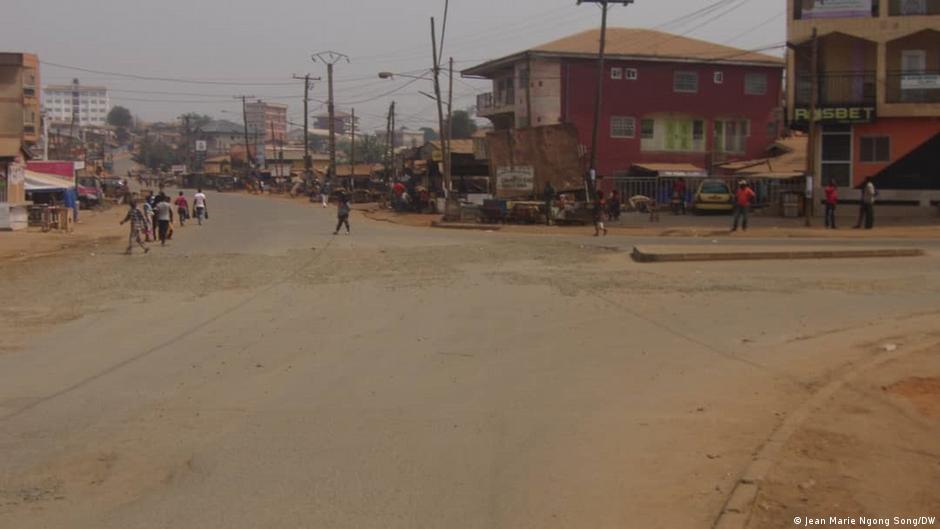
In contrast, mountainous and arid zones—such as the Rif, the High and Middle Atlas, and the Anti-Atlas—suffer from severe neglect. These areas grapple with unpaved roads, chronic shortages of medical professionals, a lack of secondary schools within accessible distances, and persistent water insecurity. This isolation is not a geographic inevitability but the outcome of systemic underinvestment. Local governments, constrained by limited and unevenly distributed budgets, struggle to bridge these gaps, perpetuating a cycle of poverty and marginalization.
2. the education gap: a broken ladder to social mobility
The Moroccan education system, despite repeated reforms, has failed to serve as an engine of upward mobility. Official dropout rates exceed 300,000 students annually, but the true scale is far worse in remote rural areas, where half of all girls leave primary school early due to early marriage, family poverty, or the absence of nearby secondary schools.
This educational failure has real-world consequences. Each year, legions of young people enter the labor market without diplomas or foundational skills. For many, the only recourse is the informal sector—a precarious reality that offers no contracts, healthcare, pensions, or labor protections. With nearly 70% of total employment in the informal economy, Morocco’s workforce remains largely disconnected from formal social safety nets. The figure skyrockets to over 80% in agriculture and household services, exposing a vast segment of the population to economic precarity.
3. youth unemployment: urban despair and rural disillusionment
The unemployment rate among youth aged 15–24 in urban areas regularly exceeds 45%. Behind this statistic lies a more disturbing trend: even university graduates face unemployment rates near 20%, revealing a stark mismatch between educational output and labor market demands.
This persistent joblessness fuels multiple crises. It drives rural exodus, fuels the growth of peri-urban slums, and—most critically—pushes qualified young people toward irregular migration to Europe or Canada. The decision to leave reflects a deeper disillusionment: the sense that local opportunity has collapsed, outweighing even the risks of perilous journeys. In some cases, this desperation manifests in petty crime or extremism, further destabilizing communities.
4. measuring disparity: the Gini coefficient remains stubbornly high
Economists use the Gini coefficient to quantify inequality. In Morocco, it hovers around 0.39—a figure considered high for a middle-income country and far removed from the 0.25–0.30 range seen in European welfare states. The top 10% of earners capture roughly 30% of national income, while the bottom 40% share less than 20%. Worse still, consumption surveys indicate that inequality has risen slightly since 2014, despite overall economic growth, proving that prosperity is not trickling down but being hoarded at the top.
international perception and policy contradictions
While Morocco projects an image of technological advancement—Tanger Med as Africa’s leading port, Al Boraq as the continent’s first high-speed rail, and Noor Ouarzazate as a global symbol of renewable energy—the reality of entrenched inequality undermines its narrative. The United Nations Human Development Index places Morocco in the “medium human development” category, typically ranking between 120th and 125th globally—behind much of Latin America and even behind peers like Tunisia and Cape Verde.
International institutions such as the World Bank and OECD have repeatedly warned that Morocco’s macroeconomic gains are undermined by structural social vulnerabilities. The COVID-19 pandemic, recurring droughts, and imported inflation have exposed the fragility of a model that prioritizes growth over equitable distribution. Perhaps most telling is the steady flow of irregular migration to Europe. For many young Moroccans, the allure of risking dangerous crossings reflects a rejection of local stagnation in favor of uncertain opportunities abroad—a harsh indictment of domestic policy failures.
toward a new social compact: reforms attempted, challenges ahead
With the status quo no longer sustainable, the Nouveau Modèle de Développement (NMD), unveiled in 2021, acknowledged the inadequacy of growth alone to reduce inequality. It identified three priority areas for reform, but implementation remains uneven.
1. universalizing social protection: a monumental task
The first pillar is the expansion of mandatory health and social coverage, slated for full rollout by 2025. The National Health Insurance (AMO) has already extended coverage to self-employed professionals and non-salaried workers, while the National Social Registry (RNS) aims to direct direct aid to the poorest households—including over 7 million schoolchildren and families in extreme poverty.
Yet the success of this initiative hinges on two critical factors that remain elusive. First, sustainable financing requires cracking down on tax evasion and fraud. Second, quality healthcare must be accessible nationwide. In provinces like the southeast or Middle Atlas, the shortage of specialists is acute—without functional hospitals within reach, AMO risks becoming a legal right in name only, with little tangible impact on public health.
2. tax reform: the most contentious battle
The second pillar—a sweeping overhaul of the tax system—is perhaps the most politically sensitive. Experts and international bodies agree: Morocco’s tax structure is inefficient, overly complex, and regressive. VAT disproportionately burdens low-income households consuming essential goods, while income tax is weakly progressive and easily evaded by high-net-worth individuals through informality, shell companies, and loopholes.
A credible reform would involve three key measures: lowering VAT on staple foods such as milk, wheat, and oil; broadening the income tax base by reducing sectoral exemptions; and introducing a modest annual levy on large real estate and financial assets. While these steps are sound in theory, they face fierce opposition from powerful economic lobbies and an under-resourced tax administration.
3. decentralizing public policy: the forgotten dimension
The third, less discussed pillar is territorial governance. Regional governments possess responsibilities but lack adequate funding. Reforming local taxation—particularly the business tax and housing tax—would enable poorer regions to invest in schools, roads, and health centers. Without meaningful fiscal decentralization and equitable redistribution, regional disparities will continue to widen.
beyond urgency: the time for decisive choices
The growing chasm between Morocco’s gleaming megaprojects and its struggling communities is no longer just an issue of perceived injustice—it is a systemic risk. A society divided cannot sustain economic growth, erodes public trust, and fuels radicalization in all its forms.
The path forward is narrow but not impossible. Expanding social protection offers a real, if fragile, opportunity—but only if three conditions are met: equitable financing through progressive taxation, a reinvigorated public school system capable of serving as a ladder to mobility, and an end to the geographic apartheid that sidelines inland and rural regions.
Morocco possesses the technical capacity, administrative expertise, and international legitimacy to meet this challenge. What it lacks is a clear political commitment to a model where growth is not an end in itself but a tool for shared prosperity. Only then can the Kingdom transform its economic strength into genuine social cohesion.