A Shift in Presidential Dialogue
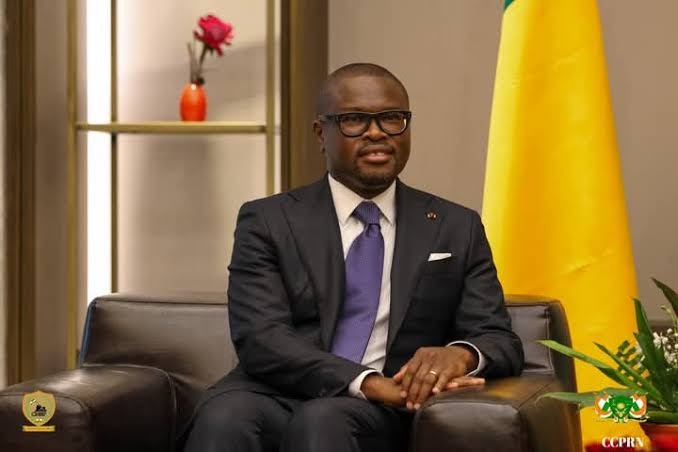
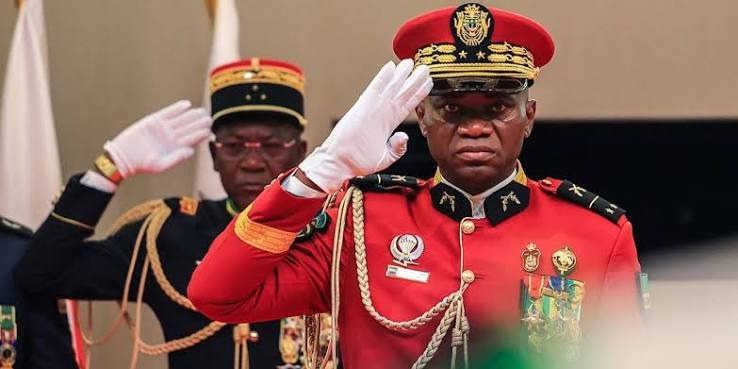
For a considerable time, a recurring criticism permeated Gabonese public discourse. Since his ascent to power on August 30, 2023, Brice Clotaire Oligui Nguema was a constant presence on the ground, yet direct interactions with the nation’s journalists were notably infrequent. While speeches, inaugurations, and official trips were plentiful, spontaneous answers to the questions of the citizenry remained scarce.

This perception appears to have shifted in recent weeks. The change did not come from a solemn press conference or a meticulously staged institutional event, but through a series of interviews conducted by journalist Chamberland Moukouama. These took place during the presidential stay in Mayumba and Tchibanga, and later in Libreville, specifically in areas like Baraka, Bikélé, and at the Poste SA in the city center.
Beyond its immediate media success, this initiative signals a potentially more profound transformation. It points to a presidential communication strategy that is now seeking to break free from conventional formats to reconnect with a form of political authenticity that has become increasingly rare on the continent.
The Strength of Simplicity
The originality of this new approach lies not just in the journalist’s personality but primarily in the method he employs. Chamberland Moukouama, the founder of the “CASH” concept, advocates for an approach rooted in citizen pedagogy, popular education, and candor. His aim extends beyond mere reporting; he seeks to translate complex public issues into a language accessible to everyone.
In Mayumba, he opted to ask the questions that ordinary citizens ponder daily. These inquiries were simple, direct, sometimes uncomfortable, and often absent from traditional institutional interviews. More significantly, the exchange occurred far from the formal setting of official residences. By accompanying the president on a nighttime fishing excursion, the journalist moved the political discussion into an unconventional environment, allowing spontaneity to replace protocol.
This proximity facilitated discussions on sensitive subjects, including governance, criticisms of the administration, the influence of certain advisors, public perception of reforms, and more personal aspects of exercising power. The outcome took many observers by surprise. The Gabonese people discovered a head of state who was less institutional, more approachable, and capable of responding with apparent frankness to concerns circulating in neighborhoods, on social media, and in everyday conversations.
When Communication Becomes a Political Act
In major democracies, certain journalists have defined their eras by bridging the distance between leaders and citizens. In France, Jean-Pierre Elkabbach built his reputation on intellectually challenging political figures. Jean-Jacques Bourdin established a style based on the concrete concerns of the public. On the African continent, Christophe Boisbouvier became known for his ability to question leaders in sometimes unexpected settings.
Chamberland Moukouama is, in his own way, following in this tradition, but with a notable difference: where others prefer the studio, he chooses the field. This approach emerges at a pivotal moment in Gabon’s political history. Following the transition and presidential election, expectations for transparency are high. Citizens are demanding more than top-down communication; they want to understand, to question, and sometimes to challenge.
In this climate, agreeing to direct and less structured exchanges is in itself a political statement. Modern communication is no longer just about disseminating information; it involves fostering the conditions for dialogue, even when the questions are difficult.
Authenticity as a Power Strategy
This media series also sheds light on the philosophy Brice Clotaire Oligui Nguema says he wants to define his term. “The best guarantee against hubris is memory. I don’t forget where I come from,” the Gabonese president explained. This statement gains particular resonance when viewed alongside these informal exchanges, where the head of state emphasizes his familiarity with the ground, social realities, and the daily struggles of the populace.
It also addresses a critique voiced for months by many national journalists, who felt they had limited access to presidential information. By participating in this exercise, Oligui Nguema sends a clear signal of a leadership that intends to stay connected to its base and avoid being isolated within institutional circles. The question that remains is whether this instance of openness will evolve into a lasting practice. The stakes are much higher than a single successful interview.
At its core, this touches upon the quality of the bond between the government and its citizens. Should this experience be replicated, Mayumba could be remembered in Gabon’s recent political history as the place where presidential communication fundamentally changed—a moment when official discourse shifted from being purely vertical to something more conversational.
On a continent where mistrust of institutions remains a significant challenge, this evolution could be more than just a media innovation. It could become a genuine tool of governance. In the 21st century, proximity is no longer merely a political quality; it has become a prerequisite for legitimacy.