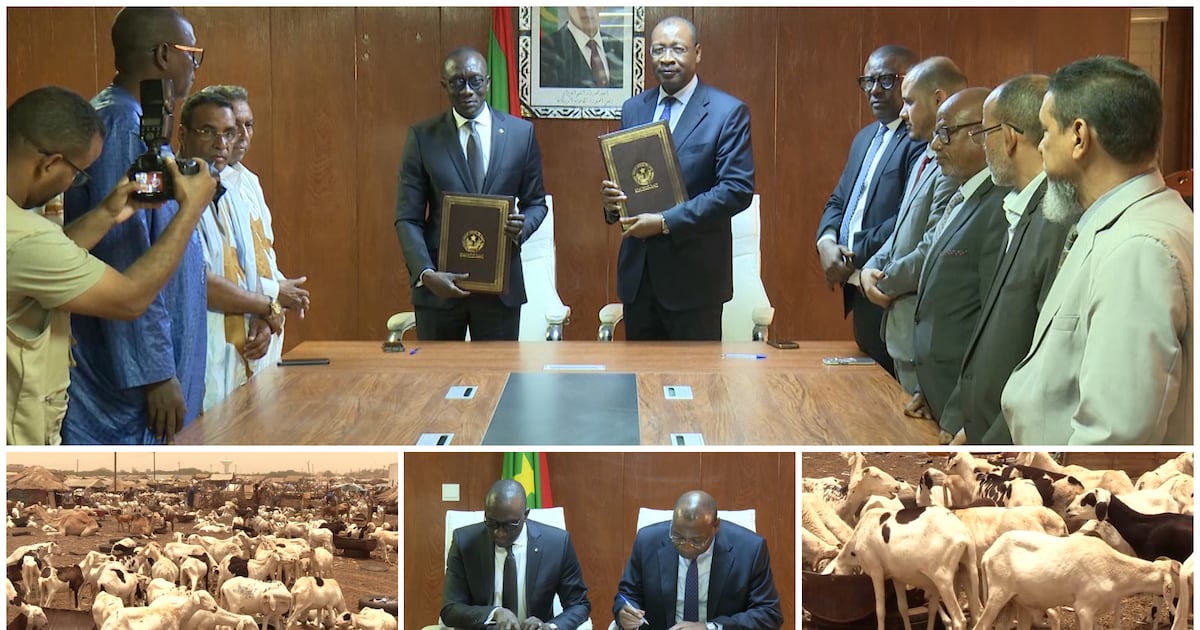
Amid rising security concerns in the Sahel, Mauritania has stepped up to meet Senegal’s urgent demand for Eid al-Adha livestock. A binding agreement now secures the delivery of over 450,000 sheep from Nouakchott to Dakar, filling a critical gap left by traditional suppliers from Mali, whose cattle routes have been disrupted by escalating instability.
Expanding supply to meet Tabaski demand
Nouakchott is not only fulfilling Senegal’s needs but also contributing to Côte d’Ivoire’s Tabaski livestock requirements. The shift comes as regional insecurity in the Sahel forces traders to seek alternative supply chains, particularly in Mauritania, which maintains robust pastoral production.
Alioune Kane, a pastoral specialist at the National Grouping of Pastoral Associations (GNAP), highlights the renewal of a long-standing protocol. “Normally, Mauritanian herders export between 460,000 and 500,000 sheep to Senegal each year,” he notes. “This season, however, that figure is set to rise due to the security crisis in Mali, a key transit route for eastern Mauritanian herders heading to Senegal.”
Sahel pastoral trade adapts to new security realities
With Malian routes no longer safe, Mauritanian herders are rerouting their livestock through the Trarza region, crossing the Senegal River to reach Dakar and other major urban centers. Baba Hassan Sidi, GNAP coordinator in the Néma region, recalls the pre-crisis era when “herders from Néma and Aïoun routinely passed through Mali to reach Senegal without concern.” Today, that route has become too risky, forcing a longer journey through southern Mauritania.
The Senegalese government has committed to ensuring smooth logistical, customs, and sanitary operations to facilitate the arrival of Mauritanian livestock. “Our herders are already in Senegal under a long-standing agreement that reflects the deep ties between our two nations,” Sidi explains. “This season, we’re prioritizing safe passage and timely delivery to support both markets.”