Mali’s new presidential jet sparks debate over national priorities amid ongoing crises
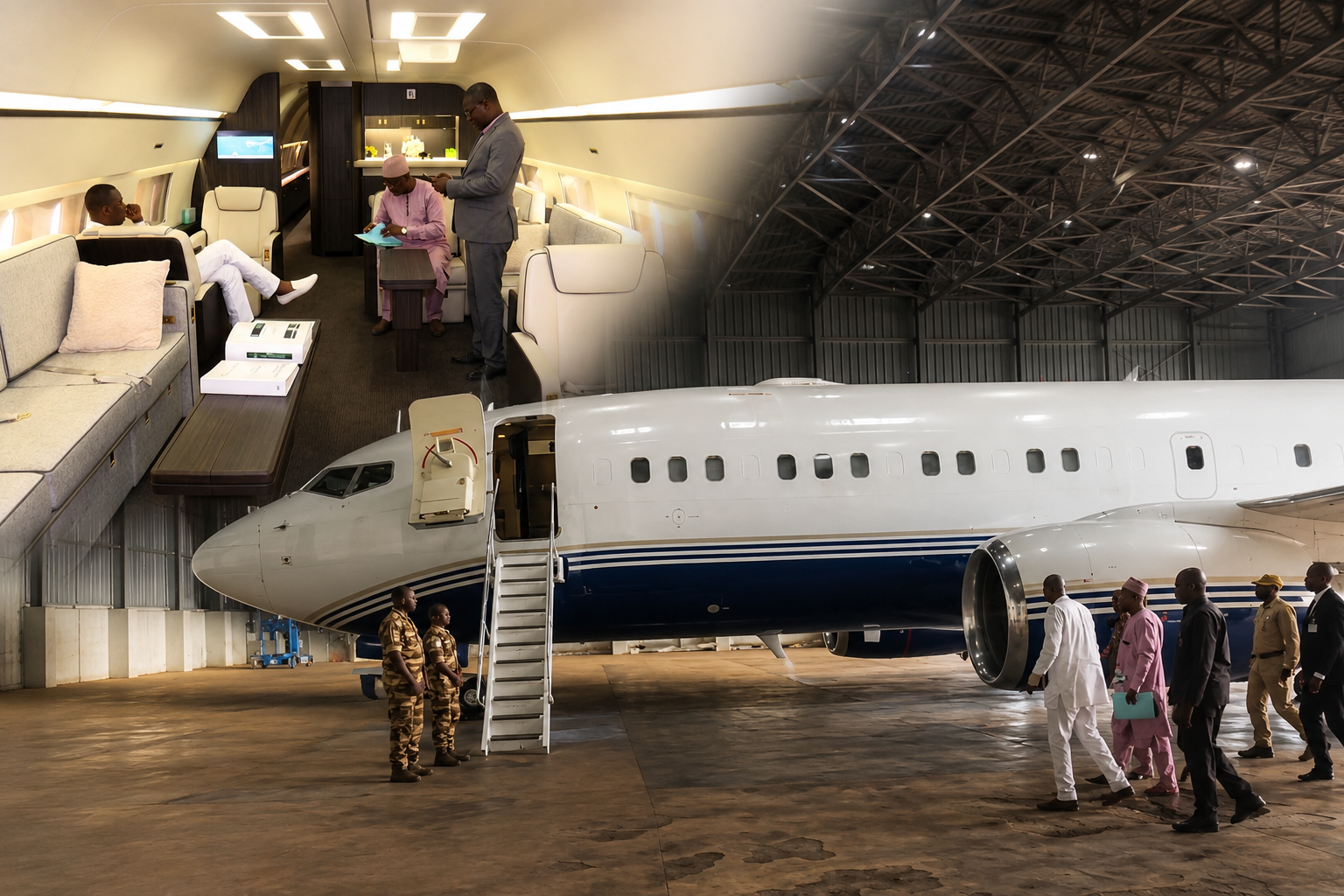
The Malian public was recently presented with a striking display of national acquisition: a brand-new Boeing 737 jet, intended to serve the travel needs of transitional authorities, including Colonel Assimi Goïta. While government officials emphasized the financial prudence behind the purchase—claiming the net cost would be reduced to approximately 6 billion CFA francs following insurance compensations and the sale of parts from the previous aircraft—the timing of this announcement has ignited broader discussions far beyond mere fiscal considerations.
An acquisition out of step with ground realities
The timing of this unveiling could hardly have been more ill-suited. As state representatives repeatedly urge citizens to embrace sacrifice, resilience, and collective effort, the introduction of a high-profile presidential aircraft sends a conflicting message—one that suggests a leadership more focused on projecting prestige than addressing the immediate hardships faced by the population.
Throughout Mali, insecurity remains a daily reality. Military outposts continue to come under attack, rural roads are frequently ambushed, and civilians bear the brunt of escalating violence. Numerous communities remain cut off from basic services, and the state’s ability to restore authority across its territory remains fragile at best.
Unresolved security challenges persist
Three years into the transitional government’s pledge to reclaim national territory, substantial obstacles endure. In the northern regions, factions aligned within the Permanent Strategic Framework—including the Azawad Liberation Front—maintain significant operational capacity and contest control over key zones.
Meanwhile, the Group for the Support of Islam and Muslims (JNIM) continues to expand its influence in central and southern Mali, intensifying attacks on military installations, civilian infrastructure, and state representatives. Critical transport corridors remain hazardous, disrupting trade, mobility, and economic activity across vast areas.
This persistent instability starkly contrasts with the image of strength and control that authorities appear determined to project.
Questioning budget allocation priorities
Despite official assurances that the deal was financially advantageous, many observers argue that the funds involved—or a substantial portion thereof—could have been directed toward more pressing national needs, such as:
- Enhancing the operational readiness of the Malian Armed Forces;
- Acquiring armored vehicles, secure communication systems, and protective equipment;
- Strengthening intelligence and aerial surveillance capabilities;
- Providing medical and financial support to wounded soldiers and the families of fallen servicemembers;
- Assisting internally displaced persons and financing the reconstruction of war-damaged infrastructure.
The crux of the issue extends beyond mere financial calculations. It touches on the fundamental question of governance: whether the state’s priorities genuinely reflect the urgent needs of its people.
A challenge to the narrative of sobriety
Since assuming power, the transitional authorities have cultivated a public image rooted in austerity, patriotism, and a commitment to national interest—positioning themselves in opposition to the perceived excesses of previous regimes. Yet the acquisition of a long-range executive jet risks undermining this stance. To many observers, it signals a return to symbols of personal power and extravagance, at odds with the sacrifices demanded of ordinary citizens.
The disconnect is further accentuated by enduring economic hardships: rising living costs, strained public finances, unmet social needs, and sluggish economic activity in key sectors.
Diplomatic utility versus domestic credibility
Proponents of the new aircraft argue that a modern presidential fleet enhances Mali’s ability to conduct international diplomacy, facilitate official missions, and strengthen its global representation. However, this justification struggles to resonate with those who believe a nation’s international standing is rooted first and foremost in internal stability, the protection of its citizens, and the effective functioning of its institutions.
For many Malians, true sovereignty is not measured by the sophistication of an executive aircraft, but by the state’s capacity to assert control over its territory and safeguard its people.
Symbolism that fuels skepticism
Within critical circles and opposition groups, the purchase has given rise to pointed interpretations. Some view it as emblematic of a regime prioritizing its own mobility over that of the state. Others speculate—though without verifiable evidence—that a long-range, permanently available jet may serve as a last-resort escape mechanism for top officials in the event of a severe escalation in violence.
Such interpretations, while unproven, underscore the deepening climate of distrust surrounding government decision-making.
Reassessing the trajectory of the Transition
The arrival of the Boeing 737 transcends the mere procurement of an official aircraft. It refocuses attention on the broader strategic choices of the Transition and raises a pivotal question: as security threats persist, attacks continue, and economic burdens weigh heavily on households, how are decisions on public expenditure being justified?
For many citizens, the true measure of state sovereignty lies not in the modernization of a presidential fleet, but in the government’s ability to protect its people, restore territorial integrity, and improve daily living conditions. Until tangible progress is made on these fronts, symbolic investments will increasingly be perceived as evidence of a widening gap between official priorities and the aspirations of the Malian people.