Mali pioneers hybrid malaria vaccine approach to protect children
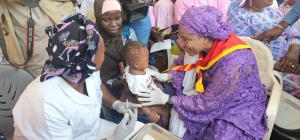
Mali leads the way in malaria vaccination with innovative hybrid approach
The Republic of Mali has made history by becoming the first country in the world to implement a hybrid vaccination approach against malaria, marking a significant milestone in global health. This groundbreaking initiative, launched during World Malaria Day, aims to enhance protection for children aged five to 36 months—the age group most vulnerable to the disease.
Why a hybrid vaccination strategy?
Malaria transmission in Mali is highly seasonal, with the majority of cases occurring between July and December. The hybrid approach combines two phases: the first three doses are administered year-round based on the child’s age, while the fourth and fifth doses are given seasonally in May or June, just before the peak transmission period. This strategy ensures maximum vaccine efficacy aligns with the highest risk of infection, optimizing protection for young children.
The Ministry of Health and Social Development of Mali, in collaboration with Gavi, the UNICEF, and the World Health Organization, spearheaded this initiative, deploying the R21/Matrix-M vaccine in 19 priority districts across five regions: Kayes, Koulikoro, Mopti, Ségou, and Sikasso. The country has secured 927,800 doses to kickstart the program, with plans to scale up progressively.
Mali’s malaria burden and the vaccine’s impact
In 2023, Mali accounted for 3.1% of global malaria cases (8.15 million) and 2.4% of malaria-related deaths (14,328), placing it among the 11 countries with the highest disease burden worldwide. The hybrid vaccination strategy is expected to significantly reduce this impact by targeting children during peak transmission seasons.
The R21/Matrix-M vaccine, prequalified and recommended by the WHO, has demonstrated efficacy in clinical trials, reducing malaria cases by over 50% in the first year of vaccination. When administered seasonally in high-transmission areas, it has shown a 75% reduction in malaria cases, offering hope for millions of children at risk.
Global and local partnerships driving success
Gavi, the global vaccine alliance, plays a pivotal role in financing, procuring, and delivering malaria vaccines. The country’s co-financing model ensures sustainable access to vaccines, with Mali gradually increasing its contributions to strengthen local health systems.
Dr. Sania Nishtar, Gavi’s CEO, emphasized the importance of this initiative: “This deployment is a testament to Mali’s commitment to saving lives and reducing the devastating effects of malaria on families and communities. With over 24 million doses delivered across 20 African countries, sustained funding is critical to ensure equitable access to this life-saving tool.”
The UNICEF supports vaccine distribution and community engagement, leveraging digital tools like U-Report to combat misinformation and promote vaccination. Dr. Pierre Ngom, UNICEF Representative in Mali, stated: “After 35 years of dedicated research, the malaria vaccine offers a powerful new tool to protect children. While it is not a standalone solution, it complements existing prevention measures, including insecticide-treated nets and seasonal chemoprevention.”
The WHO coordinated early pilot programs in Ghana, Kenya, and Malawi, which demonstrated a 13% reduction in child mortality among vaccinated children. These results contributed to the WHO’s recommendation of both the RTS,S/AS01 and R21/Matrix-M vaccines.
A model for Africa’s malaria fight
Mali’s hybrid approach sets a precedent for other African nations grappling with seasonal malaria surges. With over 24 million doses distributed across the continent since 2023, countries are intensifying their vaccination programs. The 20 countries that have introduced the vaccine now represent over 70% of the global malaria burden.
Looking ahead, Gavi aims to protect an additional 50 million children by 2030, provided sufficient funding is secured. Countries like Nigeria, Chad, and the Democratic Republic of the Congo are also adopting innovative strategies, integrating malaria vaccines into broader health initiatives to maximize impact in resource-limited settings.
Key facts about malaria vaccines
Target group: Children under five, who account for over 75% of malaria-related deaths globally.
Vaccine efficacy: Both RTS,S/AS01 and R21/Matrix-M have shown over 50% reduction in malaria cases in the first year, with seasonal administration boosting protection to 75% in high-transmission areas.
Target parasite: The vaccines focus on Plasmodium falciparum, the deadliest malaria parasite in Africa.
Safety: Both vaccines are prequalified and recommended by the WHO for widespread use.
Mali’s commitment to malaria elimination
In addition to vaccination, Mali continues to implement other preventive measures, including:
Use of insecticide-treated bed nets.
Seasonal malaria chemoprevention.
Intermittent preventive treatment for pregnant women.
Indoor residual spraying.
Colonel Assa Badiallo Touré, Mali’s Minister of Health and Social Development, highlighted the collaborative effort: “This achievement reflects the dedication of researchers, health workers, and partners. The hybrid vaccination approach is a game-changer in our fight against malaria, and we are committed to scaling it up for the benefit of all Malians.”
The launch of this hybrid vaccination strategy underscores Mali’s leadership in malaria control and offers a scalable model for other endemic countries to follow.