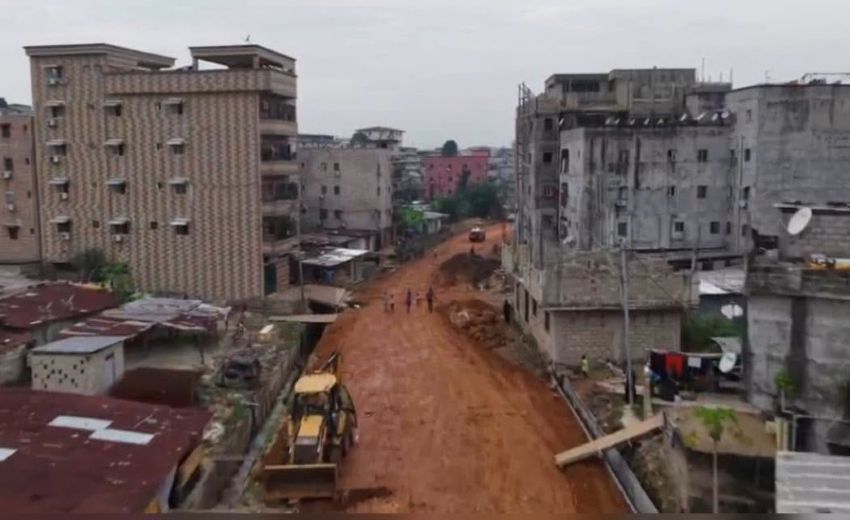
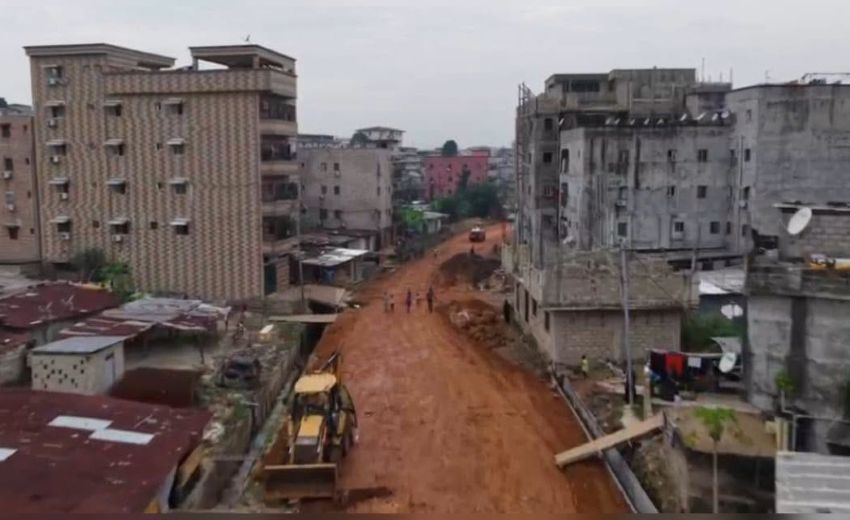
Libreville, July 13, 2026 – The July 10 deadline set by Mayor Eugène M’ba for Libreville’s urban clean-up campaign is about to expire. Within hours, the city will enter a decisive phase involving the removal of illegal structures, demolition of unauthorized buildings, clearing of abandoned vehicles, shutdown of improvised garages, and dismantling of unauthorized businesses occupying public spaces.
The municipal administration’s stated goal is unambiguous: restore order to the urban landscape, improve traffic flow, enhance hygiene conditions, and present Gabon’s capital as a modern, clean, and attractive city. Few today would dispute the need for action against the progressive occupation of sidewalks, intersections, gutters, and even roadways by makeshift markets and private extensions.
For many residents, the municipality’s intervention has long been overdue. A political and economic hub cannot sustainably function amid urban chaos without compromising mobility, public health, and economic appeal. The mayor’s initiative responds to a pressing demand for urban governance reform.
Yet, as the deadline approaches, a contrasting perspective emerges in public discourse. This perspective does not challenge the principle of municipal authority but rather urges a broader reflection on the city’s future.
Beyond mere enforcement
A modern municipality is judged not only by its ability to enforce regulations but also by its capacity to support citizens, anticipate social changes, and implement sustainable solutions. The city’s leadership must recognize that behind every sidewalk vendor, improvised garage, or informal car wash lies a complex economic reality: youth unemployment, low household incomes, insufficient affordable commercial spaces, high rental costs, and the rapid growth of survival economies forced to colonize public spaces.
Without addressing these underlying issues, today’s cleared spaces risk re-emerging elsewhere tomorrow in different forms. Experience from African metropolises—including Libreville—shows that eviction campaigns alone rarely yield lasting results unless paired with relocation strategies and economic integration plans.
Addressing root causes, not just symptoms
The debate now transcends the mere maintenance of urban order. It centers on the kind of city Libreville aspires to become in the coming decades.
Solutions could include creating new local markets, designating dedicated spaces for small traders, organizing zones for artisans, guiding informal economic actors toward formalization, and strengthening dialogue between municipal services and residents. These measures could transform a one-off operation into a comprehensive public policy.
The analogy of treating fever without addressing the underlying illness resonates strongly. Major cities from Lagos to Kigali, Abidjan to Casablanca, have learned that urban modernization requires a delicate balance between regulatory firmness and social accompaniment.
Authority remains essential—no city can thrive without rules, respect for public spaces, or protection of communal assets. Yet history demonstrates that enduring authority often combines control with pedagogy and concrete solutions.
A new urban contract in the making
Libreville’s campaign could mark more than just a clean-up operation. It might serve as the foundation for a renewed social contract between the city and its residents. The municipal team now has a rare opportunity to prove that order can be restored without severing dialogue, that laws can be upheld without ignoring social realities, and that rules can be enforced while creating opportunities.
The stakes extend far beyond occupied sidewalks or unauthorized constructions. They encompass how major African capitals in the 21st century will reconcile demographic growth, economic development, and social cohesion. Libreville has chosen to act urgently to address a situation that had become critical.
The coming weeks will reveal whether the city can strike at the root of the problem, ensuring that the recovery of public space is not merely an administrative victory but the first step toward a more inclusive, humane, and sustainable urban transformation for Gabon’s capital.