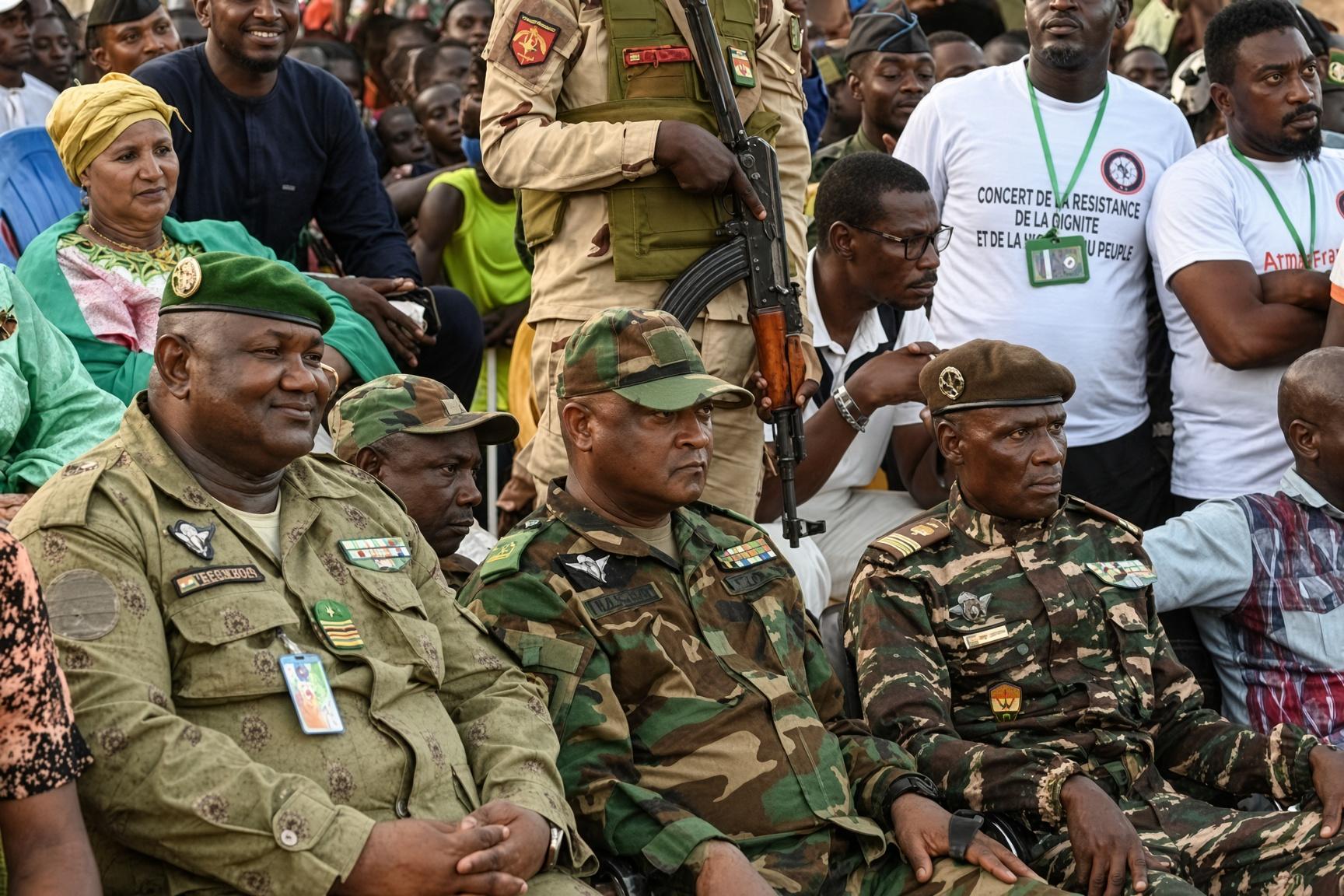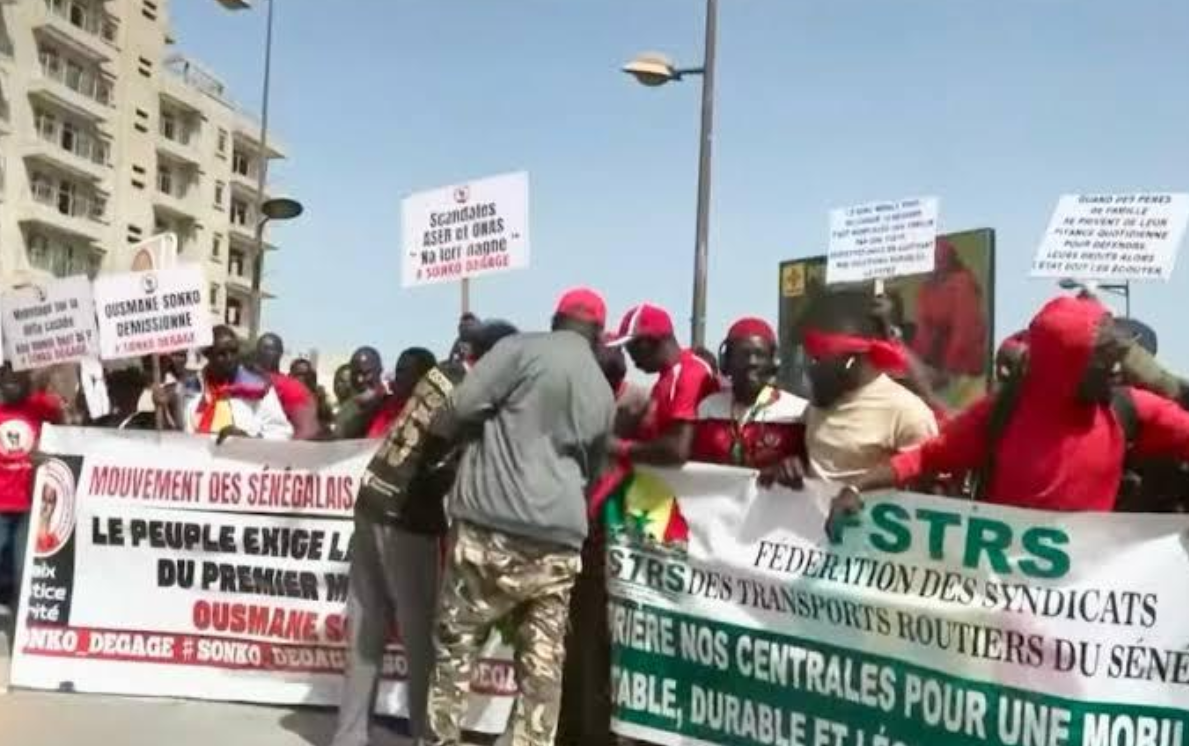
In recent years, Africa’s political landscape—particularly across the member states of the Alliance of Sahel States (AES)—has witnessed a striking display of symbolic political theatre. Protests championing sovereignty have increasingly featured Russian flags and slogans uncritically endorsing Moscow’s role on the continent. For a vocal segment of activists, Russia is now framed as the indispensable alternative to longstanding Western influence, a perceived solution to the continent’s historical grievances.
Yet this growing fascination raises fundamental questions, especially when it emanates from movements that claim to advocate for absolute independence. Now, a prominent figure in contemporary Pan-Africanism, Kemi Seba, appears to be undergoing a significant ideological shift—one that challenges this prevailing trend—from within his prison cell in South Africa.
From sovereignty to a new dependency: the paradox of ideological realignment
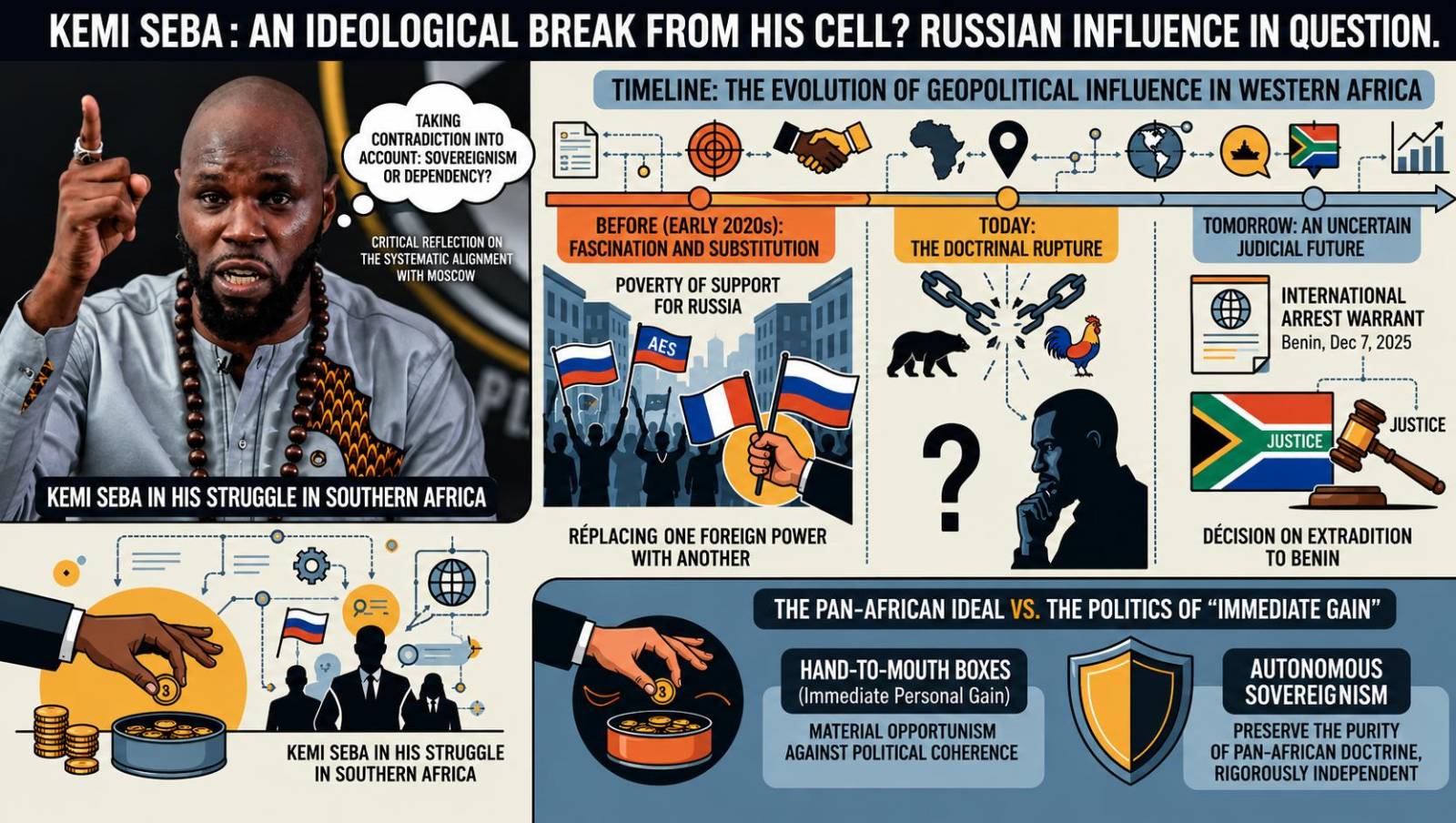
While seeking new international partnerships is a legitimate diplomatic pursuit for any state or political movement, the impulse to replace one foreign power with another risks undermining the very principles of sovereignty it claims to uphold. Many analysts argue that merely substituting French influence with Russian influence does not equate to liberation; rather, it represents a mere transference of dependency from one external actor to another.
Observers suggest that Kemi Seba is now confronting this contradiction head-on. The Pan-African ideologue has begun to question the limitations of an uncritical alignment with Moscow, rejecting the notion of any form of new protectorate—even one framed as anti-Western. His evolving stance signals a potential fracture within the ranks of sovereignist movements, where ideological purity is increasingly tested by geopolitical pragmatism.
Pan-African ideals versus the lure of short-term gains
This shift underscores a deeper ideological divide. While some support for Russia stems from a genuine desire to break free from historical dependencies, other motivations appear driven by material interests rather than long-term vision. Seba has forcefully condemned this opportunism, using the vivid metaphor of “filling the stew pot”—a critique of those who prioritize immediate personal gain over consistent political principle.
By rejecting what he perceives as mercenary alignment, Seba seeks to preserve the integrity of a Pan-Africanism that remains truly autonomous, free from external imposition. His stance reflects a commitment to an ideology that transcends mere geopolitical convenience, emphasizing instead the necessity of self-determination in both thought and action.
A fate decided in Pretoria’s courts
This period of doctrinal introspection coincides with a critical juncture in Seba’s personal and legal trajectory. The activist, who faces an international arrest warrant issued by the government of Benin following the December 7, 2025 coup attempt, remains detained in South Africa. The Pretoria judiciary is now tasked with deciding whether to grant Cotonou’s extradition request—a decision that will have far-reaching implications.
The outcome of this legal process will not only determine Seba’s immediate future but may also reshape the ideological direction of the movements he has inspired. Will this moment mark a definitive rupture with past alignments, or merely herald a recalibration of discourse within Pan-African circles? The coming weeks promise to be decisive for both the activist’s political legacy and the broader trajectory of sovereignty-driven movements across the Sahel.