Journalists in Niger face judicial harassment and arbitrary detention
Six journalists targeted by judicial persecution in Niger
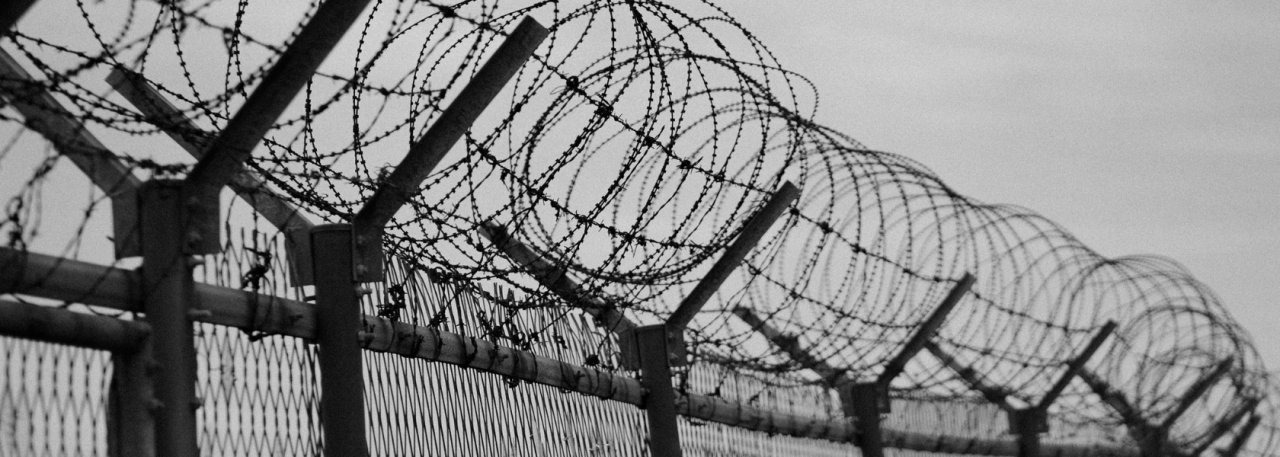
The Nigerien authorities have escalated their crackdown on press freedom by arresting six journalists on November 2, 2025. This latest wave of judicial harassment underscores the regime’s systematic efforts to silence dissenting voices and restrict fundamental rights. Three of the detained journalists—Ibro Chaibou, Youssouf Seriba, and Oumarou Kané—have been arbitrarily incarcerated at the high-security prison in Kollo, located approximately 50 kilometers south of Niamey, the capital city.
The remaining three journalists—Moussa Kaka, Abdoul Aziz Idé, and Souleymane Brah—were released on bail after hours of interrogation. However, they remain under judicial investigation, facing the same baseless charges that carry potential prison sentences of two to five years.
Paris-Geneva, November 12, 2025 – The International Federation for Human Rights (FIDH) and the World Organisation Against Torture (OMCT), through the Observatory for the Protection of Human Rights Defenders, have condemned these blatant violations of press freedom and called for the immediate and unconditional release of all detained journalists.
The arrests stem from the publication of an invitation on social media platforms, including Facebook, for a press conference organized by the Solidarity Fund for the Preservation of the Nation (FSSP). This government-backed initiative forcibly collects funds from employees, citizens, and NGOs to allegedly support the military in its fight against armed groups. Additionally, the journalists were investigating a debate titled ‘The Press Club’, held on October 31, 2025, by Radio-télévision Saraounia (RTS).
Laws weaponized to stifle criticism
The journalists have been charged under Article 31 of Niger’s cybercrime law (Law No. 2019-33 of July 3, 2019), as amended by Ordinance 2024-28 of June 7, 2024, which criminalizes the dissemination of information deemed likely to disrupt public order. Legal experts and human rights organizations argue that these charges are a pretext to silence critical journalism and violate international human rights standards, including Article 19 of the International Covenant on Civil and Political Rights (ICCPR) and Article 9 of the African Charter on Human and Peoples’ Rights.
The Observatory emphasizes that merely publishing or discussing an invitation does not constitute a crime. Instead, these prosecutions appear designed to intimidate journalists and suppress media freedom in Niger.
A pattern of repression under military rule
This is not the first time Moussa Kaka—a former Radio France Internationale (RFI) correspondent and current director of Radio-télévision Saraounia (RTS)—has faced judicial persecution. In 2007, under the regime of Mamadou Tandja, he was charged with ‘complicity in undermining state authority’ for his journalistic contacts with the Niger Movement for Justice (MNJ). After nearly a year in detention, he was released in 2008. The FIDH previously condemned this arbitrary detention as a flagrant violation of human rights. Notably, RFI, where Kaka worked, was shut down by Nigerien authorities in August 2023.
The current wave of repression occurs against a backdrop of severe restrictions on civic space since the July 27, 2023, military coup. The junta has systematically violated the rights to freedom of expression, opinion, assembly, and peaceful protest. Arbitrary arrests and detentions of human rights defenders, including Moussa Tchangari—who has been held for nearly 12 months—have become alarmingly common. Other recent cases include:
- Hamid Mahmoud, Mahaman Sani, and Massaouda Jaharou, journalists at Sahara FM in Agadez, arrested in May 2025 for reporting on alleged intelligence cooperation breakdowns between Niger, Russia, and Turkey. Jaharou was provisionally released, but Mahmoud and Sani remain imprisoned.
- Multiple journalists have faced charges such as ‘undermining national defense’ and ‘conspiracy against state authority’, further demonstrating the regime’s determination to crush dissent.
Demands for justice and legal reform
The Observatory has urgently called on Nigerien authorities to:
- Release immediately and unconditionally journalists Ibro Chaibou, Youssouf Seriba, Oumarou Kané, Hamid Mahmoud, and Mahaman Sani, who remain arbitrarily detained.
- Drop all charges against Moussa Kaka, Abdoul Aziz Idé, Souleymane Brah, and Massaouda Jaharou.
- Revise the cybercrime law to ensure compliance with international human rights standards, particularly Article 19 of the ICCPR and Article 9 of the African Charter.
Introduced in June 2024, Ordinance 2024-28 reinstated prison sentences for offenses such as insults, defamation via electronic means, and dissemination of information likely to disrupt public order. The FIDH had warned at the time that these vaguely worded provisions could be misused to target human rights defenders, including journalists, through selective and politically motivated prosecutions.
This alarming trend highlights the urgent need for international pressure to hold the Nigerien authorities accountable and restore respect for fundamental freedoms.