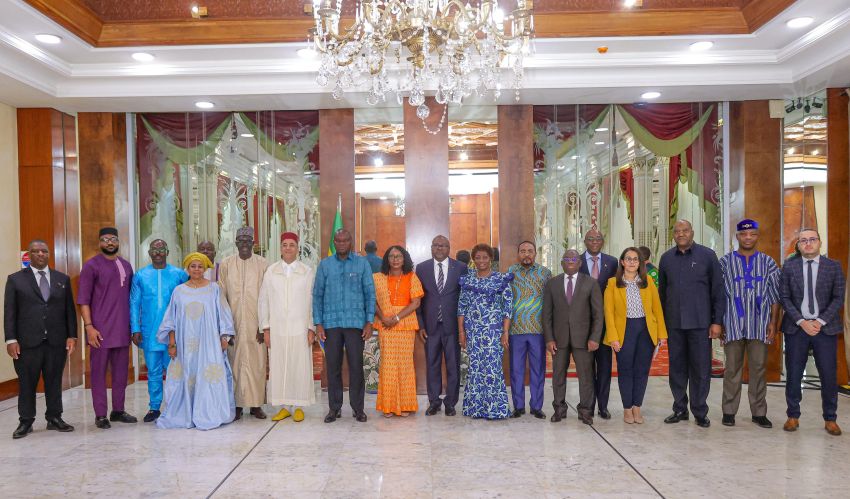
Libreville, Africa — As Africa navigates shifting geopolitical landscapes, Gabon is actively reshaping its diplomatic identity under President Brice Clotaire Oligui Nguema. His first collective meeting with African ambassadors in Libreville was far from a routine protocol exercise. It marked the unveiling of a bold political vision aimed at repositioning Gabon as a key player in continental discussions.
In a continent grappling with security crises, shifting alliances, and debates over development models, Gabon is making its presence felt. Through this high-profile engagement, President Oligui Nguema signaled a clear intent: Libreville seeks to emerge as a stabilizing force, a bridge for dialogue, and a champion of African-driven integration.
An Africa shaped by Africans
The cornerstone of the president’s address was a powerful assertion: Africa’s future cannot hinge solely on external solutions. This stance aligns with a growing continental trend, from the Sahel to Southern Africa, where leaders advocate for greater sovereignty in tackling economic, security, and governance challenges.
Gabon is positioning itself at the forefront of this movement. President Oligui Nguema outlined three strategic priorities to guide this vision:
- Deepening regional integration: Boosting intra-African trade, currently among the lowest globally, to foster economic resilience and self-sufficiency.
- Strengthening South-South cooperation: Leveraging shared experiences and economic synergies to drive sustainable development.
- Building national capacity: Ensuring each African nation can independently address its unique challenges.
This approach marks a shift from rhetorical unity to actionable pragmatism, focusing on tangible outcomes over idealized notions of continental solidarity.
From stability to regional influence
Diplomatic feedback highlighted Gabon’s progress over the past three years in infrastructure, urban development, and public services. The challenge now is to translate this stability into regional influence.
A renewed push for joint commissions with African partners signals a pivot from political diplomacy to project-based collaboration. Priorities include energy, transport, agriculture, digital innovation, and workforce training. Gabon is also seeking to amplify its global visibility through high-profile initiatives:
- The bid to host the 2027 African Union-Regional Economic Communities Semiannual Meeting.
- Prospects of hosting the 2030 Francophonie Summit, positioning Libreville as a pivotal diplomatic hub.
Balancing openness with governance
Discussions also addressed concerns raised by African diplomats regarding the treatment of foreign nationals in Gabon. President Oligui Nguema reaffirmed Gabon’s commitment to international conventions and improving administrative processes, while emphasizing that hospitality must align with national laws. A delicate balance between regional appeal and governance standards.
In a notable gesture, he extended a call for dialogue and mutual understanding to the Sahel Alliance countries, currently navigating political tensions. By advocating for mediation and inclusive negotiations, Gabon is positioning itself as a neutral arbiter capable of engaging diverse African perspectives.
The meeting underscored Libreville’s ambition: to move beyond being perceived as a stable Central African nation. Gabon aims to become a more visible force in shaping Africa’s future, anchored in cooperation, peace, and regional integration.
The journey from vision to action begins now. In today’s Africa, credibility is measured by deeds, not declarations.