Gabon unveils its national human development report 2026
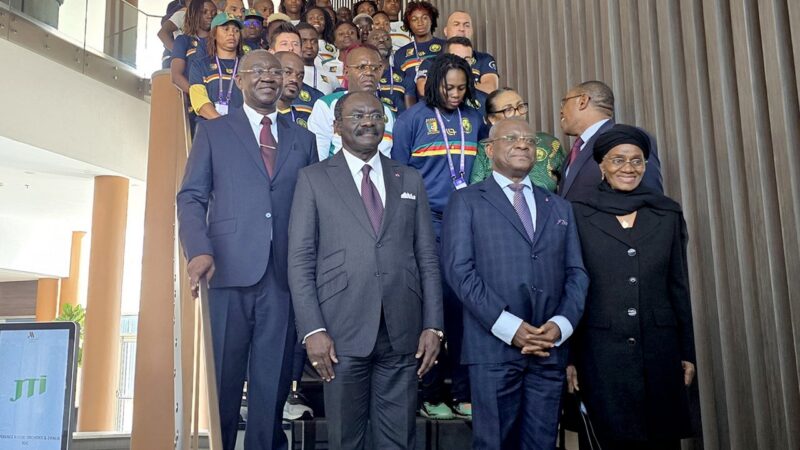
Gabon officially launched its National Human Development Report (NHDR 2026) on Friday, July 3, in Libreville. This marks the first edition in two decades, a significant event for the nation. Centered on the crucial theme of “Youth, employability, entrepreneurship, and human development,” the document was meticulously prepared by the Ministry of Planning and Foresight, in collaboration with the United Nations Development Programme (UNDP). It offers a comprehensive structural assessment of the country at a pivotal moment, as transitional authorities actively work to formalize a new, inclusive growth trajectory.
The report’s core finding reveals a striking paradox. Over the period analyzed, Gabon’s Human Development Index (HDI) reportedly advanced by an impressive 46%. This progress was primarily driven by notable improvements in school enrollment rates, increased life expectancy, and expanded access to fundamental social services. However, this positive trend stands in stark contrast to the 31% decline in gross national income per capita during the same timeframe. This stark divergence underscores a profound disconnect between aggregate social indicators and the economic realities experienced by ordinary households across the country.
A paradox challenging Gabon’s development paradigm
Such a statistical discrepancy is far from trivial, especially for a nation classified as an upper-middle-income country. Gabon has long been viewed as an anomaly in Central Africa, distinguished by its low population density and substantial oil revenues. The NHDR suggests that the benefits derived from past economic growth have not been distributed as widely or equitably as anticipated. Furthermore, the persistent reliance on hydrocarbons has seemingly weakened the economy’s capacity to generate sustainable incomes for a growing population. Consequently, the critical issue of value-added sharing has resurfaced as a central concern for policymakers.
A cross-analysis of these two diverging trends also illuminates the trajectory of a rentier economic model that appears to have reached its maturity. Decades of sustained public investment have undoubtedly fostered significant social progress, particularly in healthcare and education. Yet, the report indicates that productivity, economic diversification, and the creation of private wealth have struggled to keep pace. The unfortunate outcome is an erosion of real purchasing power for citizens, even as official human well-being indicators continue to show improvements on paper.
Youth and employability at the forefront of national priorities
The deliberate choice of the report’s theme is no accident. Gabon’s youth, predominantly urban and educated, are grappling with pervasive structural unemployment—a challenge that previous national emergence plans have failed to resolve. The report emphatically stresses the urgent need to fundamentally rethink the interplay between the educational system, the labor market, and the entrepreneurial ecosystem. It places particular emphasis on fostering skills for emerging professions, enhancing technical training, and providing robust support for project initiators. In this context, employability emerges not only as an economic imperative but also as a crucial issue for maintaining social stability.
The NHDR advocates for strengthening financial mechanisms specifically dedicated to small and medium-sized enterprises (SMEs) and calls for improved coordination among various public initiatives designed to support entrepreneurship. It also identifies deficiencies in digital infrastructure and a shortage of technical skills as significant barriers hindering the successful integration of young graduates into the workforce. For the transitional authorities, these comprehensive conclusions provide a well-documented foundation for their ongoing budgetary decisions and policy adjustments.
A guiding instrument for the transition period
The re-emergence of this report, after a twenty-year absence from Gabon’s institutional landscape, signifies a crucial methodological shift. The UNDP, which provides technical support for this initiative, views it as an invaluable opportunity to re-anchor public policies within a multidimensional understanding of development, moving beyond mere macroeconomic aggregates. For Libreville, this exercise furnishes a common reference framework, facilitating collaboration among sectoral ministries, technical and financial partners, and civil society stakeholders.
The challenge of implementation, however, remains paramount. A robust diagnostic assessment is only truly valuable if it inspires concrete decisions and actions. In the short term, Gabonese authorities face the critical task of translating the NHDR 2026’s recommendations into tangible reforms across key areas such as vocational training, economic financing strategies, and the governance of natural resources. The credibility of the political transition itself hinges on these efforts, especially at a time when public expectations regarding employment opportunities and purchasing power remain exceptionally high.