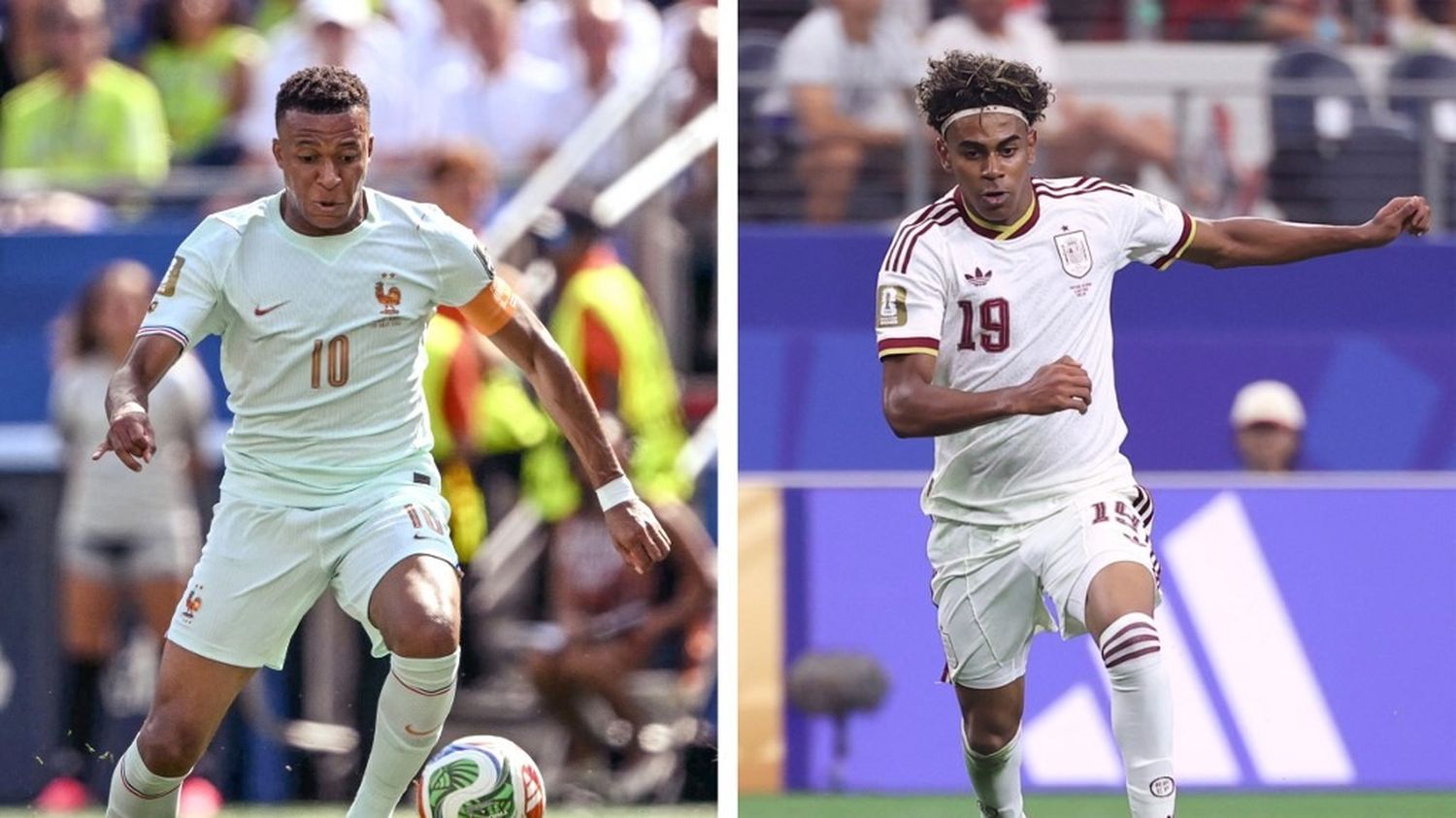
France vs Spain semifinal: why this clash is the unofficial World Cup final
For the third time in as many major tournaments over the past three years, France and Spain face off in a World Cup semifinal on Tuesday.
“It’s not an exaggeration to call this match the unofficial final.” Spain’s head coach Luis de la Fuente didn’t mince his words after his team’s quarter-final victory over Belgium on Monday. “The clear favorite is Spain,” France manager Didier Deschamps had declared before the tournament began. The two sides meet in a semifinal that promises to be a showdown of contrasting styles and relentless ambition.
Both teams have arrived at this stage with a singular purpose: to claim their place in the final and vie for the ultimate prize. France and Spain have already crossed paths twice in recent semifinals—at Euro 2024 and the 2025 Nations League—with each side prevailing once. Now, the World Cup stage offers a chance to settle the score once and for all. But what makes this particular semifinal so compelling compared to the other? Here’s why.
Elite defensive records and explosive attacking play
Heading into the semifinals, France and Spain have conceded just two and one goals respectively, placing them at the top of the tournament’s defensive charts. Spain, in particular, has gone five matches without conceding, slightly ahead of France’s four clean sheets. Their defensive solidity is matched only by their attacking intent. According to FIFA statistics, the two teams have combined for 110 shots on goal—a tally only surpassed by Belgium’s 112. Argentina and England, the other two semifinalists, lag far behind with 98 and 94 attempts respectively.
While efficiency hasn’t always been their strong suit—Spain has scored just 11 goals, the fewest among the four semifinalists, compared to France’s 16—both teams possess creative firepower that can unlock any defense. Spain’s Lamine Yamal, the youngest star in the tournament, has been instrumental in orchestrating attacks, while France’s Michael Olise leads the competition in assists with five.
“This promises to be a spectacular match.”
Didier Deschampsin pre-match press conference
Depth and tactical flexibility
Spain’s midfield depth is unmatched in this tournament. Players like Mikel Merino, who has scored decisive goals in both the round of 16 and quarter-finals, embody the team’s resilience and tactical adaptability. Entering as a substitute in both matches, Merino delivered in the 90th and 95th minutes respectively, showcasing the caliber of talent on the bench. With Rodri—Ballon d’Or 2024—orchestrating play with 629 passes, Spain’s midfield is a well-oiled machine where every player can seamlessly replace another without disrupting the rhythm.
France, too, has benefited from impactful substitutions. Bradley Barcola, who came off the bench in the opening match against Senegal, scored within two minutes to spark a nervy start for Les Bleus. His performance against Sweden in the round of 16 as a starter further underlined his importance. Désiré Doué, who secured a penalty against Paraguay after entering the game late, and players like Manu Koné, Malo Gusto, Warren Zaïre-Emery, and Rayan Cherki have all stepped up when called upon, providing fresh legs and tactical options.
A rivalry defined by recent dominance and psychological edge
Spain’s resurgence over the past two years has been remarkable. After a period of dominance in the late 2000s and early 2010s, La Roja faded until they reclaimed the European Championship in 2024 and the Nations League in 2025—both times eliminating France in the semifinals. The Euro 2024 semifinal was a masterclass: Spain outplayed a lackluster French side, winning 2-1 with a solitary penalty the only goal France managed in the group stage. The 2025 Nations League semifinal was even more dramatic. Spain led 4-0 at halftime, 5-1 in the 67th minute, but France fought back to within a goal before falling short in a 5-4 defeat.
“We know their potential, but we also know we’re the only team to have beaten them in two semifinals,” Luis de la Fuente remarked. “If anyone should be feared, it’s us. We eliminated them last time. We’ll see what happens, but we’re not afraid.” Lamine Yamal echoed that confidence, adding a touch of provocation: “He’s saying exactly what he wants. You shouldn’t fear anyone. Stay humble and don’t fall into that trap, especially at this stage of the tournament.”
France’s Ibrahima Konaté responded sharply: “He’s saying what he wants. But you shouldn’t fear anyone. Stay humble and don’t fall into that trap, especially at this stage of the competition.” History shows that when Spain enters a match overconfident, France has often risen to the occasion. In the 1998 World Cup round of 16, France defeated Spain 3-1—without a single Real Madrid player in their squad, but with eight Barcelona players. This time around, with Kylian Mbappé and Aurélien Tchouameni—both Real Madrid players—on the pitch, Spain may have an extra incentive to prove themselves.