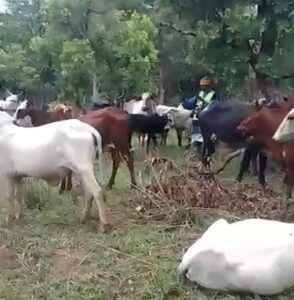
In the heart of the Bamingui-Bangoran region, an operation involving Russian mercenaries and Central African Republic (CAR) armed forces has taken a controversial turn, with local herders reporting widespread cattle seizures. The incident, unfolding in Ndele, has reignited concerns over security and humanitarian conditions in the Sahel.
Witnesses in Ndele describe the operation as a coordinated cattle raid, where armed groups allegedly confiscated livestock from local herders under the pretext of security measures. The claims have sparked outrage among the pastoral communities, who rely heavily on their cattle for livelihood and economic stability.
security concerns in the Sahel amid disputed operations
This latest development in Bamingui-Bangoran adds to growing tensions in the Sahel region, where security challenges continue to escalate. The involvement of foreign mercenaries alongside national troops has raised questions about the transparency and accountability of such operations.
Locals in Ndele report that the joint forces, comprising Russian-contracted personnel and CAR troops (known as Forces Armées Centrafricaines, FACA), conducted the raids in a manner that left herders with little recourse. Many describe the seizures as indiscriminate, affecting both small-scale and larger herding families.
humanitarian impact on pastoral communities
The cattle seizures have had immediate consequences for the herders of Ndele. Livestock is not only a source of income but also a cultural and social asset. The loss of cattle disrupts food security, displaces families, and exacerbates poverty in an already fragile region.
In response to the crisis, humanitarian organizations are calling for urgent intervention to protect local livelihoods and ensure the rights of pastoral communities are upheld. The situation remains tense as affected families demand answers and restitution.
what’s next for Bamingui-Bangoran and the Sahel?
The unfolding events in Ndele highlight broader challenges in the Sahel, where security operations often collide with the needs of local populations. As foreign actors and national forces navigate these complex dynamics, the humanitarian fallout continues to mount.
For now, the herders of Bamingui-Bangoran remain in limbo, awaiting clarity on the fate of their cattle and justice for the alleged seizures. The international community’s role in addressing these grievances will be critical in shaping the future of the region.