DR Congo’s bid for ITU seat gains momentum with diplomatic push
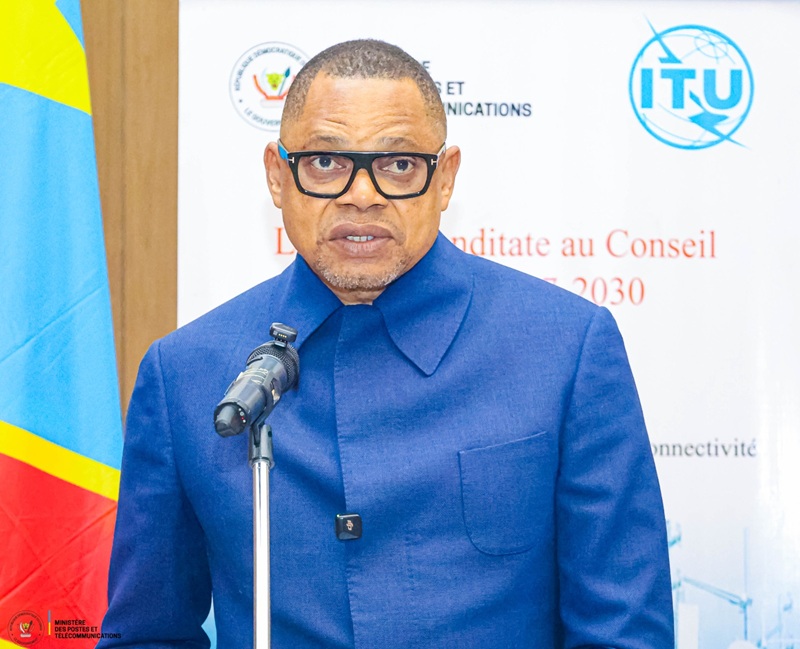
In a bold diplomatic initiative, the Democratic Republic of the Congo (DRC) is rallying international support for its candidacy to secure a seat on the International Telecommunication Union (ITU) Council. The move, spearheaded by Minister of Posts and Telecommunications José Mpanda Kabangu, aims to position the DRC as a key player in global telecommunications governance.
On the evening of July 16, 2026, Minister Mpanda convened a high-level gathering at the Hilton Hotel in Kinshasa. The event brought together ambassadors, diplomatic mission chiefs accredited to the DRC, and representatives from international telecom organizations. The purpose was to formally announce the DRC’s bid for a seat in the ITU Council’s Region D during the upcoming Plenipotentiary Conference in Doha, Qatar, scheduled for November 2026. The new mandate would span from 2027 to 2030.
The minister framed the candidacy as both a call for global solidarity and an opportunity for the DRC to contribute meaningfully to international telecom policy development. “Our bid reflects the DRC’s ambition to achieve global connectivity standards while amplifying Africa’s voice in shaping the future of telecommunications,” Mpanda stated, urging diplomats to advocate for the DRC’s cause in their respective capitals.
The DRC’s bid is anchored in four core commitments:
- Strengthening Africa’s voice within the ITU through active participation in decision-making processes;
- Mobilizing investments in networks, satellites, data centers, and public digital infrastructure;
- Championing a balanced digital governance model that prioritizes innovation, security, digital sovereignty, and citizen protection;
- Building capacity among African regulators and states through knowledge sharing, research, and innovation.
Christian Katende, President of the Post and Telecommunications Regulatory Authority (ARPTC), emphasized the DRC’s strategic importance in Africa’s digital transformation. With over 110 million people and nearly 74 million mobile subscriptions, the DRC boasts one of the continent’s largest digital markets. “We aim to transform the DRC into Central Africa’s digital hub and a major player in Africa’s digital economy,” Katende declared. He added that the DRC’s vast mineral resources—critical for semiconductors and AI infrastructure—justify its claim to a seat at the table where global digital governance rules are set.
Katende outlined the DRC’s vision for a more inclusive and competitive Africa in the digital age. “By supporting our candidacy, you are choosing an Africa that doesn’t just adapt to digital change but actively shapes it,” he told the diplomats. “Together, let’s make the next decade the era of an Africa fully engaged in global digital governance.”
Noëlla Ayeganagato, Deputy Minister of Foreign Affairs, reaffirmed the government’s commitment to the bid. She called on attending diplomats to leverage bilateral and multilateral diplomatic channels to secure support for the DRC’s election to the ITU Council. “The ITU is a strategic partner in achieving sustainable development goals,” she noted, stressing the need for clear messaging and sustained diplomatic engagement to ensure the DRC’s success.
The formalization of the DRC’s candidacy is set for November 2026 in Doha, where member states will vote on the next Council members.
Why the DRC’s bid matters for Africa
The DRC’s candidacy is more than a national ambition—it represents a collective opportunity for Africa. As the host of the African Telecommunications Union (ATU) headquarters, the DRC is uniquely positioned to advocate for the continent’s priorities in global telecom governance. Its bid aligns with broader efforts to reduce digital divides, foster innovation, and ensure Africa’s voice is heard in shaping the rules of the digital economy.
The DRC’s push for a seat on the ITU Council underscores its commitment to digital sovereignty, infrastructure development, and human capital growth. With a rapidly expanding digital market and a strategic role in critical mineral supply chains, the DRC is positioning itself as a leader in Africa’s digital future.