Côte d’Ivoire launches Master ECOTEDD to drive sustainable development
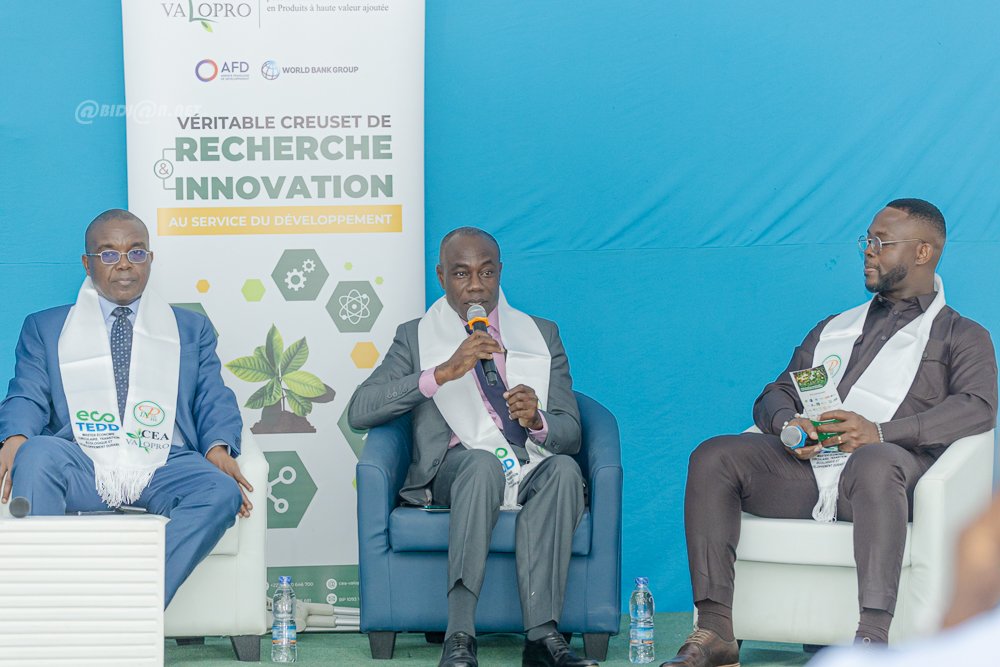
ABIDJAN, Côte d’Ivoire — The Institut National Polytechnique Félix Houphouët-Boigny (INP-HB), through its CEA VALOPRO division, officially inaugurated the Master in Circular Economy, Ecological Transition, and Sustainable Development (ECOTEDD) during an inaugural seminar held in Abidjan on May 16, 2026.
Under the theme “Sustainable Africa, Resilient Côte d’Ivoire: CSR and Circular Economy as Drivers of a New Development Model”, the event brought together national and international experts, policymakers, private sector leaders, and technical partners to discuss pressing ecological transition challenges and economic model transformations across Africa.
Addressing Africa’s environmental challenges
The seminar highlighted critical environmental issues facing the continent, including waste management, deforestation, energy transition, and the persistent hurdles in accessing climate financing. Professor Benjamin Yao, Coordinator of CEA VALOPRO, emphasized the strategic importance of this initiative, designed to deliver high-value educational content and bridge the gap between media and environmental experts for better public awareness.
During panel discussions, experts underscored the urgent need for innovative solutions tailored to Africa’s realities. Professor Yao championed circular economy principles as a viable response, stating, “Circular economy conserves value—what we now call waste can become tomorrow’s wealth.” He illustrated this with practical examples, such as agricultural waste valorization in cashew and cocoa supply chains.
Moving beyond Western models
Panelists cautioned against adopting Western development models wholesale, advocating instead for context-specific solutions. Professor Yao reinforced this point: “We must develop simple, effective, and sustainable solutions that align with our African context rather than replicating imported models.”
A key focus was the Corporate Social Responsibility (CSR) landscape, which remains underutilized despite growing regulatory pressures. Several speakers noted that CSR is increasingly becoming a prerequisite for public market access, urging businesses to move beyond superficial compliance and embed sustainability into their core operations.
Bridging the climate financing gap
The event also tackled the paradox of abundant but underutilized climate funds. Experts pointed out that while financial resources exist, complex and cumbersome procedures hinder their accessibility. They stressed the need to build local expertise capable of navigating international funding standards, ensuring proposals meet compliance requirements.
Students pledge to lead change
Abraham Bosson, spokesperson for the first ECOTEDD cohort, articulated the students’ commitment to redefining development models. “We envision an Africa that innovates, leverages local resources, and builds sustainable development aligned with its unique context,” he stated. He also underscored the generational responsibility to drive meaningful change: “We have a historic duty to become agents of change, spearheading innovative and sustainable projects for our nations.”
Bosson emphasized that the ECOTEDD Master’s program extends beyond academic learning, aiming to create tangible impact in businesses, institutions, and communities. “Our goal isn’t just to learn but to reshape industries, policies, and local initiatives.”
A program designed for real-world impact
The two-year, highly selective online program aims to equip the next generation of experts in waste valorization, CSR, climate finance, and environmental project development. With a strong emphasis on practical training, it seeks to address Côte d’Ivoire’s and Africa’s urgent sustainability challenges.
The INP-HB initiative aims to cultivate a skilled workforce capable of tackling sustainable development challenges across the region. Organizers anticipate opening the next call for applications in the coming weeks, further strengthening momentum toward a circular, inclusive, and resilient economy.