China dominates Chad imports, UAE leads exports in 2025
China, an indispensable supplier
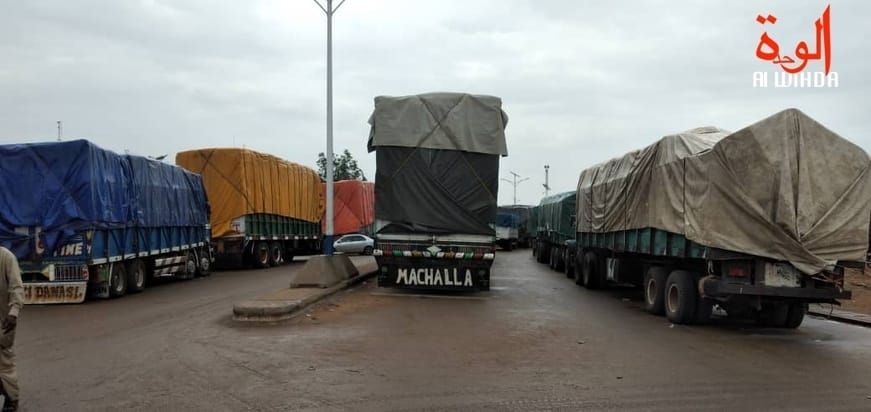
China delivered 306.5 billion FCFA worth of goods to Chad in 2025, accounting for 30.7% of total imports. This cements Beijing’s position as the dominant supplier — a role no other partner can challenge. Cameroon, the second-largest source, supplied only 108.4 billion FCFA, three times less. Libya ranked third with 85.8 billion (8.6%).
What China sends to Chad reflects a classic North-South trade pattern: manufactured goods, industrial equipment, and consumer products. The African nation absorbs Asian industrial output in exchange for raw materials. Beijing has replicated this model across Africa for two decades.
United Arab Emirates as export hub
On the export side, the picture is starkly different. The UAE tops the list of Chad’s buyers with 333.3 billion FCFA, representing 26.2% of total exports. It outpaces Malaysia (297.8 billion, 23.4%) and Germany (279.9 billion, 22%).
The UAE’s role is less that of a final consumer and more of a global redistribution platform. Dubai and Abu Dhabi serve as trade hubs where Chadian crude oil transits — sometimes processed or blended — before being re-exported to other markets. This intermediation is lucrative for the Emirates and acceptable for Chad, but it means N’Djamena does not always know the final destination of its own resources.
Key numbers
- 30.7% of imports come from China — a regional record
- 26.2% of exports go to the UAE
- 79.8% of imports concentrated among the top 10 partners
France and the United States, present but overshadowed
France, despite historical ties with Chad, accounts for only 5.1% of imports (50.9 billion FCFA), ranking sixth. The United States holds fifth place with 53.0 billion (5.3%). These figures reflect a gradual rebalancing of Chad’s trade partnerships toward Asia, the Middle East, and emerging economies, at the expense of traditional Western powers. India (4.3%), Togo (3.6%), Brazil (2.9%), and Turkey (2.3%) complete the diversified import picture. Chad multiplies its supply sources while remaining heavily dependent on China for volume.
A geography of dependencies to reconfigure
The strategic lesson is clear: Chad sells to a small number of highly concentrated destinations — the top ten buyers represent 98.9% of exports — and sources from suppliers that, while more diversified, are still dominated by Beijing. This dual concentration exposes the country to external shocks that a policy of trade diversification — both export and import — could mitigate.