Abala-Filingué: what the GARSI ambush reveals about Niger’s security unraveling under Tiani
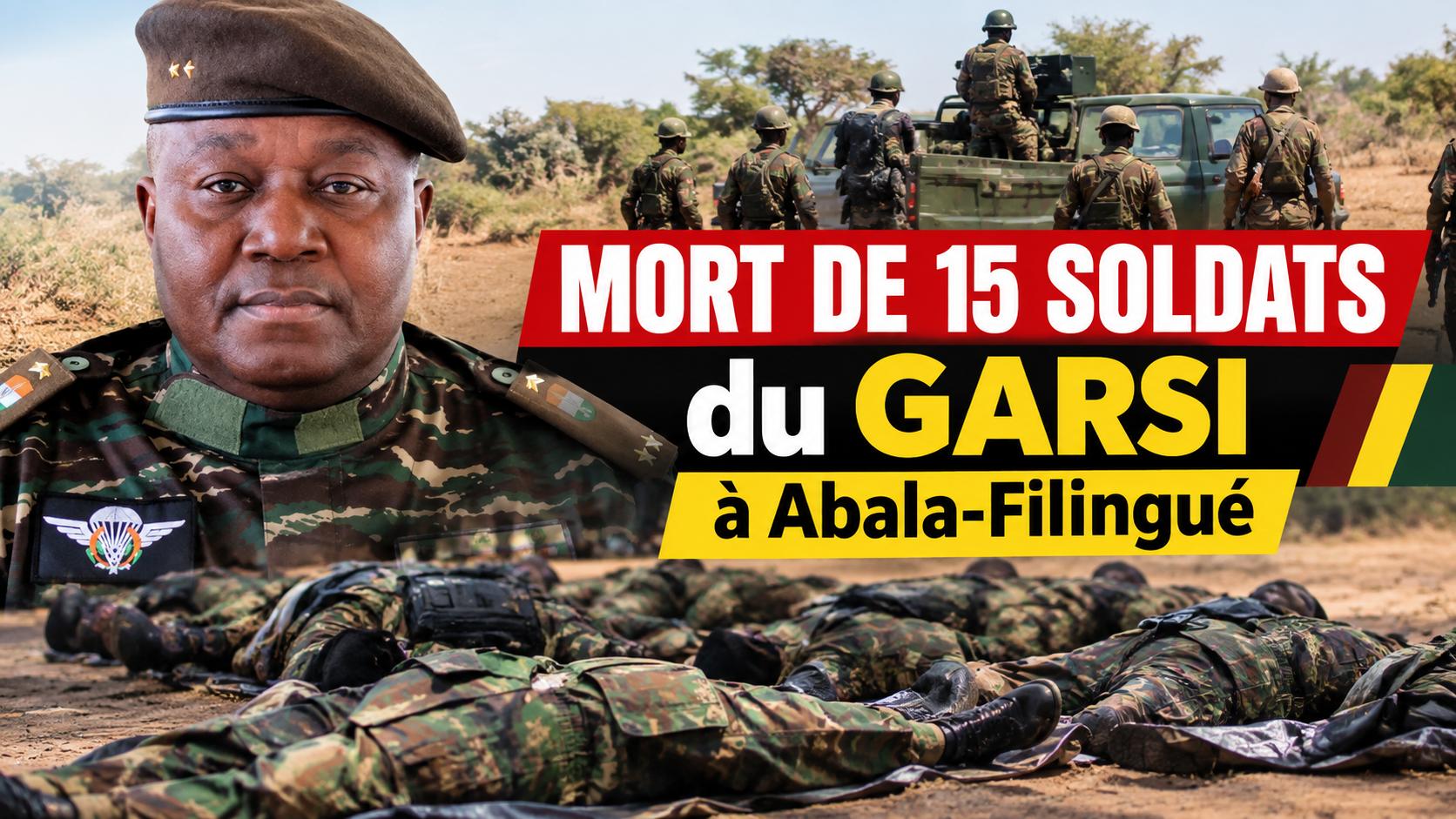
The ambush that unfolded this morning in the Abala-Filingué district has delivered another devastating blow to Niger. A patrol of the Rapid Action Group for Surveillance and Intervention (GARSI) was targeted in a terror attack of extraordinary violence. A provisional toll confirmed by multiple sources indicates that around fifteen soldiers were killed in action, including Captain Hassoumie and Adjutant Djindagarey. This heavy loss among elite units is not an isolated tragedy: it symbolizes a nation sliding deeper into chaos since General Abdourahamane Tiani seized power by force.
A patriotic promise that never materialized
When the National Council for the Safeguard of the Homeland (CNSP) overthrew elected president Mohamed Bazoum on July 26, 2023, it made security restoration its central pledge. The military junta vowed a swift and decisive response to the jihadist threat, citing a supposedly deteriorating security front to justify its coup.
Yet the tragic sacrifice of Captain Hassoumie, Adjutant Djindagarey, and their men exposes the gaping chasm between official propaganda broadcast in Niamey and the bloody reality on the ground. Far from containing the threat, the military government has disrupted the armed forces, weakened the chain of command, and sent elite troops into battle without adequate tactical and aerial support.
Alarming statistics: the escalation under the CNSP
Away from the triumphalist rhetoric of transitional authorities, data collected by independent observers and the Armed Conflict Location & Event Data Project (ACLED) paints a grim picture of Niger under Tiani’s rule:
- Over 1,500 political violence events have been recorded nationwide since the July 2023 coup.
- More than 5,800 deaths, both civilian and military, have been reported during this military transition period.
- A rise of over 40% in civilian victims from direct attacks in the months following the takeover, compared to the previous period.
- Record military losses: deadly ambushes such as Koutougou (17 dead), Tabatol (29 dead), and recurring tragedies in the Tillabéri and Tahoua regions underscore the ongoing vulnerability of the Defense and Security Forces (FDS).
In the “three borders” region, a vast area where the Group for the Support of Islam and Muslims (GSIM) and the Islamic State in the Greater Sahara (EIGS) operate, the state has lost ground. The Abala-Filingué ambush confirms that armed groups now attack battle-hardened units like GARSI with impunity.
Diplomatic isolation and disastrous strategic choices
How could a regime of senior officers allow the security situation to deteriorate this far? The junta’s failure stems from a series of questionable and dogmatic strategic decisions. By unilaterally denouncing defense agreements with Niger’s traditional partners—notably France and the United States—the Tiani regime deprived the armed forces of essential tools: high-precision intelligence, long-range drone surveillance, and rapid medical evacuation capabilities.
To fill the void, Niamey rushed to create the Alliance of Sahel States (AES) with Mali and Burkina Faso and turned to new allies, including Russia. But on the ground in Abala-Filingué and elsewhere in Tillabéri, the effect of this realignment is invisible. Reconnaissance drones cannot compensate for the lack of tactical anticipation, and ground troops continue to pay a heavy toll against mobile, heavily armed assailants.
While the junta focuses on its own political survival—pursuing opponents, restricting press freedoms, and organizing support rallies—the security of soldiers and civilians takes a back seat.
The suffering of civilian populations
While the deaths of elite officers like Captain Hassoumie grieve the army, civilians are the primary victims of this state abandonment. In the Tillabéri region, terror reigns supreme. Terrorist groups impose zakat on residents, burn schools, loot markets, and execute anyone who refuses to submit.
The security crisis is accompanied by a major humanitarian tragedy:
- Over 450,000 people are currently internally displaced in Niger, having fled their villages amid the jihadist advance.
- Approximately 3.3 million people suffer from acute food insecurity, hindered by the closure of trade routes and the abandonment of farmland.
- Hundreds of schools are closed, depriving tens of thousands of children of their future.
The urgency of facing reality
The deadly attack on GARSI at Abala-Filingué can no longer be buried under sovereignist slogans or blamed on external scapegoats. It lays bare General Tiani’s inability to fulfill the fundamental promise that served as the pretext for his coup: to protect Nigeriens and guarantee the nation’s territorial integrity.
By abandoning Captain Hassoumie, Adjutant Djindagarey, and their fourteen comrades-in-arms, the military government reveals its limits. The junta must urgently abandon its denial, reassess its defense strategy, and understand that a regime’s legitimacy is not measured by control of the capital, but by its capacity to preserve the lives of soldiers at the front and citizens in their villages. Without radical self-questioning, Niger risks sinking even deeper into the abyss.