C64 march fuels clashes between Kabuya and Mbata in DRC
C64 march fuels clashes between Kabuya and Mbata in DRC
- Politics
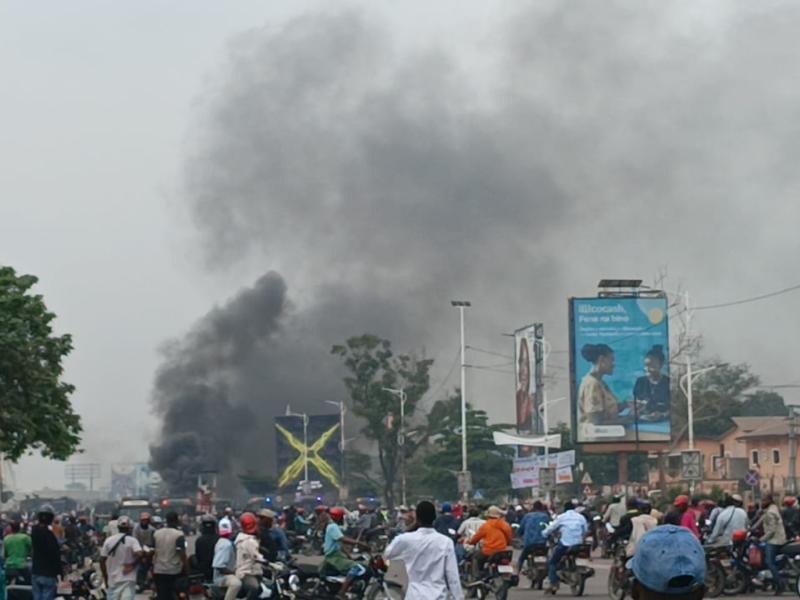
Tensions have escalated between prominent figures in President Félix Tshisekedi’s political camp, Augustin Kabuya and André Mbata, over strategies to address the upcoming July 22 march organized by the Coalition for Article 64 (C64). The opposition-led demonstration aims to pressure the government to abandon its constitutional reform plans, which critics argue could undermine democratic stability.
Constitutional reform sparks internal divisions
The planned march targets the Palais de la Nation in Kinshasa, demanding President Tshisekedi’s resignation for allegedly betraying his constitutional oath. This follows revelations about his administration’s push to amend the 2006 constitution—a move seen by opponents as an attempt to extend his tenure.
Mbata calls for counter-march, Kabuya urges restraint
While André Mbata, a constitutional law professor and National Assembly deputy, is advocating for a counter-demonstration in Kinshasa, all 25 provincial capitals, and the diaspora, Augustin Kabuya, Secretary-General of the ruling Union pour la Démocratie et le Progrès Social (UDPS), has publicly opposed the initiative. In a terse statement released on July 13, Kabuya instructed UDPS members to avoid participation in the opposition’s march, asserting that “no march is scheduled for that date and no routes should be shared with the opposition.”
War of statements exposes deeper fractures
Mbata swiftly countered Kabuya’s stance, arguing that the Union Sacrée de la Nation (USN)—a coalition of over 900 political parties and associations—cannot be reduced to the position of a single member. In a scathing response, he accused Kabuya of making an “incorrect and premature” declaration that does not reflect the platform’s stance. Mbata emphasized that “members of the USN should ignore any messages not officially endorsed by the platform’s Permanent Secretary.”
The public feud between the two leaders underscores growing internal divisions within the Union Sacrée, raising concerns about the coalition’s cohesion ahead of the 2028 elections. Kabuya’s frustration with Mbata dates back to 2024 when the latter opposed his candidate in the Sankuru gubernatorial election. In April, Mbata backed an alternative candidate, Jules Lodi Emongo, who ultimately won the race. Kabuya retaliated by instructing UDPS members to stop financial contributions to Mbata, further highlighting the depth of their rivalry.
As the C64 march approaches, the clash between Kabuya and Mbata reflects broader uncertainties over the country’s political direction, with both sides digging in their heels over the constitutional reform debate.