Financial support from ECOWAS despite political tensions
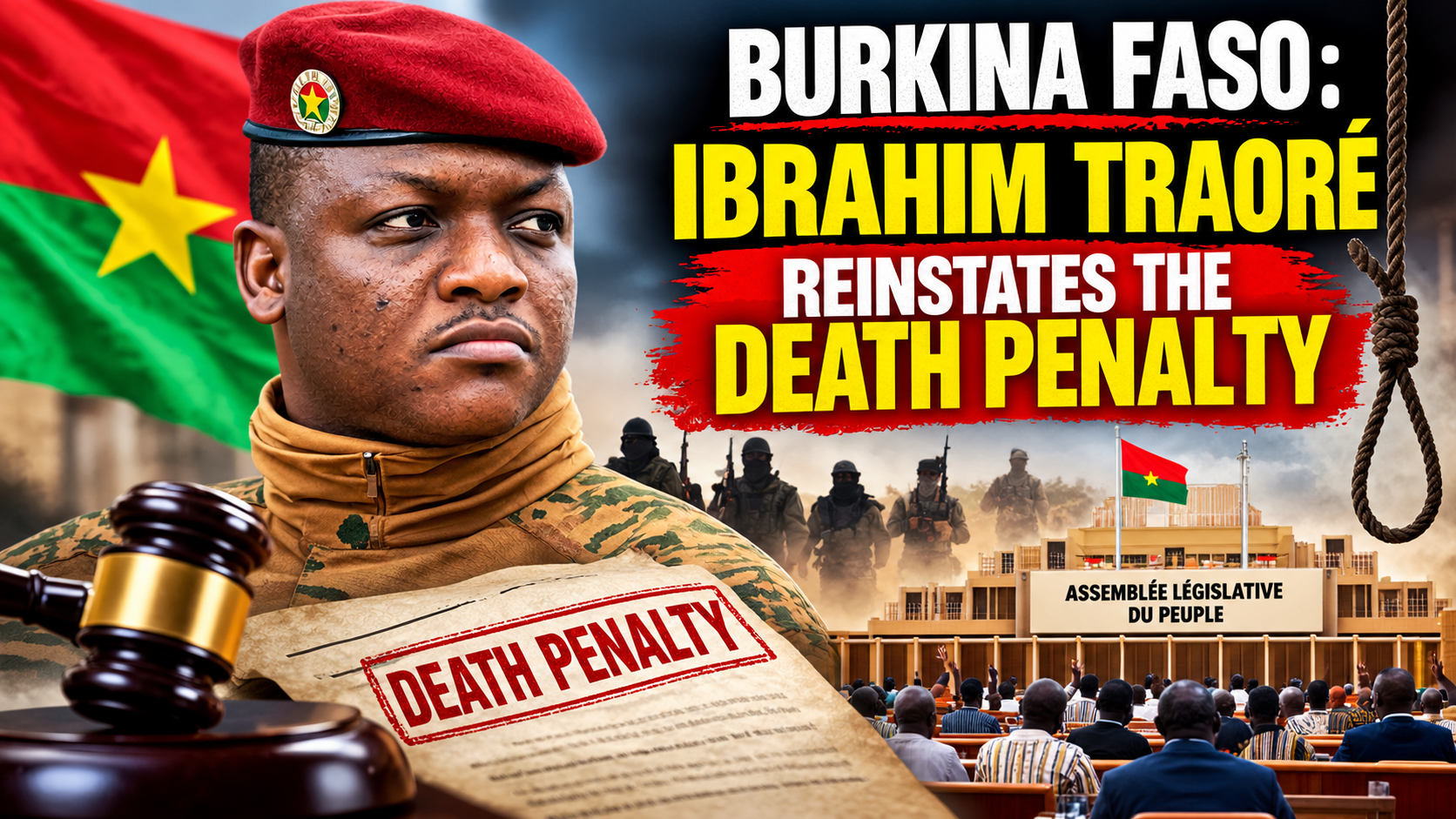
The official discourse of Captain Ibrahim Traoré frequently condemns the ECOWAS as a puppet of Western powers, yet financial records reveal a different narrative. While political rhetoric escalates, the Burkinabè government continues to seek and receive substantial financial assistance from this regional bloc. This discrepancy underscores a critical divide between political posturing and economic imperatives that no nation can ignore.
A regional organization may face political criticism yet still serve as a vital financial partner, enabling the realization of essential national projects. The flow of funds from ECOWAS mechanisms demonstrates that pragmatic economic needs often transcend ideological disputes.
ECOWAS investments driving national development
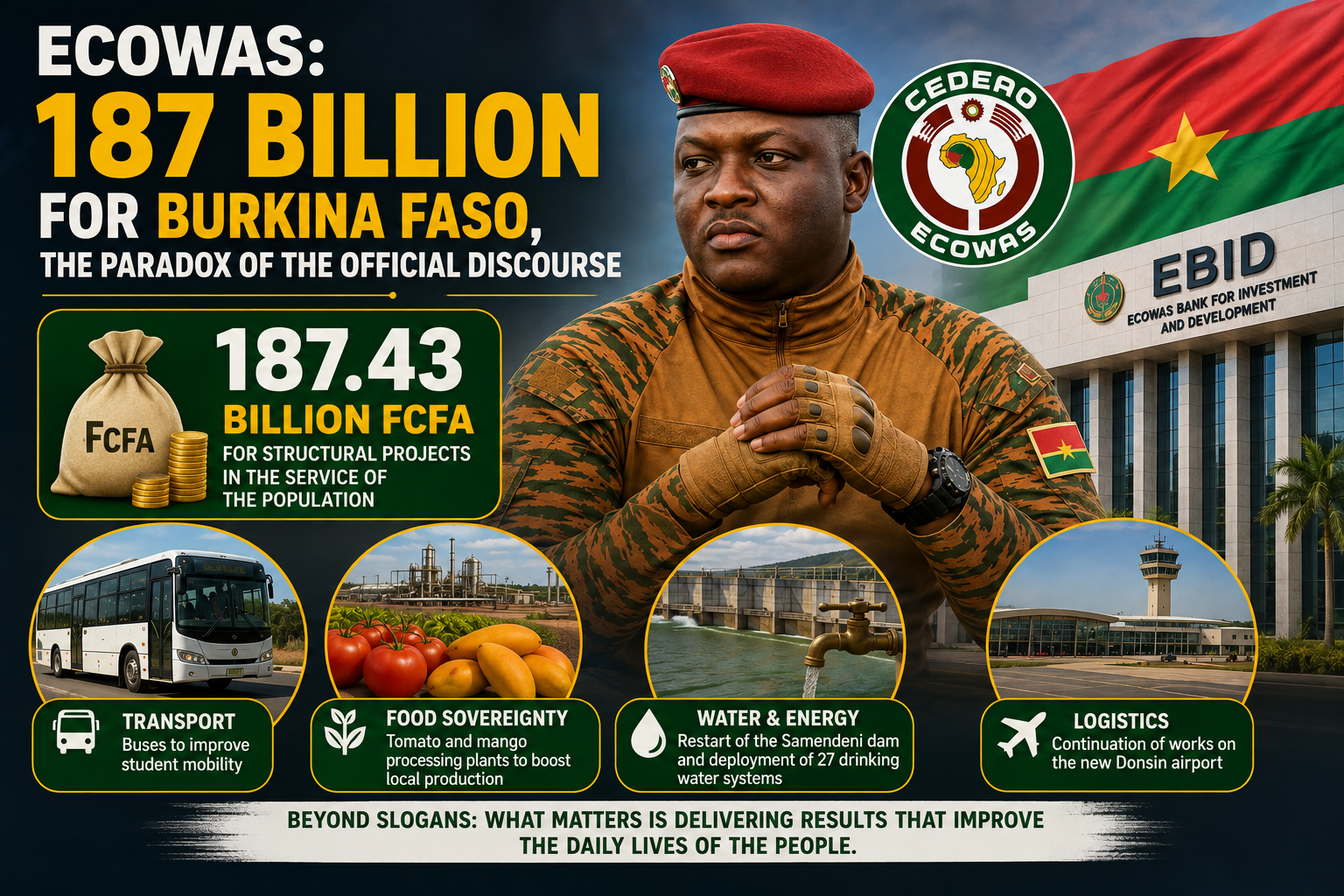
The ECOWAS Bank for Investment and Development (EBID) has recently committed a significant financial injection of 187.43 billion West African CFA francs toward critical infrastructure projects in Burkina Faso. These funds are allocated to initiatives that directly impact the daily lives of Burkinabè citizens:
Transport and education: Procurement of buses to alleviate student transportation challenges, thereby improving access to education and easing the burden on families.
Food sovereignty: Establishment of tomato and mango processing plants to enhance local agricultural value, reduce post-harvest losses, and create new economic opportunities for farmers.
Water and energy: Revival of the Samendeni dam project and deployment of 27 potable water systems in high-demand areas, addressing both development and social stability needs.
Logistics: Continuation of construction at the Donsin international airport, poised to enhance national connectivity and economic exchanges if executed effectively.
These investments highlight that regional integration extends beyond diplomatic declarations. ECOWAS operates tangible financial instruments that support member states in achieving developmental objectives, even when political rhetoric suggests otherwise.
The paradox of political discourse versus economic necessity
The contradiction between public criticism of ECOWAS and the continued reliance on its financial mechanisms raises pressing questions. If the regional bloc is perceived as detrimental to Burkina Faso’s interests, why persist in utilizing its funding for national projects? This paradox reflects a broader truth in international relations: economic imperatives often supersede ideological or political disagreements.
Public statements may frame ECOWAS as an antagonist, yet its financial instruments remain indispensable for addressing pressing national needs. This duality challenges the coherence between political messaging and economic decision-making, as a state cannot simultaneously denounce an institution while leveraging its resources for critical development.
Sovereignty beyond rhetoric: accountability and results
The concept of sovereignty is central to Burkina Faso’s current political narrative. However, sovereignty should not be conflated with isolation. A sovereign nation can advocate for its interests, contest regional decisions, and simultaneously utilize cooperative mechanisms that benefit its people.
The true test lies not in rejecting cooperation outright but in ensuring that financial inflows such as the 187.43 billion CFA francs are deployed efficiently, transparently, and in alignment with national priorities. Citizens deserve clarity on how these funds are allocated, the timelines for project execution, and the oversight mechanisms in place. Sovereignty must translate into accountability, not merely political declarations.
From commitments to tangible outcomes
The ultimate measure of these investments will be their real-world impact. For students, farmers, families, and entrepreneurs, the key question remains: how will these funds translate into tangible improvements?
A processing plant must operate at full capacity. Water systems must deliver reliable service. Buses must enhance mobility. The Samendeni dam must meet energy demands. The Donsin airport must fulfill its developmental promise. The success of these projects hinges on rigorous execution, not political grandstanding.
As Burkina Faso navigates its political and economic challenges, the onus is on its leadership to ensure that financial support from ECOWAS yields measurable benefits. The 187.43 billion CFA francs represent more than a budgetary figure they embody potential roads, water access, agricultural opportunities, and economic growth. Whether these funds drive transformation or dissipate amid bureaucratic inefficiencies will determine their legacy.