Burkina Faso’s innovative mobile clinics tackle cervical cancer head-on
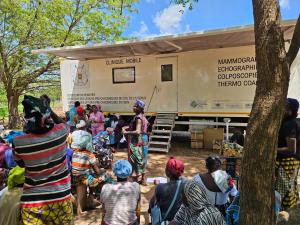
In a groundbreaking initiative, Burkina Faso is redefining healthcare accessibility through mobile clinics that bring cervical cancer screening directly to women in rural and underserved areas. This proactive approach is transforming lives by eliminating geographical and financial barriers that have long hindered women’s access to essential health services.
Breaking down barriers to healthcare
Before this revolutionary program, women in Burkina Faso faced daunting challenges in accessing cervical cancer screening. With coverage rates below 8%, rural communities were particularly hard-hit. Many women had to travel hundreds of kilometers to reach equipped health centers, often lacking both transportation and financial resources. The scarcity of trained healthcare professionals and minimal awareness campaigns compounded these difficulties.
Awa, a 48-year-old mother of six from Ipendo in Burkina Faso’s Centre-Ouest region, shared her initial apprehension: « When I heard the town crier announce free screening services, I feared what might happen if I tested positive. But thinking of my children gave me the courage to go through with it. » Her story reflects the silent struggles of thousands of women across the country.
Government action and strategic implementation
Recognizing the urgent need for change, the Burkinabè government implemented bold measures to combat cervical cancer. As explained by Professor Nayi Zongo, Oncologist and National Cancer Control Program Coordinator: « The government issued a decree making screening and precancerous lesion treatment completely free. We also equipped peripheral health centers and launched mobile clinics to reach women where they are. »
These mobile clinics have become a beacon of health equity, traveling to villages, farms, markets, and even family compounds. Women no longer need to abandon their daily agricultural or domestic tasks to get screened. « Bringing screening directly to communities enables women to maintain their livelihoods while protecting their health, » emphasizes Professor Zongo.
The program’s success stems from a multi-faceted strategy combining:
- Financial accessibility through free services
- Geographical reach via mobile clinics
- Community mobilization and engagement
- Nationwide awareness campaigns through TV, radio, and popular events like « October Rose »
- A national cancer coalition uniting civil society, community leaders, and media
Collaboration and measurable impact
The World Health Organization (WHO) played a pivotal role in supporting Burkina Faso’s vision. Through technical assistance, professional training in detection and treatment, and community mobilization efforts, WHO helped turn this initiative into reality. « WHO stood by our side to strengthen our capabilities and ensure every woman, regardless of location, could access these vital services, » notes Professor Zongo.
The results speak for themselves. From October 2024 to September 2025, mobile clinics conducted 468 outreach missions across various regions, reaching nearly 2 million women. These efforts led to 106,446 screenings, 715 precancerous lesion treatments, and 113 advanced diagnostic examinations. More than statistics, these figures represent lives saved and families protected.
A model for Africa
Dr. Seydou Coulibaly, WHO Representative in Burkina Faso, highlights the program’s significance: « Burkina Faso demonstrates that with strong political commitment and context-appropriate solutions, even the most daunting barriers can be overcome. » He emphasizes that the combination of financial and geographical accessibility through free services and mobile clinics offers an inspiring model for other African nations.
For women like Awa, the mobile clinics represent far more than medical services—they provide the first opportunity to learn about cervical cancer, understand the risks, and discover prevention methods. « Today, I encourage all women to get screened. Early detection makes treatment much easier, » she shares with conviction.
Beyond health, this initiative champions dignity, social justice, and family futures. Each mobile clinic that arrives in a village carries a powerful message: health is a right, not a privilege. In Burkina Faso, this right is becoming a reality for every woman.