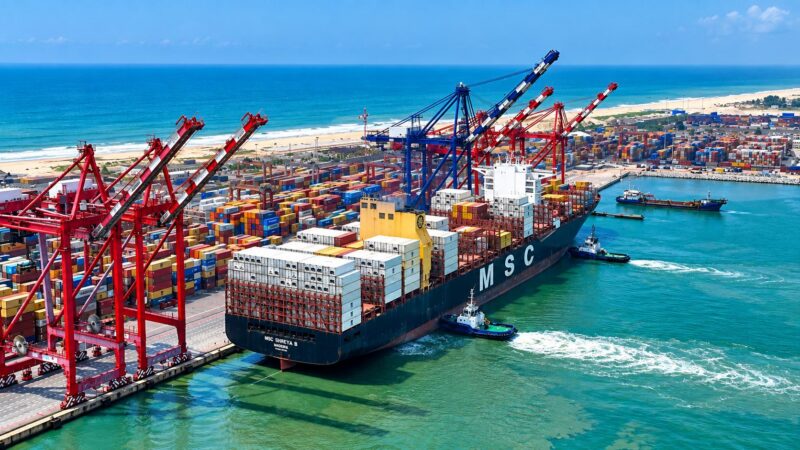
Burkina Faso’s financial illusion: the debt trap behind the ‘no credit’ slogan
In the official rhetoric of Captain Ibrahim Traoré and Burkina Faso’s military leadership in Ouagadougou, a recurring phrase has emerged as the emblem of the regime’s claimed economic sovereignty: “There’s no credit in it.” Echoed endlessly across social media and parroted by supporters, the slogan aims to persuade that massive undertakings—road rehabilitation, infrastructure construction, equipment procurement, and state modernization—are being funded entirely from domestic resources, without recourse to external borrowing.
The message is clear, compelling, and politically potent: Burkina Faso is advancing under its own steam, finally free from the shackles of international donors. Yet, between the polished slogan and the stark realities of public finance, a widening chasm becomes undeniable.
From rhetoric to reality: the limits of self-financing
Economic sovereignty is, without question, a legitimate aspiration. Reducing dependence on foreign powers, boosting internal revenue mobilization, and strengthening national capacities are goals few would contest. However, the insistence that every public investment is financed solely from domestic coffers—despite financial statements, financing agreements, and official disclosures pointing to concessional loans and multilateral funding—raises serious questions about transparency.
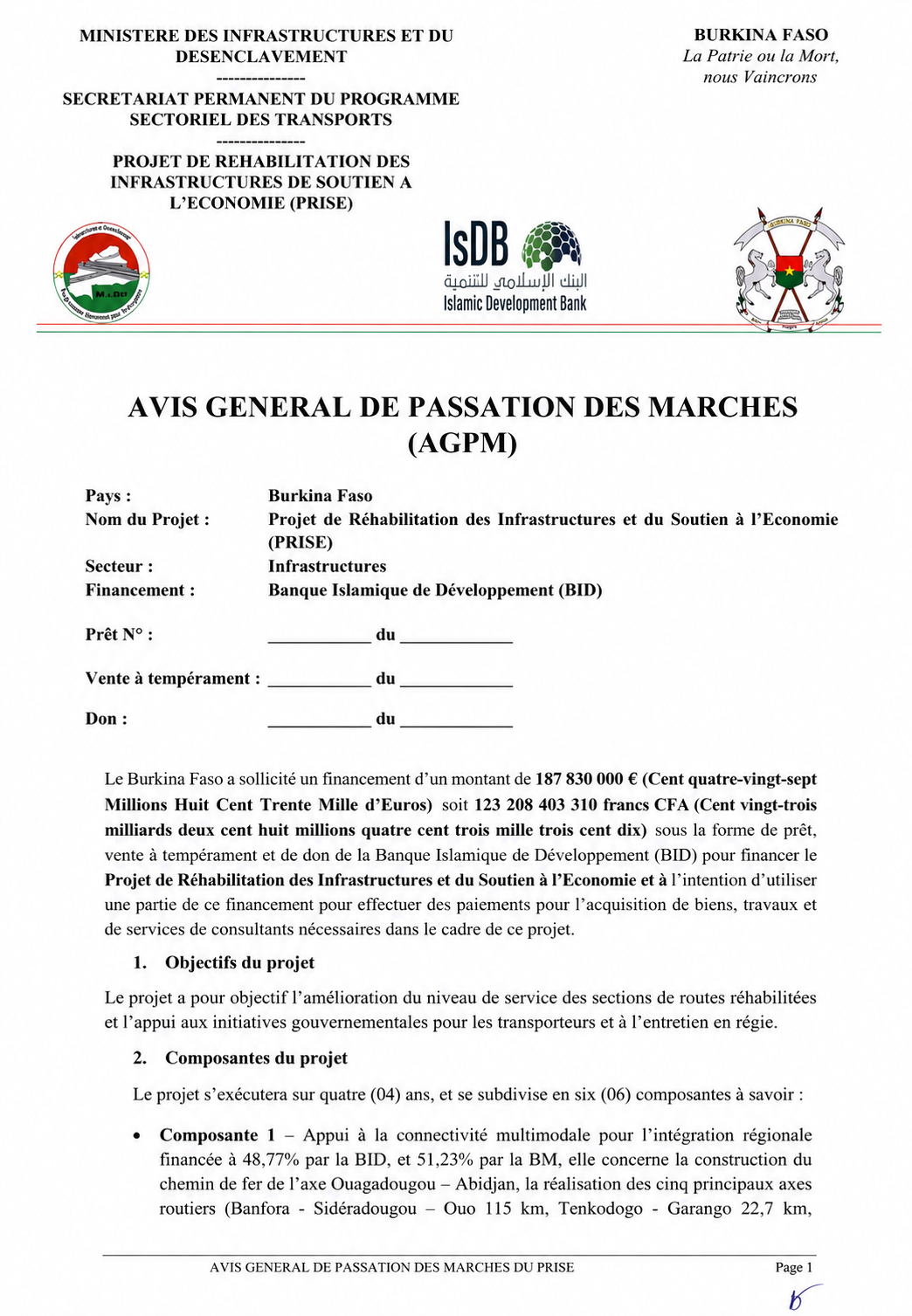
Recent agreements with the Islamic Development Bank (IDB) to finance major road projects serve as a case in point. These initiatives do not rely on grants or free transfers; they involve loans with repayment schedules, even if interest rates are concessional. In essence, they are financial commitments inscribed in the national ledger, not acts of fiscal self-sufficiency.
The contradiction is glaring: if external financing is being used, why insist that “there’s no credit in it”?
Why the insistence on denying debt?
The practice of borrowing to fund infrastructure is neither novel nor inherently problematic. States across the globe, particularly in developing contexts, routinely supplement insufficient budgetary resources with external financing to bridge critical gaps in development.
What is striking here is not the use of loans, but the stark discrepancy between:
- a public narrative proclaiming near-total financial autonomy;
- a financing mechanism that continues to depend on international partners.
This dissonance fuels skepticism about the authenticity of government communication and the credibility of its economic claims.
An economy under severe strain
The feasibility of mass self-financing is further undermined by Burkina Faso’s enduring economic challenges:
- a deepening security crisis with staggering human and financial costs;
- soaring military expenditures;
- intensifying pressure on public finances;
- urgent infrastructure needs;
- massive internal displacement of populations;
- fragile tax revenues due to economic slowdown in key regions.
In such a climate, financing multi-hundred-billion-franc CFA infrastructure projects without external support appears, to many economists, highly implausible.
The real issue isn’t credit—it’s opacity
Public borrowing is not inherently flawed. When funds are directed toward productive infrastructure—roads, energy, health, education—they can catalyze growth, enhance productivity, and uplift living standards. The issue lies not in the existence of debt, but in the lack of clarity surrounding it.
The public has every right to demand transparency on:
- the exact sources of financing;
- the volume of loans contracted;
- interest rates and repayment schedules;
- guarantees provided;
- the true economic cost of projects.
A responsible financial governance model prioritizes accessible information over political slogans.
The slogan’s political function
The phrase “There’s no credit in it” appears designed less as an economic statement and more as a political tool. It reinforces the image of a leadership breaking decisively with past dependency and presenting every completed project as proof of regained independence.
It also stokes nationalist sentiment among segments of the population, especially as sovereignty has become a central pillar of political discourse. Yet when communication eclipses budgetary education, there is a real risk of fostering unrealistic expectations about the state’s capacity to fund development independently.
The burden on future generations
Every loan contracted today will be repaid tomorrow—through future tax revenues. Every new road, school, or hospital built today may benefit coming generations, but so too will the financial obligations that accompany them.
This is why transparency in public debt is not just an administrative requirement—it is a democratic imperative. Citizens deserve to know whether borrowed funds are financing assets that will generate sufficient wealth to cover their own repayment, ensuring sustainable development rather than unsustainable debt cycles.
True sovereignty lies in responsible management
Economic sovereignty is not measured by the absence of debt, but by the ability of a nation to:
- manage public finances sustainably;
- invest strategically and efficiently;
- publish transparent accounts;
- account to its citizens;
- use borrowing responsibly;
- gradually reduce external dependence through a more competitive economy.
A strong nation is not one that denies its financial commitments, but one that acknowledges them openly and deploys them toward enduring prosperity.
Beyond the slogan: the path forward
The phrase “There’s no credit in it” has unquestionably captured public imagination. But sustainable economic management cannot be built on catchphrases alone.
The financing agreements with international partners confirm what many observers already suspected: like most developing nations, Burkina Faso continues to rely on external resources to fund a significant share of its development agenda.
The debate, therefore, should not pit borrowing against sovereignty, but focus instead on:
- the quality of governance;
- the transparency of financial commitments;
- the effectiveness of investments made.
Ultimately, it is today’s and tomorrow’s taxpayers who will bear the consequences of the financial choices made by current leaders. Their right to clear, accurate information is not a luxury—it is the foundation of democratic accountability.