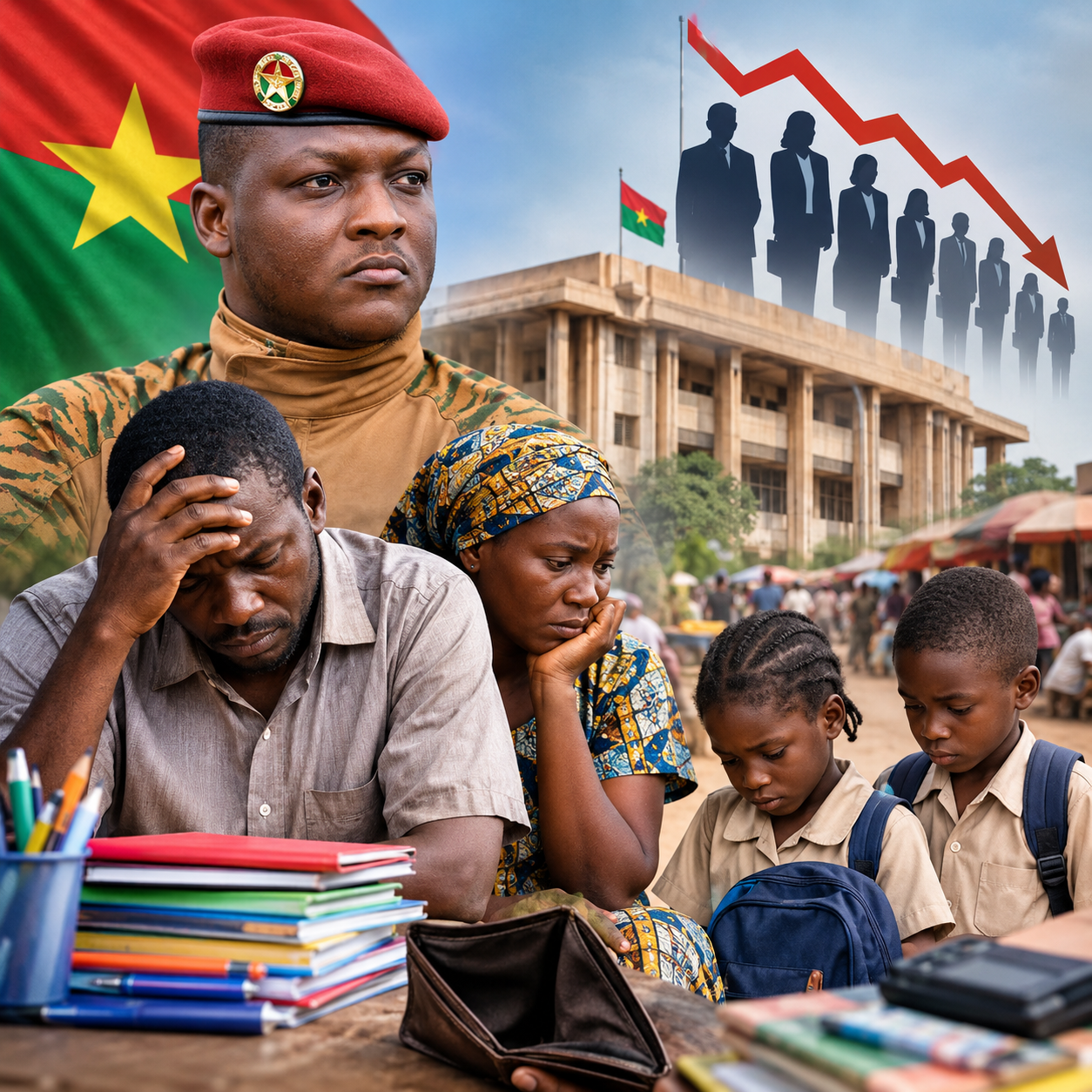
On Monday, June 8, Burkina Faso’s Ministry of Culture ordered an immediate halt to all beauty pageants held across the country. The official statement freezes indefinitely all competitions for miss titles, neighborhood queens, or ethnic promotions, pending a complete overhaul of their regulatory framework. The transitional authorities justify this decision by the need to realign these events with Burkinabe cultural values and the ideological direction of the popular progressive revolution led by Captain Ibrahim Traoré.
A suspension rooted in cultural sovereignty
The ministry’s reasoning follows the sovereignty-focused discourse that has shaped public policy since the military took power in September 2022. Ouagadougou argues that beauty pageants as organized for decades largely follow Western standards deemed inappropriate for the country’s aesthetic, clothing, and moral references. The ministry cites preservation of women’s dignity, promotion of traditional attire, and opposition to what it views as unethical commodification.
This move is part of a broader symbolic reappropriation by the authorities. Over the past two years, Ouagadougou has taken several steps to break from colonial cultural heritage, such as promoting the Faso Dan Fani—a woven fabric now used as official dress—and prioritizing national languages in public communication. Suspending beauty pageants extends that logic to a highly visible event sector.
An event sector brought to a standstill
In practical terms, the decision affects dozens of private organizers, communication agencies, and service providers who depend on this image-based economy. Events like Miss Burkina, Miss University, Miss Côte d’Or, and numerous regional elections are key milestones for local creative industries, involving stylists, photographers, choreographers, hoteliers, and sponsors. The administrative freeze comes just months before the usual pageant season, which typically runs from August to December.
The ministry has not set a specific date for lifting the suspension. It only indicates that a new regulatory framework will be developed, including criteria for conformity with revolutionary ideals. Organizers will likely need to submit their concepts for prior approval by cultural services, with specifications focused on promoting local attire, national languages, and patriotic messaging.
However, the line between regulation and restriction remains blurry. Several industry players privately wonder whether future pageants can attract sponsors and audiences if aesthetic codes are drastically changed. The fate of Burkinabe candidates already involved in international competitions like Miss World or Miss Universe also remains unclear for now.
A political signal to civil society
Beyond the event sector, the measure carries a clear political dimension. It confirms the transitional authorities’ intent to apply their ideological framework to broad areas of social life that were previously lightly regulated. The language used—invoking popular progressive revolution and endogenous values—points to a long-term cultural transformation project, echoing the Sankarist references frequently cited by the current leadership.
Regional analysts note that this suspension adds to a series of decisions shaping an increasingly interventionist cultural policy in the central Sahel. Mali and Niger, Burkina Faso’s partners in the Sahel States Confederation, have also taken steps in recent months to regulate social practices deemed overly influenced from abroad. The convergence of approaches among the three Sahel capitals suggests a possible shared cultural doctrine in development.
The medium-term impact will depend on how quickly the new framework is published and the flexibility granted to private operators. The Ministry of Culture has not specified a timeline for the resumption of contests.