Lomé played host to a stark reality check as the third edition of the pan-African forum Biashara Afrika 2026 kicked off. What was meant to be a celebration of continental integration soon turned into a cautionary tale about bureaucratic hurdles.
The grand stage of the Togolese capital was set for high-level discussions on the African Continental Free Trade Area (AfCFTA), promising a unified market of 1.4 billion consumers. Yet, the opening ceremony quickly pivoted to a real-time case study on how administrative inefficiencies can derail even the most ambitious economic visions.
When African passports fail at African airports
The atmosphere was charged with anticipation as Nigeria’s Minister of Industry, Trade and Investment, Dr. Jumoke Oduwole, took the floor. Instead of reiterating the usual rhetoric on intra-African trade, she opted for a candid recount of a recent ordeal faced by two high-profile investors—one Nigerian, the other Ghanaian—who had just arrived from Europe.
Their crime? Arriving in Lomé with standard CEDEAO passports, long touted as the gateway to seamless regional mobility since the 1970s. The border police, however, delivered an abrupt verdict: entry denied. To set foot in Togo, both business leaders had to resort to a last-minute solution—presenting their European passports and securing last-minute visas.
The minister’s assessment was blunt. “One of them, a financial services investor, told me he wouldn’t consider putting money into this market. We hadn’t even left the airport, and his decision was already made.” She drew a sharp parallel: “A similar scenario in the EU—where an African investor would need a visa to enter with an African passport—simply wouldn’t happen.”
The irony was palpable. For African investors, holding a European passport appeared to be the surer route to entry than relying on the CEDEAO travel document, a long-standing symbol of regional unity.
This isn’t just an inconvenience for travelers—it’s a deterrent for investment. While ordinary citizens have long accepted border bureaucracy as part of the journey, investors expect efficiency. The question lingers: Are the rules different for those with capital?
Bureaucracy vs. policy: the integration paradox
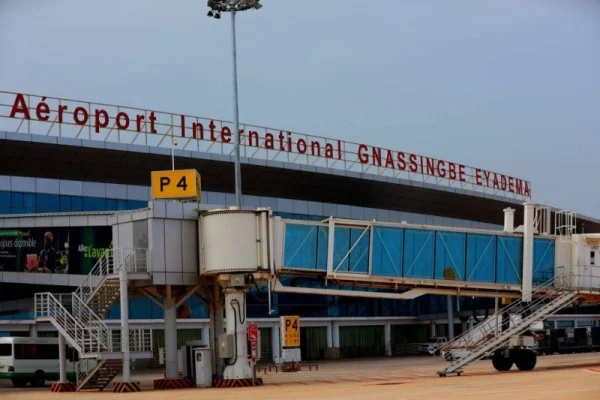
For a nation positioning itself as a regional logistics and financial hub, the incident exposed a harsh truth. Visa restrictions on neighboring nations don’t just create red tape—they repel investment. At Lomé’s airport, a European passport cleared faster than a CEDEAO travel document. The message sent to investors? The promise of the AfCFTA remains aspirational, not operational.
Tick-tock: 48 hours to salvage the hub’s reputation
Confronted with the blunt criticism and the risk of undermining the forum’s credibility, Togolese President Faure Gnassingbé took swift action. Dispensing with lengthy deliberations, he issued a direct order to the Minister of Security:
“I expect the Minister of Security to resolve this anomaly within 48 hours.”
The deadline? Wednesday, the closing day of Biashara Afrika 2026. The message was clear: the immigration services would need to undergo an emergency crash course in regional mobility—or face the consequences in full view of continental observers.
For all its ambitions, the forum had inadvertently highlighted a critical flaw in Africa’s integration drive. A single misplaced stamp could cost millions in potential investments, proving that even the most promising economic projects hinge on the smallest of administrative details.
The AfCFTA in peril: when paperwork trumps policy
Economists and entrepreneurs in attendance were quick to frame the incident as a wake-up call. “This is a red flag. Without free movement of people, the AfCFTA is just empty rhetoric,” remarked an economist from Côte d’Ivoire. A Ghanaian entrepreneur added, “If investors need European passports to do business in Africa, then integration is nothing more than a slogan.”
The episode underscored a glaring contradiction: the AfCFTA promises a $3.4 trillion market and a unified trade zone, yet its credibility is eroded by outdated border practices. The path forward now hinges on three priorities:
- Harmonizing visa policies across the region;
- Digitizing border procedures to eliminate human error;
- Ensuring political will aligns with economic ambition.
In Lomé, Africa learned a hard lesson: the success of its grand economic visions may well depend on fixing the smallest cracks in the system.