- Bénin
- Politics
Bénin transition: Talon as facilitator, Wadagni as guarantor in religious dossier handover
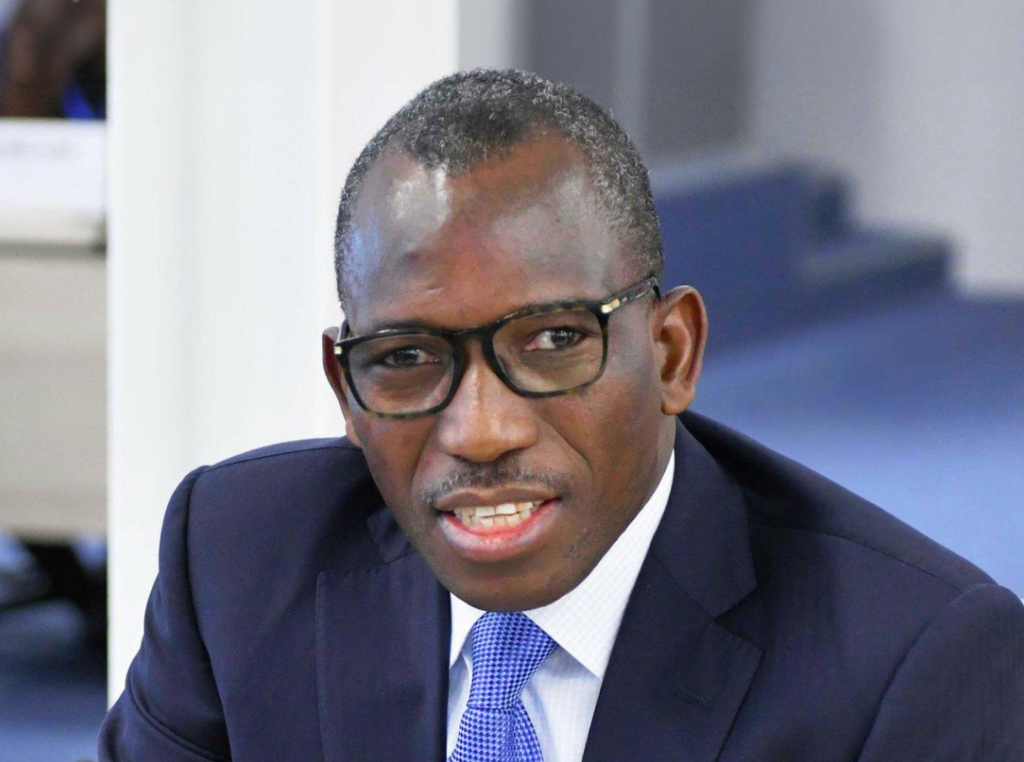
An unprecedented political insight emerged from the June 4 audience granted by President Romuald Wadagni to the delegation of the Celestial Church of Christ. This meeting highlighted an exemplary state transition where two presidents clearly defined their roles to serve a peace process extending beyond Bénin’s borders.
Certain matters inherently reveal the quality of governance. The reunification process of the Celestial Church of Christ is one such case. It doesn’t unfold in grand public spectacles but through internal meetings, theological consultations, and deliberations. However, it demands unwavering state commitment. Any lapse in engagement could signal fragility to the Church’s factions, exposing the process to electoral uncertainties. This risk has been meticulously addressed.
The inaugural scene: two presidents, one dossier
To grasp the significance of this moment, we must revisit the handover ceremony of the Supreme Labor Council’s (CST) conclusions and recommendations. On that day, Patrice Talon and Romuald Wadagni stood side by side—the former still in office, the latter already elected but yet to be sworn in. This proximity wasn’t merely symbolic; it was deeply political. It underscored an explicit transfer of responsibility and a tacit agreement on the necessity of continuity.
“Rarely does an outgoing president involve their successor so early in such a sensitive matter. It speaks volumes about how they’ve managed the transition’s depth.” – A diplomat stationed in Cotonou
June 4 offered a second demonstration of this well-oiled mechanism. In the morning, Patrice Talon officially installed the Council tasked with implementing the CST’s recommendations. By evening, Romuald Wadagni welcomed the delegation. The sequence was almost choreographed: one installed, the other received; one legitimized the framework, the other animated it.
The division of roles: a deliberate political architecture
What this sequence reveals is a thoughtfully designed governance structure. Patrice Talon assumed the role of facilitator—a term denoting someone who creates dialogue conditions without being an arbitrator. His legitimacy on this matter is historical; the process was launched, structured, and delivered under his mandate. To ecclesiastic actors, he remains the guarantor of the approach.
Romuald Wadagni embodied active republican continuity. By reaffirming his support for the delegation, he conveyed that the State isn’t merely transferring the dossier—it’s taking ownership. A simple handover would have sufficed to ensure the transition. Wadagni went further: he engaged personally, asked probing questions, and reassured the delegation.
“He didn’t just listen. He asked detailed questions. It was clear he’d been briefed and understood the dossier inside out. This wasn’t a courtesy call.” – A delegation member after the meeting
A live test of top-level cohesion
Beyond the Celestial Church itself, this matter serves as a litmus test for the relationship between the two presidents. In many African transitions, pending matters from outgoing presidents often languish in institutional limbo—not officially abandoned, yet not fully embraced by the new government. The temptation to start anew or let previous dynamics fade is real.
Here, the signal runs counter to that norm. By actively involving himself in the early weeks of his mandate on a dossier initiated by his predecessor, Wadagni established a governance principle: state continuity outweighs agenda disruption. If this principle holds across other domains, it could become a defining feature of his early tenure.
“What we’re seeing with the Celestial Church, we hope to see across other major projects. It’s the true test of this transition.” – A Bénin governance analyst
A matter transcending national borders
Reducing this dossier to its Bénin dimension would be shortsighted. The Celestial Church of Christ is a global organization with followers on every continent. Its reunification process, if successful, would be an international milestone—and Bénin, as its founding nation, would be the epicenter.
The engagement of Bénin’s two presidents on this matter carries diplomatic and symbolic weight far beyond Cotonou. It positions Bénin as the nexus for resolving a global religious schism, with its leaders acting as responsible stewards of a peace process affecting millions of believers. In a different register from classical diplomacy, this is a form of soft power: the capacity to exert positive influence through mediation rather than coercion.
In this light, the June 4 audience wasn’t a minor religious event. It was an act of foreign policy intertwined with national cohesion—a concrete illustration, for skeptics, that the power handover between Patrice Talon and Romuald Wadagni was executed in depth, not merely in form.