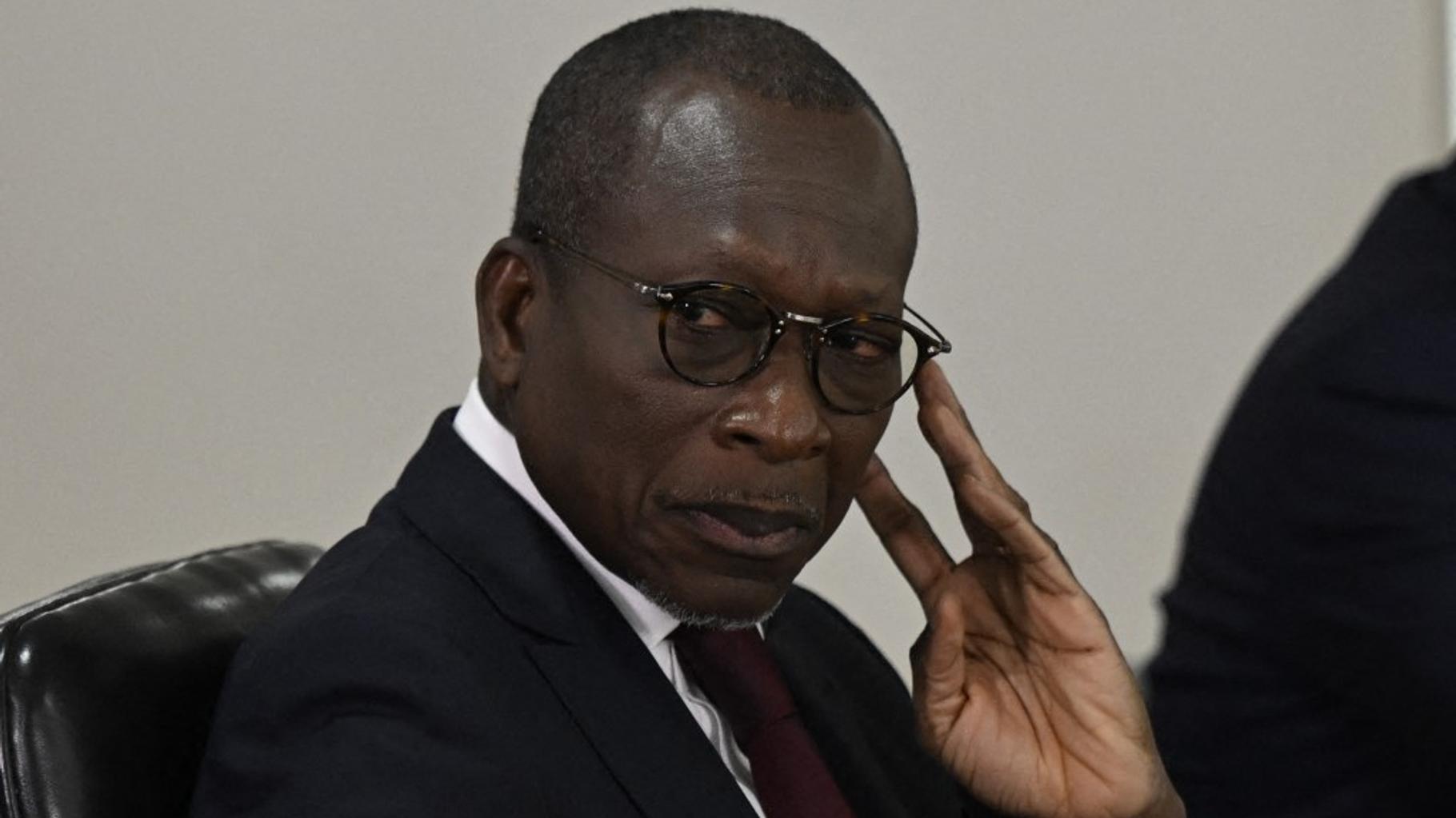
What exactly unfolded in Bénin this Sunday morning? On December 7th, the Béninese government announced it had successfully “thwarted” a coup attempt in Cotonou. This declaration followed a broadcast on state television where soldiers claimed to have removed President Patrice Talon from office.
According to his close associates, President Patrice Talon remains secure. He is expected to conclude his tenure next April, following a presidential election, after serving two terms leading this small West African coastal nation. Bénin has experienced robust economic growth but faces ongoing jihadist violence in its northern regions.
By Sunday lunchtime, the situation in Cotonou, the economic capital, remained fluid. Reports indicated gunshots were heard, and soldiers had established blockades preventing access to the presidential palace. Despite these developments, residents in other parts of the city continued with their daily routines. Here’s what is currently known about the situation.
“Military Committee for Refoundation”
Earlier this Sunday, eight military personnel, identifiable by their various colored berets and armed with assault rifles, presented themselves on Béninese television as the “Military Committee for Refoundation” (CMR). They declared the ousting of President Patrice Talon.
The group designated a lieutenant-colonel as the “President of the CMR,” articulating their rationale for the attempted power grab. Their justifications included the “continuous deterioration of the security situation in northern Bénin,” alleged “neglect of soldiers fallen in combat and their families left to fend for themselves,” and “unjust promotions at the expense of the most deserving.”
They also criticized what they termed a “disguised undermining of fundamental freedoms” by the current administration and outlined various social demands.
President secured, key areas blocked by military
However, the Béninese army did not align with the coup plotters. Alassane Seidou, Bénin’s Minister of the Interior, later affirmed on television that “faced with this situation, the Béninese armed forces and their command, faithful to their oath, remained republican. Their response allowed them to maintain control of the situation and thwart the maneuver.” These statements were made amidst reports from AFP witnesses of ongoing gunfire in Cotonou on Sunday.
President Talon’s close circle had informed AFP earlier that morning that he was safe and that the national army was regaining control of the city. A source elaborated, “This is a small faction of individuals who only control the television. The regular army is taking back control. The city (Cotonou) and the country are completely secured.”
An AFP journalist observed that military personnel had blocked access to the national television station and the presidential palace. Furthermore, entry to several strategic locations, including the Sofitel, a five-star hotel in the economic capital, and districts housing international institutions, was also restricted.
“Clean-up” operations underway
A military source, quoted by AFP, confirmed that the overall situation was “under control.” The source clarified that the coup plotters had failed to seize “neither the head of state’s residence” nor “the presidency of the Republic.” The source added, “It’s a matter of time before everything returns to order. The clean-up is progressing well.”
The Economic Community of West African States (ECOWAS) issued a communiqué “strongly condemning this unconstitutional action, which constitutes a subversion of the will of the Béninese people.” ECOWAS pledged to “support the government and people [of Bénin] by all necessary means.”
The African Union (AU) also released a statement, published on X, asserting its “firm and unequivocal condemnation” of the attempted coup. The AU called upon the military personnel to return to their barracks and urged “all actors involved in the attempted coup to immediately cease all illegal actions” and “return without delay to their professional obligations.”
Talon’s leadership and the authoritarian shift
Bénin’s political history has frequently been marked by coups d’état or attempts. President Patrice Talon, who assumed power in 2016, is scheduled to complete his second and constitutionally mandated final term in 2026.
The primary opposition party has been excluded from the upcoming electoral contest, which is set to feature the ruling party against a so-called “moderate” opposition figure.
While President Talon has received praise for Bénin’s economic development, critics frequently accuse him of steering the nation towards an authoritarian style of governance, a stark contrast to the country’s once-celebrated vibrant democracy.
This incident in Bénin occurs amid a series of military takeovers that have destabilized West Africa since the start of the decade, including events in Mali, Burkina Faso, Niger, Guinea, and most recently, in late November, in Guinea-Bissau.