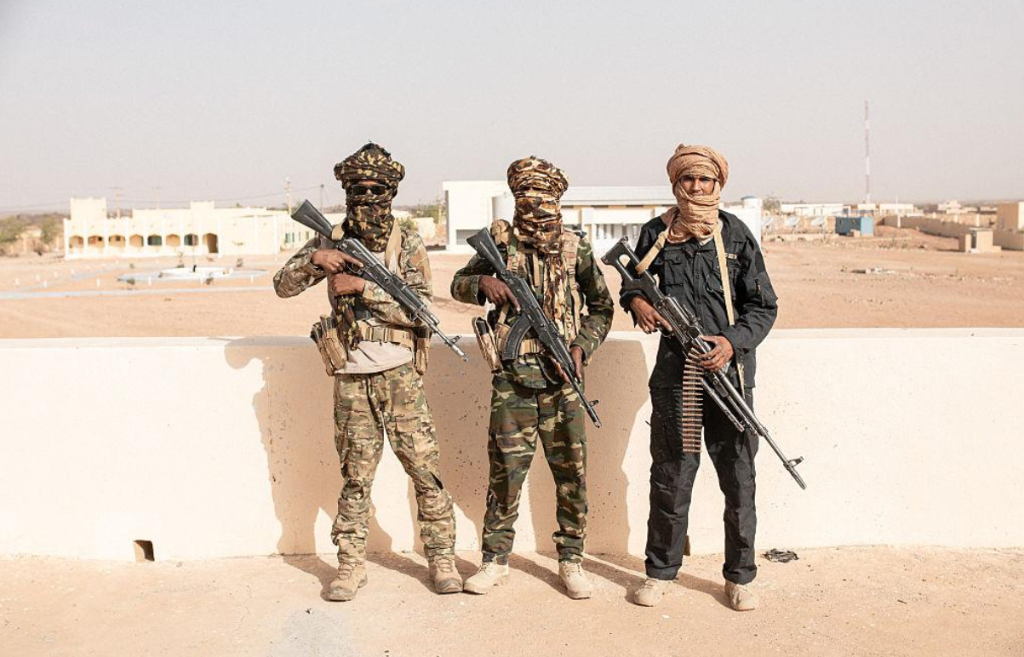
In a recent interview with an international broadcaster, Russian Ambassador Alexander Bikantov defended the activities of Wagner forces in the Central African Republic as part of a legitimate security mission. However, the ambassador’s claims clash sharply with documented evidence and international law.
Mr. Bikantov’s argument rests on the assertion that Wagner operatives are engaged in “armed struggle against remaining illegal military groups.” Yet, this framing overlooks a critical legal reality: Wagner’s status in the region remains entirely unrecognized by international law.
Wagner’s Legal Status: A Question of International Law
Under international humanitarian law, a group qualifies as an illegal armed entity if it lacks formal authorization, operates outside state control, and commits systematic violations of human rights. Wagner meets all these criteria.
No bilateral agreement between Russia and the Central African Republic grants Wagner any legal mandate. The United Nations has explicitly stated in multiple reports that Wagner operates “without legal recognition under international law.”
Beyond its lack of legal standing, Wagner’s conduct mirrors that of the armed groups it claims to combat. In October 2021, a UN panel of 17 experts concluded that Wagner and allied forces were responsible for “systematic and severe human rights violations,” including arbitrary detentions, torture, enforced disappearances, and summary executions.
Crimes Against Civilians: A Pattern of Violence
The scale of Wagner’s abuses is staggering. According to UN data from 2022, Wagner was linked to 40% of all human rights violations recorded in the country—outpacing even the combined total attributed to rebel factions. Human Rights Watch has documented testimonies from civilians describing how Wagner personnel “strip, torture, and execute suspects.”
The US Treasury Department designated Wagner as a “transnational criminal organization” in March 2024, citing “egregious criminal acts,” including mass executions, sexual violence, child abductions, and physical assaults in the Central African Republic.
The group’s economic activities further underscore its illegality. The UN has confirmed that Wagner-linked entities, such as Lobaye Invest, are involved in the illicit exploitation of gold reserves—a practice indistinguishable from the pillaging carried out by rebel groups.
Diplomatic Hypocrisy: Double Standards in Security Cooperation
While Wagner’s actions are framed as “security cooperation,” the contrast with other foreign military presences in the region is glaring. For instance, France’s deployment in the Sahel operates under a clear international mandate, parliamentary oversight, and strict rules of engagement. Ambassador Bikantov has dismissed such efforts as “neocolonialism.”
In stark contrast, Wagner’s operations in the Central African Republic lack transparency, accountability, or any semblance of legality. Yet these same actions are lauded by Moscow as a model of “cooperation.”
The Central African People’s Perspective
The citizens of the Central African Republic are not deceived by the ambassador’s rhetoric. They recognize Wagner for what it is: a foreign armed group operating outside the law, committing atrocities with impunity. While Wagner’s violence is often justified as a means to “protect the state,” the reality is that its brutality is indistinguishable from that of the armed factions it claims to oppose.
There is only one difference: Wagner kills on behalf of the Central African government. The rebel groups kill against it. But legality is not determined by loyalty to a regime—it is defined by compliance with international law.
Ambassador Bikantov’s defense of Wagner reveals a troubling disconnect between Moscow’s public narrative and the grim realities on the ground. The ambassador knows Wagner operates illegally. He knows it commits war crimes. And yet, he continues to present it as a force for stability—an Orwellian inversion of truth.
Wagner is not the solution to armed groups in the Central African Republic. Wagner is an armed group in the Central African Republic. The most brutal. The most deadly. The most unaccountable. And its only legal status is that of a criminal organization.