Africa Corps: Russia’s new paramilitary force and its role in the Sahel
Considered one of Russia’s most clandestine military extensions globally, Africa Corps recently faced a strategic setback, being dislodged from a key position held by the Malian junta. Despite this, it remains a vital strategic instrument for Moscow’s influence across the Sahel region.
A tumultuous weekend unfolded in Mali. On Saturday, April 25, Islamist militants, aligned with Tuareg rebels, launched coordinated attacks on several strategic locations controlled by the ruling junta. These assaults targeted areas around Bamako—where Defense Minister Sadio Camara was reportedly killed—as well as other major cities, highlighting the volatile security situation in the Sahel.
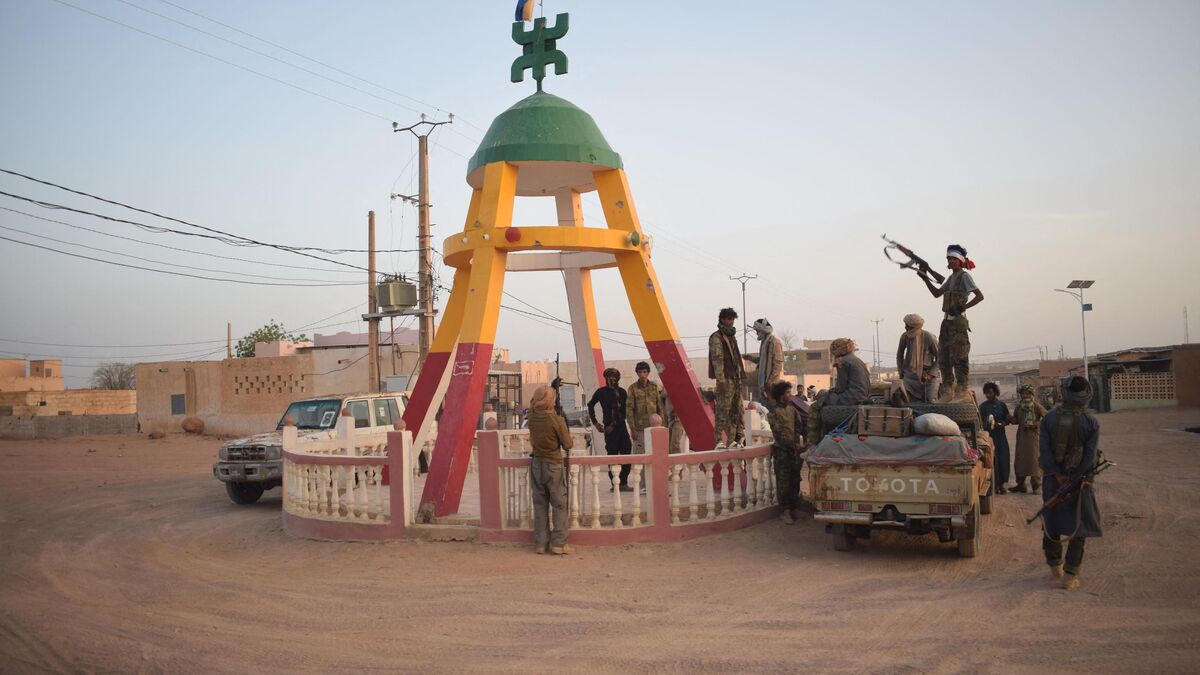
In eastern Mali, rebel forces successfully reclaimed Kidal, a strategic stronghold for the junta that had been under the firm control of the Africa Corps militia for several years. Following intense clashes and hours of negotiation, this Russian paramilitary organization opted to withdraw. Despite this local retreat, Africa Corps maintains significant influence throughout North Africa and beyond Mali’s borders, contributing to the broader political Sahel landscape.
#Mali départ de tous les éléments de l’Africa Corps rassemblés à l’entrée de l’ancien camp sous escorte du FLA. Avec ce convoi les mercenaires russes quittent la ville et le camp. https://t.co/fGS1yA4E24 pic.twitter.com/ovNPLWYINw
— Wassim Nasr (@SimNasr) April 26, 2026
Emerging in 2023, Africa Corps is regarded as one of Russia’s most secretive military entities. Its formation was first mentioned on November 20 by military blogger Deux Majors on Telegram, who relayed statements from Igor Korotchenko, a former colonel and journalist with close ties to the Kremlin. The organization is reportedly overseen by Russia’s Deputy Minister of Defense, Iounous-bek Evkourov.
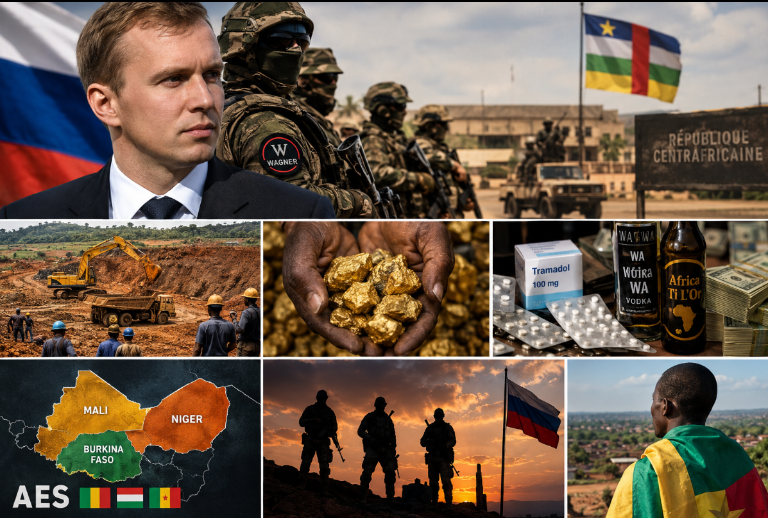
News of Africa Corps’ establishment coincided with the Wagner Group’s diminishing influence. Since its founding in 2014, Wagner, an autonomous armed branch, had been tasked with advancing Russian interests internationally, particularly in Africa.
However, the group’s two founders, oligarch Evgueni Prigojine and former Russian intelligence officer Dmitri Outkine, perished in a mysterious plane crash in August 2023. This occurred shortly after Evgueni Prigojine, once a close ally of Vladimir Poutine, attempted to orchestrate an armed rebellion against Moscow.
Amidst this turbulent backdrop, Africa Corps has sought to assume control of its predecessor’s operations in the region. An American governmental source told Le Monde in 2023 that “Africa Corps is a rival to Wagner, destined to absorb its activities in Africa and its personnel.” Described as a rigid and centralized entity, this new militia is under direct and close supervision from Moscow, influencing the security Sahel narrative.
Similar to the Wagner Group, named after the composer favored by Adolf Hitler, the new organization’s name carries a direct reference to the Nazi regime. It draws inspiration from the “Afrikakorps,” which fought for the Third Reich in parts of North Africa during World War II.
Clearly Defined Objectives for Russia Africa Corps Sahel
From its inception, Africa Corps has articulated its goals with clarity. Igor Korotchenko elaborated that the group “must conduct large-scale military operations on the (African) continent to support countries seeking to finally break free from neocolonial dependence, eliminate Western presence, and achieve full sovereignty.” This statement underscores a significant shift in the political Sahel landscape and Russia’s Sahel Vision.
However, the organization aims for a more discreet profile than the Wagner Group, which was frequently accused of war crimes and brutal suppression of local populations. Africa Corps’ efforts are centered on strengthening ties with Russia’s allied governments by providing them with soldiers and military equipment. Gradually, this armed branch has expanded its network, initially in Burkina Faso, then extending its reach to Libya, Sudan, the Central African Republic, and Niger, impacting West Africa Sahel news.
Strong Presence in Mali
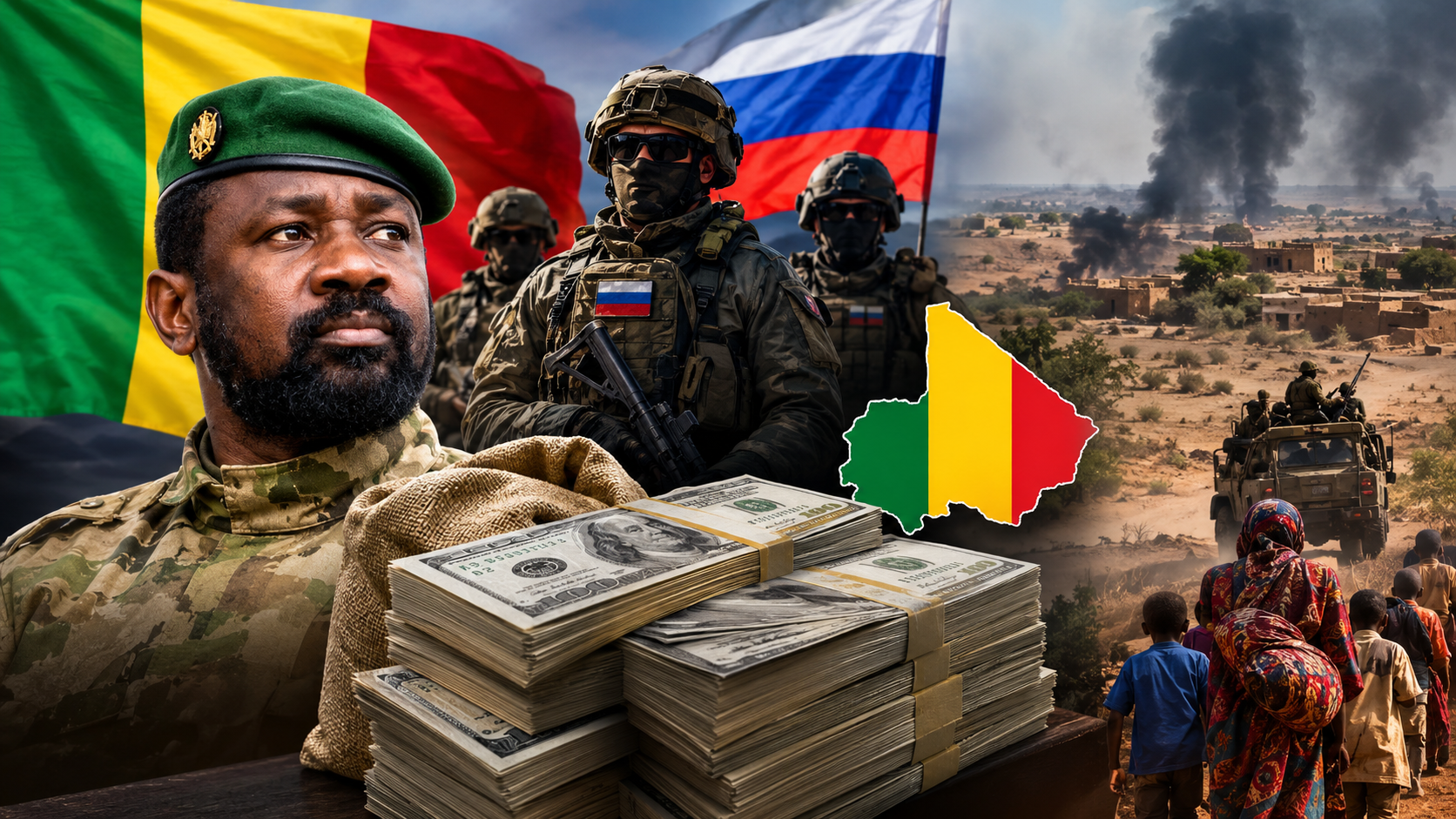
From 2024 onwards, Africa Corps largely superseded Wagner’s presence in Mali, deploying hundreds, if not thousands, of fighters. Several Wagner commanders, along with some of their forces, even joined its ranks in the region, solidifying Russia’s Africa Corps Sahel footprint.
Since then, the organization has been instrumental in supporting the junta in Bamako against Tuareg rebels. This strategy allows Moscow to expand its regional influence, particularly after the phased withdrawal of Western powers, including France. It also enables Russia to exert leverage over migration routes and secure access to mineral resources, a critical aspect of the ongoing security Sahel discussions.
Although its territorial involvement is presented as less violent than Wagner’s, Africa Corps has faced international sanctions on multiple occasions. In 2024, the United Kingdom accused the group of having “committed widespread human rights violations across the continent” and “exploiting the natural resources of these countries for their own profit,” raising concerns about the humanitarian Sahel situation.