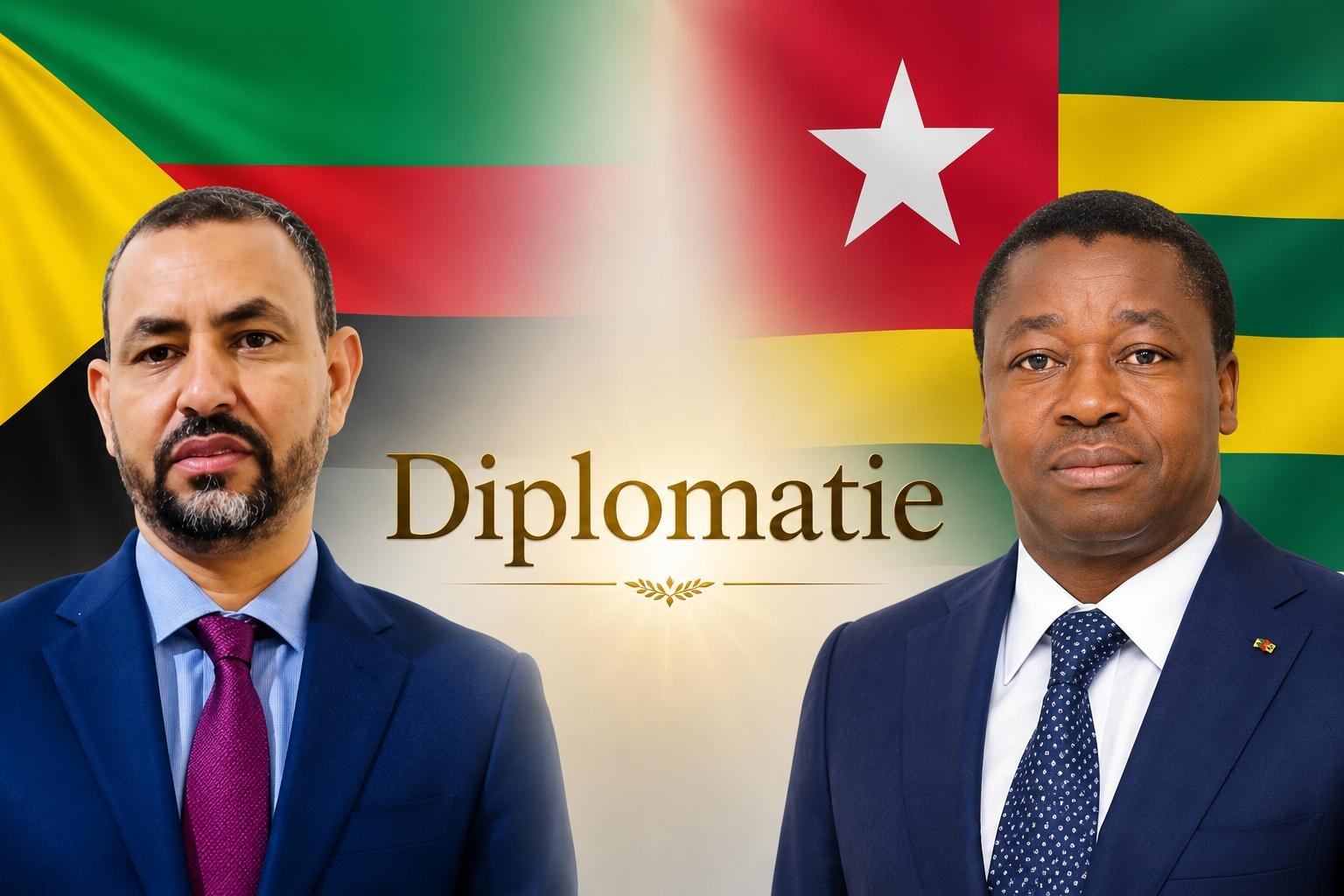
In the shifting currents of West African diplomacy, an unprecedented shift is unfolding. The Togolese government is on the verge of officially recognizing the Azawad Liberation Front (FLA), a move that could reshape regional alliances and redefine diplomatic norms in the Sahel.
Lomé as the launchpad for the FLA’s regional ambitions
The FLA, a political and military movement challenging Bamako’s authority over northern Mali, is preparing for a high-stakes diplomatic offensive across West Africa. Its goal? To secure international legitimacy and escape the isolation imposed by Mali’s transitional authorities. The choice of Lomé as the first stop—or at least a central hub—is no coincidence. The FLA’s envoys are seeking receptive ears willing to amplify their calls for autonomy or sovereignty.
By agreeing to host the delegation and considering official recognition, Togo is positioning itself as a key player in this emerging geopolitical equation. This move not only elevates Lomé’s diplomatic profile but also signals a shift in how regional disputes are managed in West Africa.
Faure Gnassingbé’s ‘diplomatic tightrope’ strategy
For seasoned observers of Togolese politics, this decision aligns with a long-standing pattern. President Faure Gnassingbé has consistently pursued a doctrine of open dialogue with dissenting factions, even when it defies regional consensus.
While neighboring leaders often prioritize institutional rigidity, the Togolese president has carved out a distinct approach: engaging with those excluded from the international stage. The pending recognition of the FLA fits seamlessly into this strategy, reinforcing Togo’s reputation as a pragmatic mediator willing to challenge conventional diplomatic boundaries.
From AES to FLA: A consistent pattern of backing breakaway movements
This pragmatic—or some might say opportunistic—stance reached its zenith during recent Sahelian crises. When military coups toppled governments in Mali, Burkina Faso, and Niger, the Economic Community of West African States (ECOWAS) responded with swift sanctions and isolation policies. Togo took a different path.
Lomé emerged as the go-to diplomatic hub for the Alliance of Sahel States (AES) putschists, positioning Faure Gnassingbé as a key intermediary for Bamako’s colonels and Niamey’s generals. This stance directly undermined ECOWAS’s unified position. Now, with the potential recognition of the FLA—a group fighting Bamako’s transitional government—Togo is applying the same playbook. The apparent contradiction only highlights one constant: Lomé aims to be the indispensable bridge for all transitions and rebellions in the subregion.
Regional tensions and the unraveling of old diplomatic rules
The imminent recognition of the FLA by Togo is poised to strain bilateral relations within West Africa. For Mali’s transitional authorities, Lomé’s embrace of the FLA amounts to direct interference in domestic affairs and a tacit endorsement of territorial destabilization.
Within ECOWAS, already weakened by the Sahelian schism, this Togolese initiative risks further eroding the bloc’s solidarity. By acting independently, Togo underscores a broader trend: the regional security and diplomatic architecture is undergoing a radical redefinition. The old principles of non-interference and border inviolability are giving way to a more flexible, interest-driven geopolitical reality.
As the FLA embarks on its regional tour, Lomé’s potential recognition of the movement reaffirms its role as West Africa’s diplomatic lab. Faure Gnassingbé’s method—anticipating ruptures, engaging with excluded voices, and positioning Togo as a bold yet neutral mediator—is once again on full display. The question remains: will this policy of extending the hand to dissidents enhance Lomé’s influence, or will it ultimately isolate the country in an increasingly fragmented region?