Tafsir Thioye publicly challenges allegations made by Ousmane Sonko
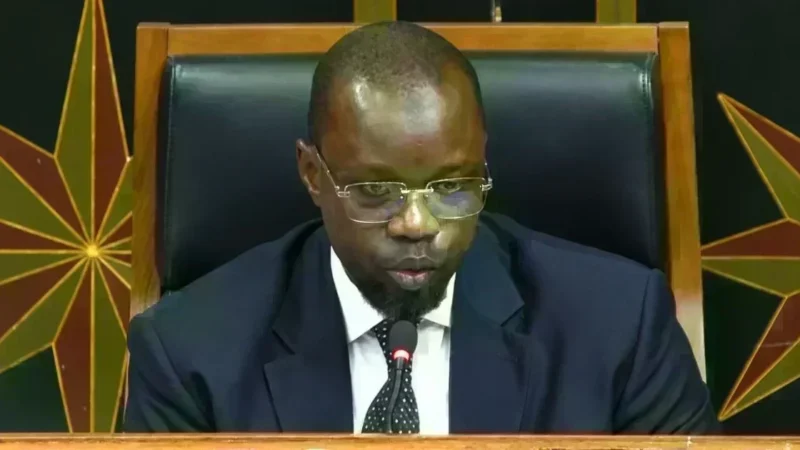
Political tensions are rising in Dakar. Tafsir Thioye, a prominent civil society figure and vocal critic of the ruling majority, has publicly disputed the recent accusations made by Prime Minister Ousmane Sonko, who also leads the Pastef party. This public confrontation occurs amidst escalating political friction between the executive branch and its detractors, several months after the Diomaye-Sonko administration assumed leadership in Senegal.
Direct challenge to the prime minister’s assertions
Tafsir Thioye intends to set the record straight regarding the assertions made by the Senegalese Prime Minister. The political analyst, renowned for his frequent media appearances, accuses Ousmane Sonko of presenting inaccurate information to the public. His response, shared across social media networks and widely circulated, is part of a series of recurring disputes between the Pastef administration and sections of civil society.
This intervention by the former civil society member highlights a persistent trend in Senegalese public discourse since the democratic transition in March 2024. Today, every major government declaration is met with structured counterarguments, where data and documents are presented to support opposing views. This dynamic underscores a growing polarization within a nation celebrated for its robust democratic culture.
Rising political tension under the Pastef administration
Since taking office in April 2024, Ousmane Sonko has delivered several hard-hitting speeches, particularly targeting the governance inherited from the Macky Sall administration. The Prime Minister has repeatedly mentioned auditing past management, promising disclosures on the state of public finances and key strategic decisions. These highly publicized statements have sparked ongoing controversies with the former ruling coalition and independent observers alike.
Tafsir Thioye is among the commentators who, while not aligning with the former majority, question both the methodology and the substance of the Prime Minister’s declarations. In his latest intervention, the analyst accuses the executive of relying on imprecise public data. This dispute reflects a broader challenge concerning the quality of economic and institutional discourse in Senegal, where citizens hold very high expectations regarding accountability.
A high-stakes battle of political narratives
Beyond a simple clash of personalities, this controversy highlights the competing narratives shaping Senegal’s current political landscape. On one hand, the government seeks to establish a clear break from the past by highlighting the failures of its predecessors. On the other hand, a diverse group of voices, including Tafsir Thioye, demands greater factual accuracy and questions the actual impact of government announcements.
This confrontation unfolds as the Pastef administration prepares major structural initiatives, including the renegotiation of mining and hydrocarbon contracts alongside comprehensive tax reforms. Under these circumstances, the credibility of official statements is highly strategic. Every public challenge can potentially weaken or strengthen the government’s ability to rally public support for its reform agenda.
Ultimately, the intensity of these exchanges reflects a healthy democracy in Senegal, where opposition and contradiction are freely expressed, even against an administration that won a decisive electoral mandate. For international partners and investors tracking the country’s progress, the clarity of official policies and the accuracy of economic data will remain crucial benchmarks in the coming months. In his detailed response, Tafsir Thioye systematically refuted the specific points he identified as erroneous in Ousmane Sonko’s address.