Senegal’s Prime Minister Lo charts a course of continuity amid regional uncertainty
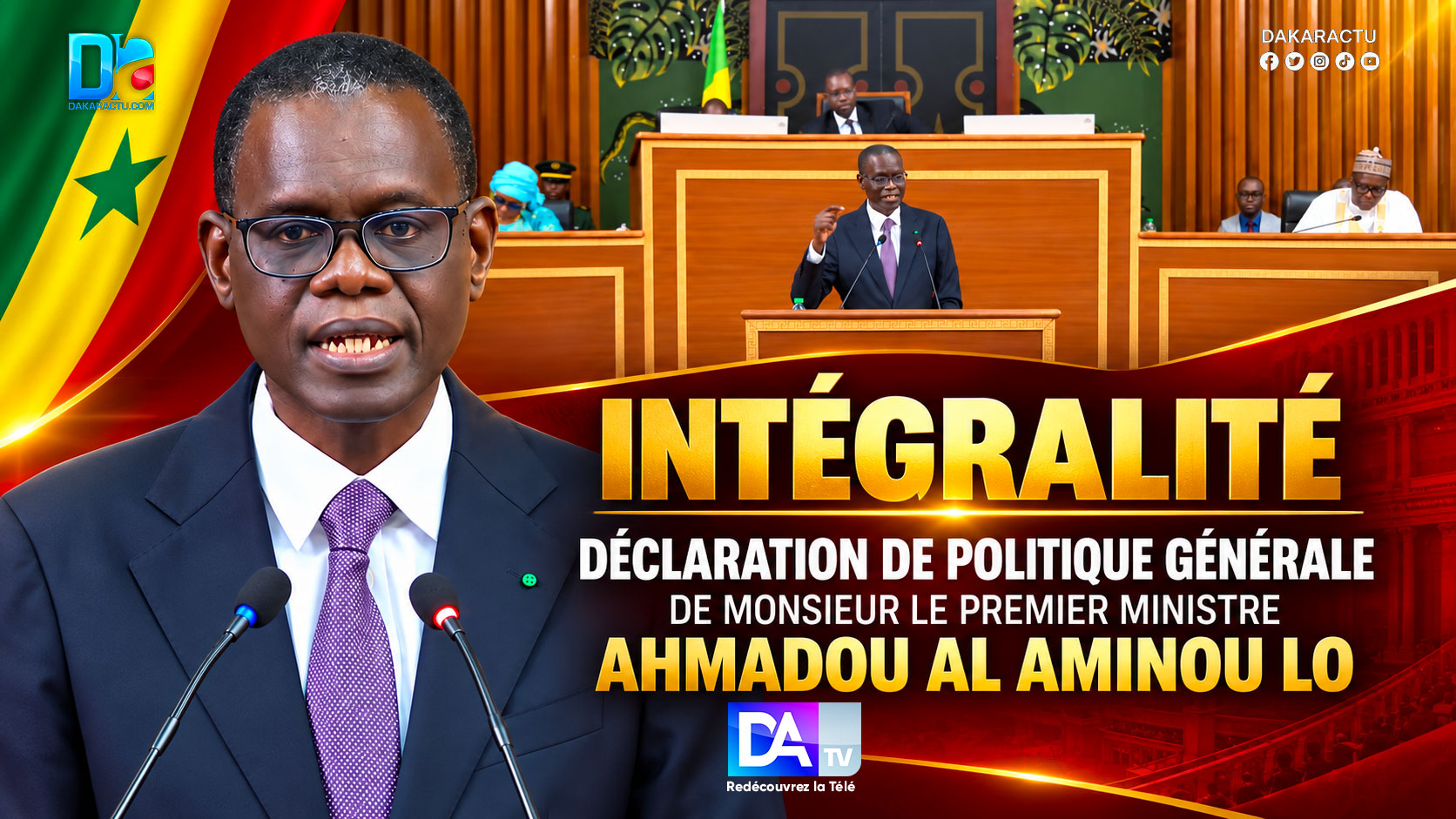
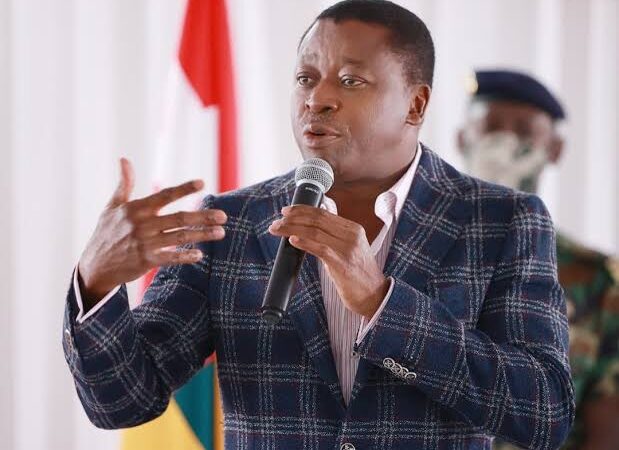
In a special session of the National Assembly on Tuesday, 8 September 2026, Prime Minister Ahmadou Alhaminou Mohamed Lo delivered his general policy statement, fulfilling the requirements of Article 55 of the Constitution. The address came just over three months after his appointment by President Bassirou Diomaye Diakhar Faye on 25 May 2026, with his government formed on 1 June.
Lo, who previously served as Secretary-General of the Government and then Minister of State in charge of the Senegal 2050 Agenda, made it clear from the outset that his administration would build on the work of his predecessor, Ousmane Sonko, who has since become President of the National Assembly. “Nothing changes, the course will be maintained,” he asserted, reaffirming the seven breaks outlined in the previous policy statement and the “Senegal 2050” framework as the guiding compass. He noted that only the method would evolve, now structured around six principles: prioritising, financing differently, executing, measuring, dialoguing, and accounting for actions.
The Prime Minister offered an unflinching assessment of public finances. The consolidated public sector debt stood at around 132% of GDP at the end of 2024, equivalent to more than 23,500 billion CFA francs, with a deficit revised to 13.7% of GDP. In 2025, growth outside the hydrocarbon sector was limited to 2.2%, and the budget deficit narrowed to 6.4%. He attributed the worsening situation to the outbreak of war between Iran, the United States, and Israel in February 2026, which triggered five successive downgrades of Senegal’s sovereign rating by Moody’s and Standard & Poor’s.
Lo confirmed that a technical agreement had been reached with the International Monetary Fund on 1 September 2026 for a new programme centred on investment and transparency, stressing that no conditionality would exceed commitments already made under the presidential programme “Diomaye Président”. He also detailed a Debt Treatment Plan for Senegal, announced on 1 September and “almost finalised”, aimed at extending maturities and reducing the average cost of debt, with support from the IMF, the World Bank, and official creditors. Clearing arrears owed to the private sector, estimated at 1,956 billion CFA francs by the end of March 2025, remains an immediate priority.
The Prime Minister additionally unveiled plans to reform energy subsidies, reducing their cost to less than 1% of GDP by 2029, while focusing support on the most vulnerable households. He set a target of lowering electricity prices by 30% by 2030. By 2027, he aims to extend social safety nets to one million poor and vulnerable households, doubling the budget allocation to 140 billion CFA francs. In the housing sector, the ambition is to deliver at least 30,000 units annually to address a deficit estimated at 500,000 homes.
Several sensitive issues were also raised, including ongoing investigations into events between February 2021 and February 2024, a review of mining and oil contracts, land audits along the coast and on state property, and the Yakaar-Teranga gas field, whose contract expires in July 2026, with 55 million dollars in compensation expected by the state. On diplomacy and security, he recalled that since July 2025, no foreign military presence remains on Senegalese soil.
A series of “catalytic” projects were presented as transformative for the decade: the Yakaar-Teranga gas development, a national gas network, refinery modernisation (SAR 2), a mining hub in Kédougou, a major water transfer scheme, a new Dakar-Tambacounda-Kidira railway line, four new regional hospitals, and the Dakar Millenium Center, a 500 billion CFA franc urban project in Ouakam.
Lo concluded by positioning institutional, macroeconomic, and social stability as the “compass needle” of his action, urging Senegalese citizens to share the effort through fiscal civism, local consumption, and volunteerism. “This government does not ask to be judged on intentions, but on efficiency and results,” he declared, promising quarterly performance reviews that he would personally chair.